 Pin It
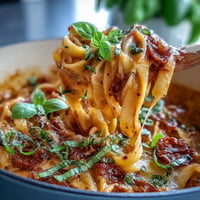
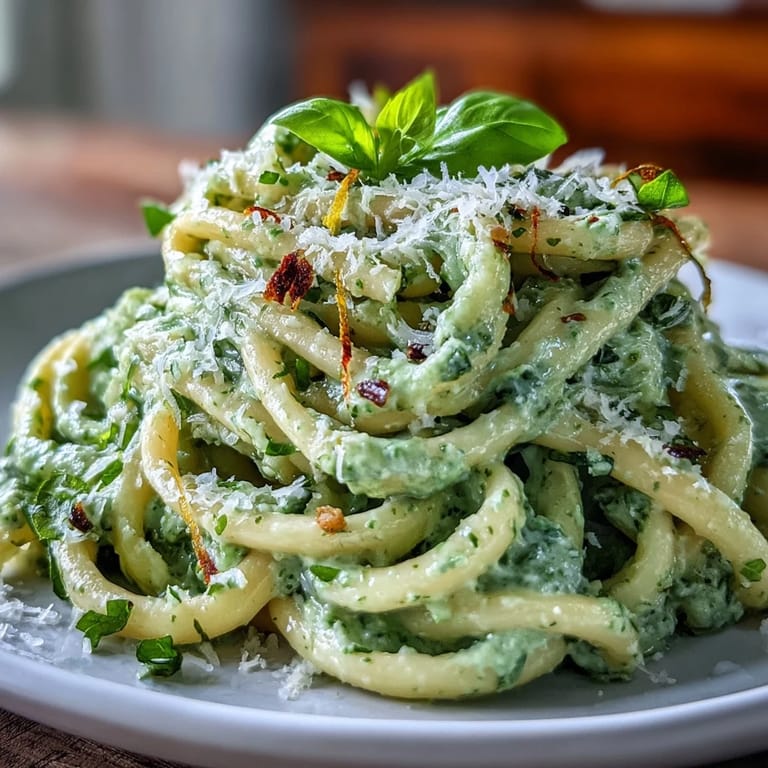
 The scent of fresh basil always brings life into my kitchen, but the first time I whirred together the avocado and herbs for this sauce, I was surprised by the burst of color and creamy texture—no stove required. That evening, instead of laboring over a simmering sauce, I simply let the blender do the heavy lifting, and dinner came together before my playlist finished. There was something a bit rebellious and freeing about skipping the pan entirely, letting the ingredients speak for themselves. The whole process felt playful, and the bright, green tangle of noodles stunned even my skeptical friend who usually leans toward heartier fare. If you love a meal that surprises your senses and speeds up the evening, this pasta might just be your new weeknight hero.
I made this pasta one sunny spring afternoon when my cousin dropped in hungry and exhausted from hiking—I still remember tossing the noodles and her cracking up at my green-stained spatula. She kept sneaking spoonfuls right out of the mixing bowl, claiming it was her new favorite party trick. Every time I toss the sauce now, I remember the easy laughter and our basil-scented hands. It’s rare that a 20-minute dish gets requested for birthdays, but this one earned that spot on her list. That moment sealed the deal for me: simple doesn’t have to be boring.
Ingredients
- Pasta: Go for spaghetti or linguine—gluten-free works too—just be sure to salt your pasta water for maximum flavor infusion.
- Avocados: Perfectly ripe avocados are the backbone here; a gentle squeeze should yield to pressure, but avoid any with big sunken spots.
- Fresh basil leaves: The more fragrant the bunch, the more it shines in the sauce; I like to tear them for extra aroma before blending.
- Pine nuts (or walnuts): Pine nuts make it buttery, but walnuts bring a more rustic edge—toast them lightly for deeper flavor if you have a minute.
- Garlic: Two cloves lend a mild sharpness; if you’re wary, start with one and add more to taste.
- Parmesan cheese: Grate it yourself for the best melt and depth—pre-shredded tends to clump.
- Lemon juice: Brightens everything and slows down avocado browning—a little zest in the sauce is never amiss either.
- Extra virgin olive oil: Its silky richness ties the sauce together; use your favorite for fresh, fruity notes.
- Salt and black pepper: Season at the end and taste as you go—it changes everything.
- For serving: A flurry of extra parmesan, basil leaves, and a pop of lemon zest always invites people in for seconds.
Tired of Takeout? 🥡
Get 10 meals you can make faster than delivery arrives. Seriously.
One email. No spam. Unsubscribe anytime.
Instructions
- Boil the pasta:
- Fill a large pot with water, salt it generously, and cook your pasta until just al dente—don’t forget to reserve some cooking water before draining.
- Blend the pesto:
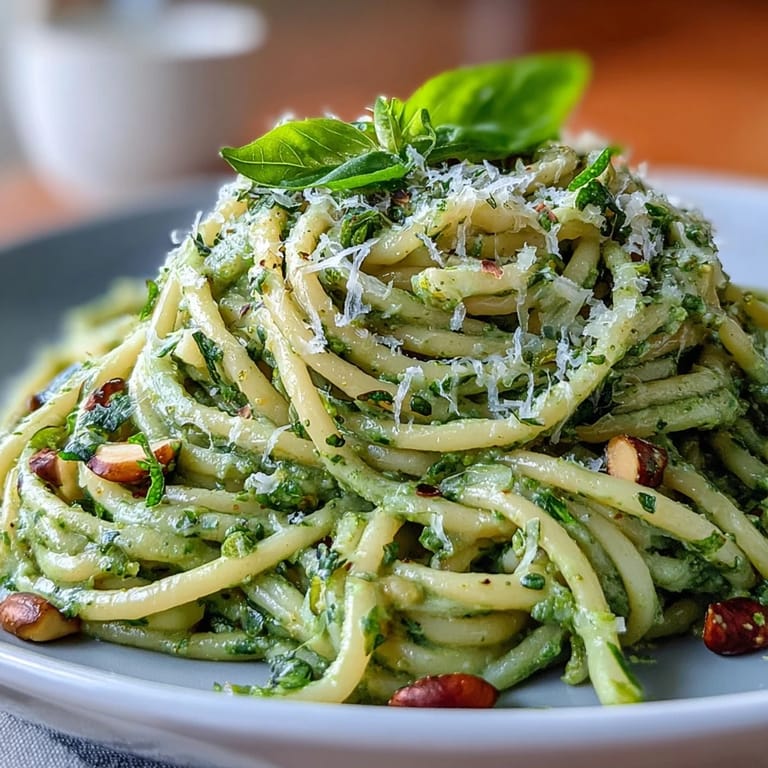
- In your food processor, combine avocados, basil, pine nuts, garlic, parmesan, lemon juice, and olive oil; blend until everything turns into a thick, dreamy green puree. Season with salt and pepper and taste for balance.
- Toss it together:
- Return drained pasta to the pot, add the avocado pesto, and pour in a splash of reserved pasta water. Toss vigorously so each strand is glossy and coated, loosening with extra water for more silkiness.
- Serve and garnish:
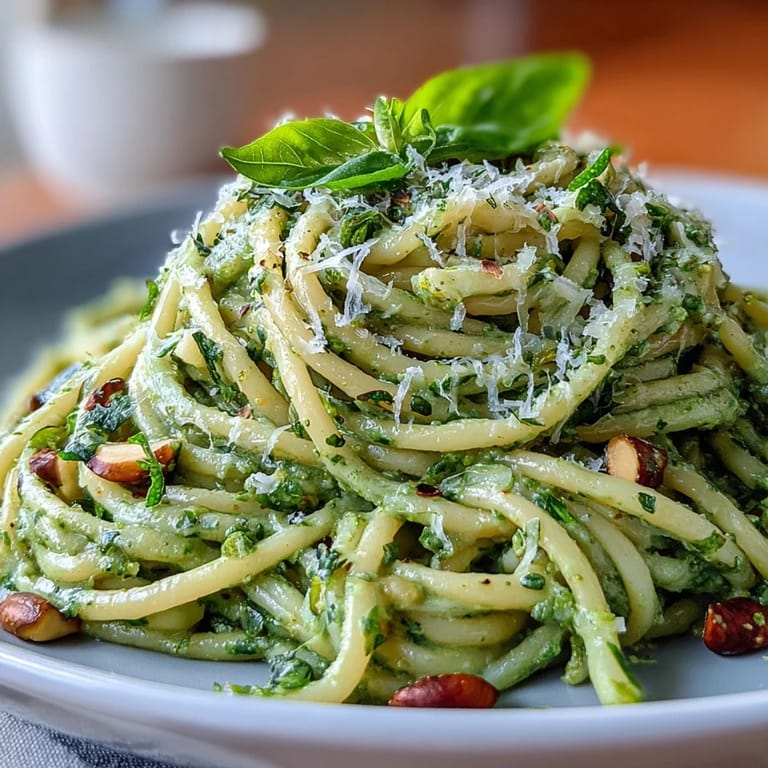
- Plate immediately, showering each bowl with extra parmesan, basil leaves, and lemon zest if you love added zing.
 Pin It
  Pin It
 One night, I brought this dish to a neighborhood potluck, nervously unsure how a green, uncooked sauce would fare alongside heavier casseroles. By the end of the evening, I was hunting for my empty serving bowl—scraped clean, no leftovers in sight. Sharing something fresh and unexpected honestly felt a little triumphant. It’s funny how small culinary gambles can bring people together. That’s when this pasta stopped being just a recipe and became a little bit of a calling card for me.
Switching Things Up: Easy Variations
You can swap pine nuts for walnuts or almonds to change up the earthiness, and adding cherry tomatoes or roasted vegetables gives a pop of color and sweetness. For vegans at the table, skip the parmesan or reach for a plant-based alternative, and nobody will miss the dairy. Sometimes I even toss in a few handfuls of arugula for pepperiness or top with grilled chicken when someone insists on extra protein. The sauce is so forgiving—experimenting became half the fun. With just a blender and a little curiosity, you can make this dish your own in minutes.
Avoiding Common Mistakes
The biggest lesson: ripe avocados are non-negotiable—underripe ones will taste bland and give your pesto an unfortunate grainy texture. Also, if you’re cooking in a hurry, don’t skip tasting the blended sauce before mixing with pasta; too little lemon or salt, and it falls a bit flat. I once forgot to save pasta water and regretted it the moment I tried to loosen the sauce with just oil. Saving that starchy liquid really is the secret key. Pay attention to textures and taste as you go for the dreamiest results.
Making Mealtime Fun and Stress-Free
Blending the avocado pesto feels oddly satisfying, especially if you let little ones press the button or sneak a taste off the spatula. Kitchen music and fast chopping make it go quickly—a bonus on rushed weeknights. If you serve right away, the color is vivid and impressive, earning oohs even from picky eaters. There’s always the option to finish with a handful of basil or a last squeeze of lemon to wake it up.
- If you’re short on basil, sub in a bit of spinach for more green and body.
- The sauce doubles as a dip for crackers or veggies if you make extra.
- Don’t hesitate—trust your taste buds each step of the way.
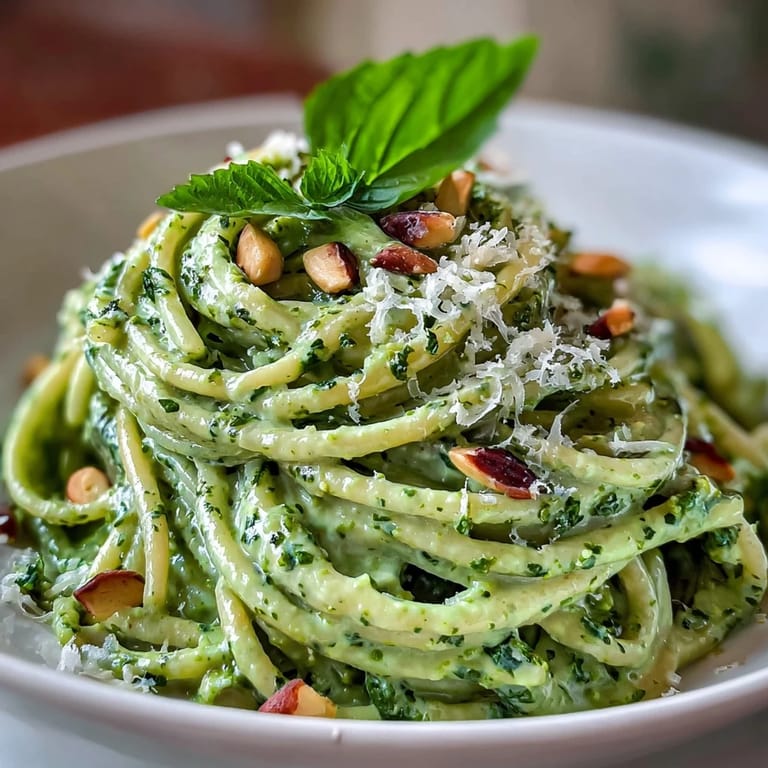 Pin It
 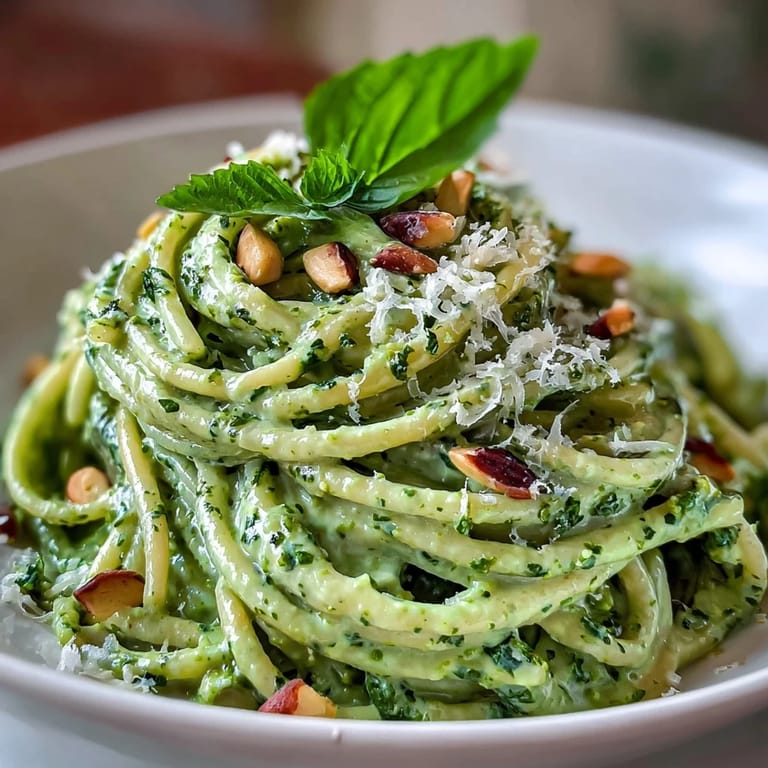 Pin It
 Give this avocado pesto pasta a try next time you want something speedy but fresh—and don’t be surprised if you catch yourself licking the spoon. Here’s to dishes that make busy days taste a little brighter.
Recipe FAQs
- → Can the avocado pesto be made ahead?
Yes — blend the sauce and press plastic wrap directly onto the surface to limit air exposure. Refrigerate and use within 24 hours; a splash of lemon juice helps slow browning.
- → Which pasta shape works best?
Long strands like spaghetti or linguine cling well to the creamy sauce, but short shapes (penne, fusilli) also work. Use gluten-free pasta if needed.
- → How do I adjust the sauce consistency?
Add reserved pasta cooking water a little at a time to thin and emulsify the sauce. Extra olive oil or another avocado can increase silkiness.
- → Can I skip the Parmesan for a vegan version?
Yes — omit the cheese or swap with nutritional yeast or a vegan hard cheese substitute for a similar savory note and creaminess.
- → What can I use instead of pine nuts?
Walnuts or almonds are great substitutes and add body and flavor. Toast them lightly for extra depth before blending.
- → How should I combine sauce and pasta for best texture?
Return drained pasta to the warm pot, add the pesto and a splash of reserved cooking water, then toss gently off the heat until evenly coated to avoid overheating the avocado.