 Pin It
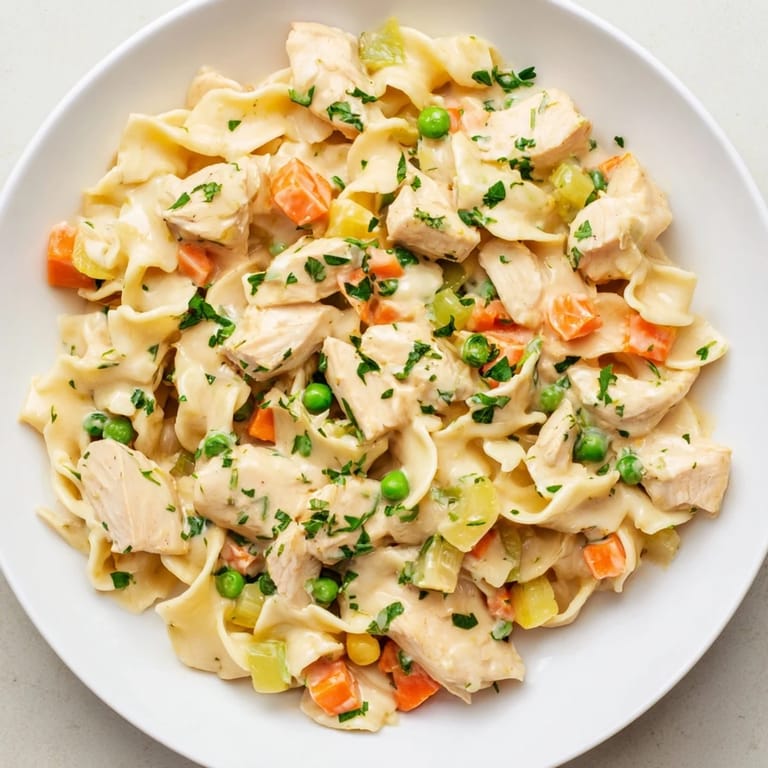
 There's something about the sound of chicken hitting hot butter that signals dinner is going to be good. My grandmother used to make this creamy chicken and noodle dish on nights when the kitchen needed to feel warm and full, and now whenever I cook it, that golden sizzle brings back those exact moments. It's the kind of meal that tastes like comfort tastes, if that makes sense—pure, uncomplicated, and exactly what you need after a long day. The beauty of this recipe is how it comes together in under an hour, with nothing fussy or demanding about the process.
I learned to make this properly when my sister was going through a rough patch and kept showing up unannounced at dinner time. I started having it ready because I noticed how she'd relax the moment the smell hit her nose, and how a bowl of this would pull her into conversation easier than anything else I tried. That's when cooking it stopped being just a recipe and became something that mattered in a different way.
Ingredients
- Boneless, skinless chicken breasts or thighs (500g): Thighs stay more forgiving if you slightly overcook them, but breasts give you cleaner bites if you watch the timing—I use thighs for weeknights.
- Unsalted butter and olive oil (2 tbsp each): The combination prevents the butter from browning too fast while giving you that rich, golden color on the chicken.
- Yellow onion, garlic, carrots, and celery (1 onion, 2 cloves, 2 carrots, 2 stalks): These are your flavor foundation—don't skip the sautéing step because that's where the sweetness develops.
- All-purpose flour (2 tbsp): This thickens your sauce into silk rather than soup, but make sure you cook it with the butter for a minute so it loses that raw flour taste.
- Chicken broth, whole milk, and heavy cream (480ml, 240ml, 120ml): The combination gives you richness without being cloying; if you only used cream it would feel heavy, and milk alone wouldn't have enough body.
- Dijon mustard, dried thyme, parsley, and paprika (1 tsp, 1 tsp, 1/2 tsp, 1/2 tsp): These seasonings work together to give the sauce complexity without tasting like you added spices—mustard especially rounds everything out.
- Wide egg noodles (250g): Wide noodles hold the sauce better than thin ones, and cooking them separately keeps you in control of the texture.
- Frozen peas (60g): Add these at the very end so they stay bright and slightly firm instead of turning to mush.
Tired of Takeout? 🥡
Get 10 meals you can make faster than delivery arrives. Seriously.
One email. No spam. Unsubscribe anytime.
Instructions
- Season and sear the chicken:
- Pat your chicken dry with a paper towel—this matters because moisture prevents browning. Season generously with salt and pepper, then let it sit for a minute so the seasoning sticks.
- Build your flavor base:
- Heat the butter and oil until they shimmer and smell nutty, then add the chicken in a single layer. Don't stir immediately; let it develop color for 2–3 minutes on each side before moving it around.
- Sauté the vegetables:
- In the same pot, let the onion, carrots, and celery soften—this takes about 4–5 minutes, and you'll know it's right when the onion turns translucent. Add the garlic and stir for just a minute so it doesn't burn.
- Make your roux:
- Sprinkle the flour over the vegetables and stir constantly for 1–2 minutes until it looks like wet sand and smells toasty. This cooks out the raw flour taste that ruins so many cream sauces.
- Build the sauce:
- Pour the broth in slowly while whisking to avoid lumps, then add the milk and cream. Whisk in the mustard, thyme, parsley, and paprika, then taste and adjust salt and pepper.
- Simmer and thicken:
- Bring everything to a gentle simmer and stir often for about 5 minutes—you'll feel the sauce thicken as the flour does its work. It should coat the back of a spoon.
- Cook the noodles:
- While the sauce simmers, cook the egg noodles in salted water according to the package, but pull them out about 1 minute before they're fully tender so they don't turn mushy when mixed in.
- Bring it together:
- Return the chicken to the sauce, add the frozen peas, and let everything warm through for 2–3 minutes. Fold in the cooked noodles and toss gently until every strand is coated.
 Pin It
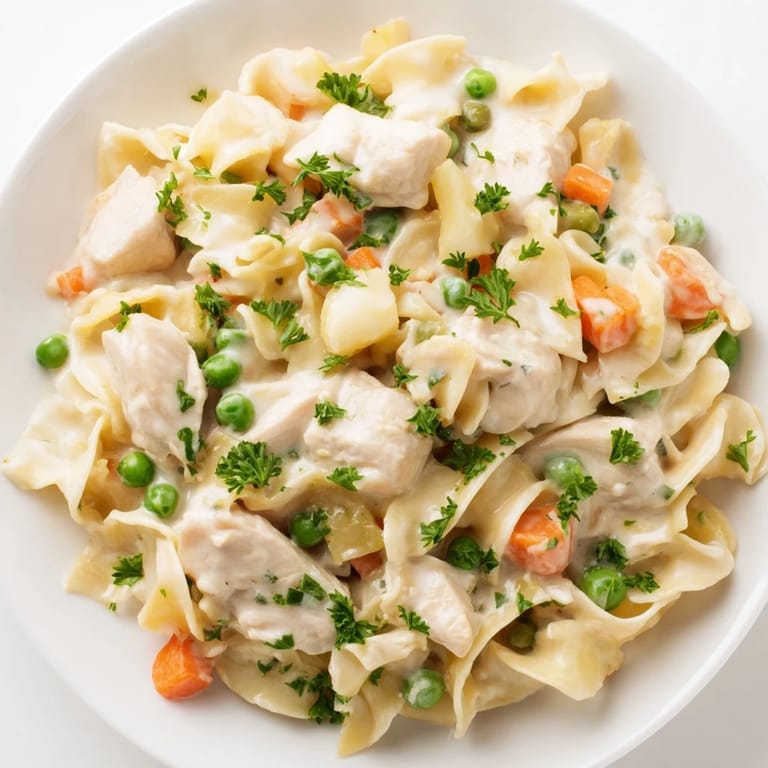
 I made this for someone who said they didn't like creamy pasta dishes, and watching them go back for seconds told me something about cooking that's worth knowing—it's not about the category of food, it's about whether you made it with actual attention. That moment made me stop defaulting to what people said they wanted and start trusting the food itself.
The Secret to Creamy Without Heavy
The reason this doesn't taste like you're eating straight cream is the ratio and the cooking time. That gentle simmer for 5 minutes isn't just about thickening—it's about the sauce actually tasting like something rather than just coating things. When you add broth to the equation, you get flavor depth instead of just richness, which is the difference between a sauce that's comforting and one that's cloying.
Timing and Temperature Matter More Than You'd Think
Cook the chicken all the way through in that initial sear—if you leave it even slightly pink, it'll continue cooking in the sauce and you'll end up with rubber. The noodles are the other timing game; pull them from the water just before they're fully done because they'll soften more in the warm sauce. Everything in this dish is about understanding that heat keeps working even after you take the pan off the stove.
When to Improvise and When to Stay Steady
This is the kind of recipe where small changes make it yours without breaking it. A splash of white wine when you sauté the vegetables adds brightness, mushrooms stirred in with the onions give you earthiness, and rotisserie chicken cuts your work in half on nights when you need that. The structure stays solid no matter what you add because the core—the sauce, the noodles, the ratio of everything—is built right.
- If the sauce seems too thin after simmering, mix a tablespoon of cornstarch with cold water and stir it in while the sauce simmers.
- Leftovers keep in the fridge for three days and reheat beautifully with a splash of milk to refresh the sauce.
- Fresh parsley at the end isn't optional if you want that green brightness that balances the richness.
 Pin It
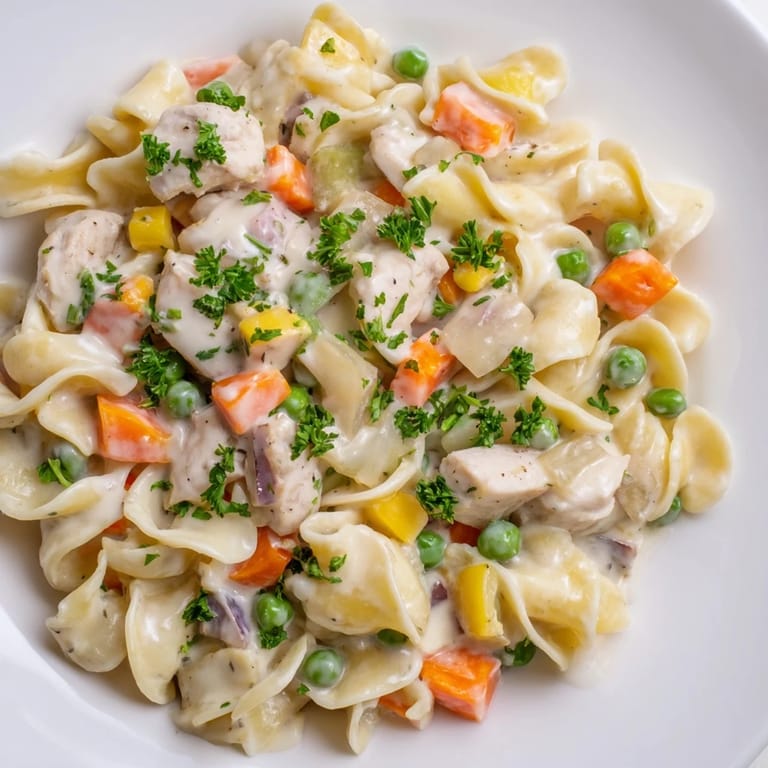
 This meal has become my answer to the question of what to cook when someone needs feeding, not just eating. It's honest food that doesn't apologize for being simple, and it tastes like it was made with thought.
Recipe FAQs
- → How can I ensure the chicken stays tender?
Cook chicken over medium-high heat until just browned and fully cooked to keep it moist and tender. Avoid overcooking to prevent dryness.
- → What type of noodles works best with this dish?
Wide egg noodles hold the creamy sauce well, offering a pleasant texture and absorbing flavors perfectly.
- → Can I add more vegetables for extra nutrition?
Yes! Mushrooms or spinach complement the dish nicely when added with the sautéed vegetables.
- → What thickening agent is used for the sauce?
All-purpose flour is cooked into a roux with butter and olive oil to create a smooth, creamy sauce base.
- → How should leftovers be stored and reheated?
Store leftovers in an airtight container in the refrigerator for up to 3 days and reheat gently on the stove to preserve texture and flavor.
- → Can I substitute chicken broth with another liquid?
Vegetable broth or a light stock can be used, but it may slightly alter the overall flavor profile.