 Pin It
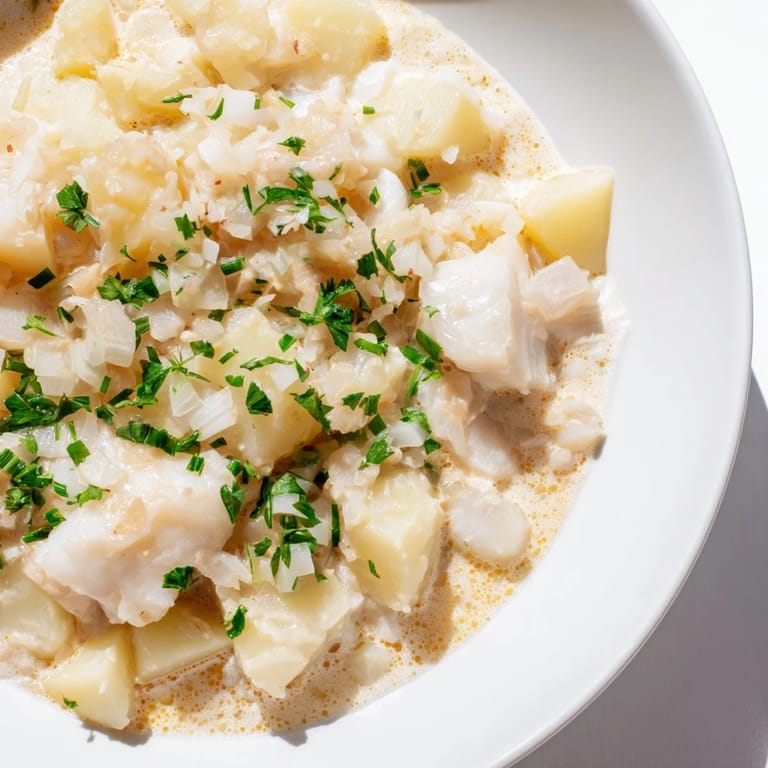
 Years ago, I stumbled into a small restaurant in Reykjavik on a raw, gray afternoon, and the first thing that hit me wasn't the decor but the smell drifting from the kitchen—something creamy, buttery, and impossibly comforting. The waiter brought me this unassuming bowl of pale, chunky stew, and I was skeptical until the first spoonful hit my tongue. Tender fish, potatoes that had nearly melted into the broth, and a warmth that seemed to reach straight through to my chest. That's when I understood why Icelanders don't fuss much over their food—they don't have to.
I made this for my partner on a Sunday when neither of us felt like leaving the house, and watching their face when they tasted it reminded me why simple food, made with care, matters so much more than fancy. We sat at the kitchen counter in our coats because the heating was acting up, and somehow that made the stew taste even better.
Ingredients
- Cod or haddock fillets (500 g): The heart of the stew—choose white fish with delicate flavor that won't overpower the cream.
- Potatoes (500 g): Use waxy potatoes if you can find them, as they hold their shape better than floury varieties.
- Butter (60 g): Real butter matters here; it's the base of the sauce and carries all the warmth.
- Whole milk and heavy cream (500 ml + 100 ml): Together they create that silky texture without being overpowering.
- Onion (1 medium): Finely chopped and sautéed until translucent; this builds the flavor foundation.
- Fresh parsley and chives: Don't skip these—they brighten the whole dish and add a whisper of garden freshness.
- Bay leaf, salt, white pepper, and nutmeg: White pepper is traditional and gentler than black; the nutmeg is optional but hints at old-world warmth.
Tired of Takeout? 🥡
Get 10 meals you can make faster than delivery arrives. Seriously.
One email. No spam. Unsubscribe anytime.
Instructions
- Start with the potatoes:
- Dice them into roughly the same size so they cook evenly, then boil in salted water until they're tender enough to break with a spoon but still holding their shape. This usually takes 12 to 15 minutes.
- Poach the fish gently:
- Barely simmer the fillets with the bay leaf and salt in just enough water to cover them. You'll know they're ready when the flesh is opaque and flakes apart easily when you press with a fork—this is usually around 6 to 8 minutes, and overdoing it will leave you with tough fish.
- Build the sauce:
- Melt butter in your large pot and sauté the onion slowly until it turns golden and sweet. This isn't a race; let it soften completely so it dissolves into the stew.
- Combine and mash:
- Add the drained potatoes to the pot and gently break them up with a masher, leaving plenty of chunks for texture and substance. You want a stew, not a purée.
- Bring it together:
- Flake the poached fish into large pieces and add it back with the reserved poaching liquid. Stir everything gently to avoid breaking up the fish further.
- Add the cream base:
- Pour in the milk and cream, then keep the heat low and stir often. Watch for the moment when it becomes silky and steaming, but stop before it even thinks about boiling.
- Season to taste:
- Add salt, white pepper, and a tiny pinch of nutmeg if you like, then stir in half the fresh herbs. Taste and adjust—it should feel like a warm hug in a bowl.
- Finish and serve:
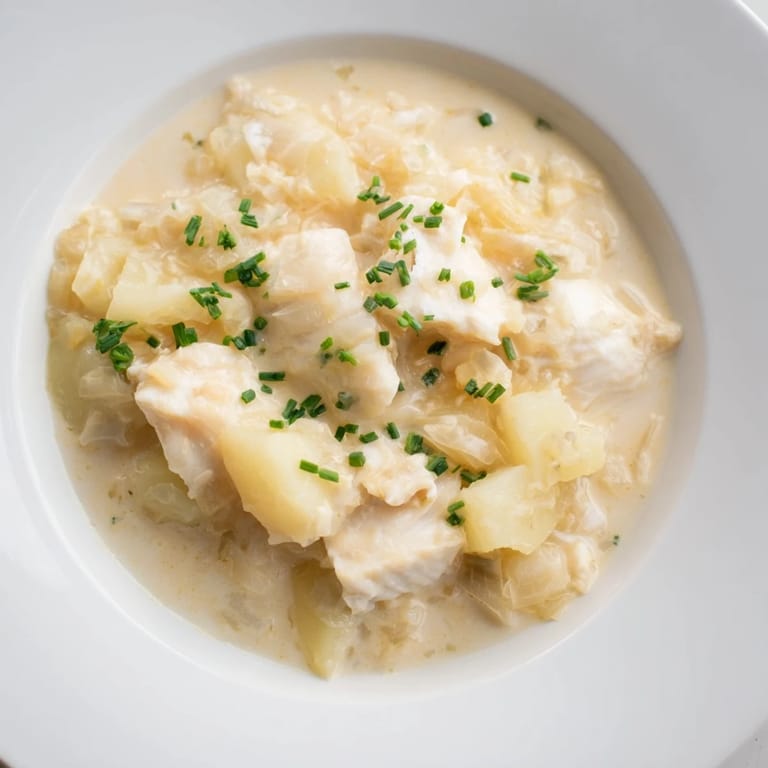
- Ladle into bowls and scatter the remaining parsley and chives on top. Serve immediately, with dark rye bread and butter if you want to be traditional about it.
 Pin It
 There's something about feeding someone a bowl of this that feels like an act of quiet kindness. My grandmother used to say that the best meals are the ones that make you slow down, and this stew absolutely does that.
Why Potatoes and Fish are Meant to Be Together
Potatoes absorb flavors without competing for attention, and when they're partially mashed into a cream sauce, they thicken it naturally and give it body. The fish, meanwhile, stays delicate and flaky, adding protein and a subtle brine that reminds you of the sea. It's a balance that's been perfected in Nordic kitchens for centuries, and once you taste it, you understand why.
The Gentle Art of Not Overthinking It
This stew taught me that some of the best dishes come from knowing when to stop fussing. There are no complicated techniques here, just an awareness of temperature and timing. The onion needs to be soft, the potatoes need to be cooked through, the fish needs to be cooked just enough, and the cream base needs to stay calm. That's it. That's the whole secret.
The Beauty of Variations
While the traditional version is wonderful on its own, this stew loves a little flexibility. You can lighten it with more milk and less cream, or go the other direction and make it richer. Some people add a splash of white wine, others include a handful of chopped dill, and I've seen versions where smoked fish replaces some of the fresh cod for a deeper, more complex flavor.
- Try smoked haddock mixed with fresh fish for layers of flavor that surprise you with every spoonful.
- A pinch of cayenne or smoked paprika adds warmth without changing the stew's fundamental character.
- Dark rye bread isn't just a side dish—it's essential for soaking up every last drop of that creamy sauce.
 Pin It
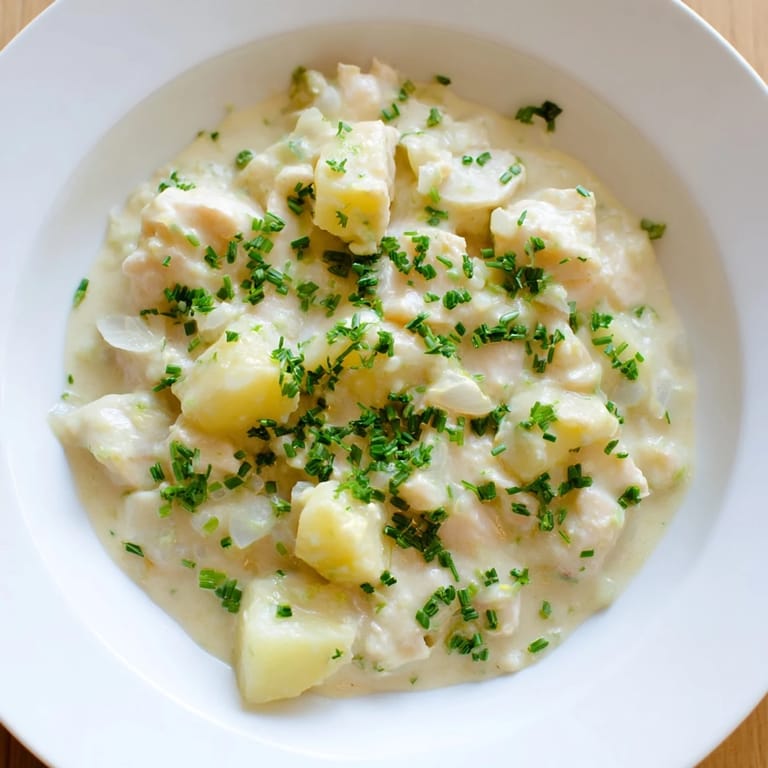
 This is the kind of recipe that becomes a quiet favorite in your rotation, the one you reach for when you want something that tastes like home without needing to be complicated. Make it once, and it'll ask to be made again.
Recipe FAQs
- → What type of fish works best?
White fish like cod or haddock, skinless and boneless, are ideal for their mild flavor and tender texture.
- → How do I achieve a creamy texture without cream?
Using just milk and butter while gently heating the mixture prevents curdling and maintains creaminess.
- → Can I prepare the stew in advance?
Yes, this stew can be made ahead and reheated gently to preserve its delicate flavors and creamy texture.
- → What herbs enhance the flavor best?
Fresh parsley and chives add brightness and subtle onion notes that complement the fish and potatoes well.
- → Is it necessary to use bay leaf when poaching fish?
Bay leaf adds aromatic depth during poaching but can be omitted if unavailable without major flavor loss.