 Pin It
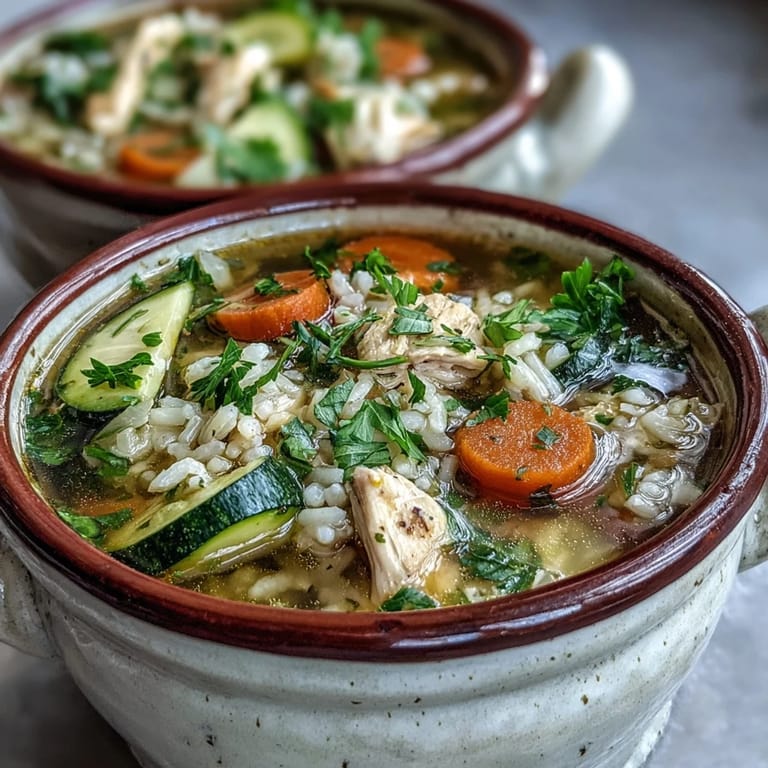
 My kitchen got quiet one Tuesday evening when my daughter came home exhausted from school, and instead of the usual snack chaos, she just wanted something warm that didn't require thinking. That's when this soup became my go-to—not because I invented it, but because it fixed everything with almost no fuss. The beauty of throwing chicken, rice, and vegetables into one pot is that it somehow tastes like you spent hours worrying over it, when really you were just watching steam rise and stirring occasionally. It's the kind of meal that makes people linger at the table longer than expected, asking for seconds before they even finish their first bowl.
I made this for a friend going through a rough patch, and she later told me that having a container of it in her fridge meant she actually ate real food instead of forgetting meals. That moment shifted how I think about cooking for people—sometimes the most valuable thing isn't fancy or impressive, it's just nourishing and there when you need it.
Ingredients
- Boneless, skinless chicken breasts (2 breasts, about 400g): Cut these into generous bite-sized pieces so they don't disappear into the broth, and they'll stay tender throughout cooking.
- Yellow onion (1 medium): The diced base that builds flavor—I learned the hard way that skipping the onion makes the whole soup taste hollow.
- Carrots (2 medium): Sliced rather than diced because they soften beautifully and create little pockets of sweetness throughout.
- Celery stalks (2): Don't skip this; it's what gives the broth that clean, classic chicken soup foundation.
- Garlic (3 cloves): Minced fine so it distributes evenly and adds a subtle warmth without overpowering.
- Baby spinach or kale (1 cup, chopped): Added at the end to keep the color vibrant and add nutrients without turning to mush.
- Fresh parsley (1 tablespoon): Stir some in during cooking for depth, then save extra for garnish because it's the small finishes that matter.
- Long-grain white rice (2/3 cup, rinsed): Rinsing removes excess starch so the rice cooks into tender grains rather than a gluey paste.
- Low-sodium chicken broth (8 cups): Use good broth because it's doing the heavy lifting here—it becomes your soup's soul.
- Dried thyme (1 teaspoon): This herb carries the soup's backbone; it speaks without shouting.
- Dried oregano (1 teaspoon): Adds complexity and a subtle Mediterranean note that lifts the whole dish.
- Bay leaf (1): Essential for depth, but remove it before serving because nobody enjoys finding it in their spoon.
- Black pepper and salt (1/2 teaspoon pepper, 3/4 teaspoon salt): Taste as you go because broth saltiness varies between brands.
- Lemon juice (from 1/2 lemon, optional): This is the secret brightness that makes people ask what you did differently.
- Olive oil (1 tablespoon): Just enough to create a base for the aromatics without making the soup slick.
Tired of Takeout? 🥡
Get 10 meals you can make faster than delivery arrives. Seriously.
One email. No spam. Unsubscribe anytime.
Instructions
- Build your foundation:
- Heat the olive oil in your large pot over medium heat until it shimmers slightly. Add the diced onion, carrots, and celery, stirring occasionally for 4 to 5 minutes until the onion becomes translucent and the vegetables start to soften—you'll know it's right when your kitchen smells like comfort.
- Wake up the garlic:
- Add your minced garlic and let it sizzle for just one minute until fragrant. This quick step transforms raw garlic into something mellow and sweet.
- Begin with the chicken:
- Add your chicken pieces and cook them for 2 to 3 minutes, stirring gently until they're lightly browned on the outside. They won't be cooked through yet, and that's intentional—they'll finish in the broth.
- Bring it together:
- Stir in the rinsed rice, thyme, oregano, bay leaf, salt, and pepper. Pour in all 8 cups of chicken broth and bring everything to a boil, which takes about 5 minutes. Watch for the moment when the surface shifts from still to gently rolling.
- Let it simmer:
- Lower the heat, cover the pot, and let it bubble gently for 20 minutes, stirring every few minutes to prevent the rice from sticking to the bottom. Around minute 18, peek in and check if the rice is nearly tender—if you taste a grain, it should yield slightly but still have the tiniest core.
- Add the greens:
- Stir in your chopped spinach or kale and cook uncovered for 2 to 3 minutes until it wilts into the broth and becomes a deeper green.
- Finish and taste:
- Remove from heat and fish out the bay leaf with a spoon. Squeeze in the lemon juice if you're using it, stir in the fresh parsley, then taste a spoonful and adjust salt and pepper until it sings. Sometimes this is where a pinch of lemon makes all the difference.
- Serve with intention:
- Ladle the soup into bowls while it's still steaming, and crown each with a small handful of fresh parsley. Serve immediately with crusty bread if you have it.
 Pin It
 One winter evening, my neighbor stopped by with a thermometer just to check on my cold, and I sent her home with a container of this soup. She texted me days later saying it was the reason she actually recovered instead of just pushing through. That's when I realized this recipe isn't just about feeding people—it's about showing up for them in the simplest, most sincere way.
When to Make This Soup
This soup thrives during transitions—early fall when nights start to cool, the gray days of January, or honestly, any Tuesday when you need comfort without complexity. It's also the kind of meal you make when someone you care about needs nourishing, or when you're cooking for yourself but want to feel like you're worth the effort.
Storage and Reheating
The soup keeps beautifully in the refrigerator for up to four days in an airtight container, and it actually tastes better the next day after the flavors have married overnight. When reheating, warm it gently over medium heat and add extra broth as needed, tasting as you go—this prevents the rice from turning mushy and keeps the soup feeling fresh rather than tired.
Variations Worth Trying
Once you've made this recipe a few times and know how it feels, you'll start seeing endless possibilities in your pantry. A parmesan rind simmered in the broth adds umami depth, drained white beans add heartiness, and different herbs like dill or tarragon shift the entire mood of the dish. The foundation is forgiving enough to welcome your experiments.
- Substitute brown rice for a nuttier flavor and slightly chewier texture, extending the simmer time to 35 to 40 minutes.
- For a vegetarian version, omit the chicken and swap in vegetable broth, then add a can of drained chickpeas or white beans for protein.
- Try adding mushrooms, zucchini, or even a handful of frozen peas in the last few minutes for different seasonal takes.
 Pin It
 This soup became my answer to the question of what to make when I want to feel capable in the kitchen without performing. Pour yourself a bowl, sit somewhere quiet for a moment, and notice how something this simple can be exactly what you needed.
Recipe FAQs
- → Can I use brown rice instead of white rice?
Yes, brown rice can be substituted but requires a longer simmer time of about 35–40 minutes to become tender.
- → How can I make this dish vegetarian?
Omit the chicken and replace chicken broth with vegetable broth. Adding chickpeas boosts protein content.
- → What herbs enhance the flavor best?
Dried thyme and oregano add warmth and depth to the broth, balancing the savory chicken and vegetables.
- → Is it important to sauté the vegetables first?
Sautéing onions, carrots, and celery first softens them and deepens their flavors, enriching the overall taste.
- → How can leftovers be reheated without drying out?
Add extra broth when reheating to maintain moisture and prevent the rice from thickening too much.