 Pin It
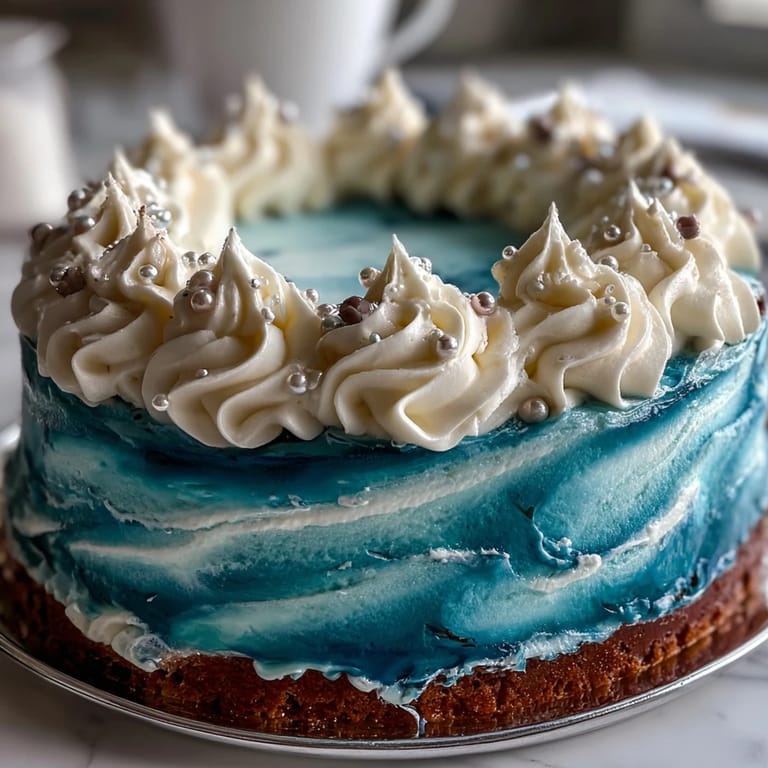
 My friend casually mentioned she was a Pisces while we were decorating cupcakes, and somehow that sparked the idea of a cake that felt like the ocean itself. I'd never really thought about zodiac baking before, but there was something magical about the challenge of creating waves in buttercream that actually looked fluid and alive. The first time I made this, I was nervous about the blue ombré effect, worried it would look childish or overdone, but when those sweeping layers came together, I understood why she loved the water so much.
I baked this for my cousin's birthday party one summer, and watching guests do a double-take when they saw it emerge from the fridge was worth every careful piping motion. Someone asked if it was too pretty to eat, which made everyone laugh, and then it disappeared in about twenty minutes. That moment reminded me that the best desserts aren't just delicious—they tell a story and make people feel something.
Ingredients
- All-purpose flour: The foundation that keeps the crumb tender and fine, so make sure it's fresh and not clumpy from sitting around.
- Baking powder: The magic lift that gives you a cake that's light without being airy or fragile.
- Salt: Just a pinch, but it deepens the vanilla flavor so people can't quite put their finger on why it tastes so good.
- Unsalted butter, room temperature: Room temperature is non-negotiable here—cold butter won't cream properly and you'll end up with a dense cake.
- Granulated sugar: This is your moisture and structure, so don't skip weighing it if you can.
- Large eggs, room temperature: Cold eggs won't emulsify smoothly with the butter, so pull them out of the fridge about 30 minutes before you start.
- Pure vanilla extract: Use real vanilla, not imitation—it makes a noticeable difference in a cake this simple.
- Whole milk, room temperature: The alternating method with milk keeps the batter from overworking and becoming tough.
- Unsalted butter for frosting: Same room temperature rule applies; you want it soft enough to beat into clouds.
- Powdered sugar: Sift it before measuring to avoid dense, grainy buttercream.
- Blue gel food coloring: Gel holds its intensity without diluting the buttercream like liquid coloring does.
- Edible pearls or sugar pearls: Optional but they catch the light beautifully and make the ocean feel real.
Tired of Takeout? 🥡
Get 10 meals you can make faster than delivery arrives. Seriously.
One email. No spam. Unsubscribe anytime.
Instructions
- Prepare your workspace:
- Preheat the oven to 350°F and grease that 9x13-inch pan generously, then line it with parchment paper so your finished cake lifts out clean. Having everything within reach before you begin beats scrambling halfway through.
- Combine the dry ingredients:
- Whisk flour, baking powder, and salt together in a medium bowl—this aerates the flour and distributes the leavening evenly. You're building the structure that holds everything together.
- Cream butter and sugar:
- Beat them together for about 3 minutes until the mixture is pale and fluffy, almost like clouds. This step incorporates air into the batter, which creates that tender crumb everyone loves.
- Add eggs one at a time:
- Beat in each egg fully before adding the next, then add vanilla—rushing this step means you end up with a broken-looking batter that won't bake evenly. Patience here pays off in texture.
- Alternate flour and milk:
- Start with flour, then milk, then flour again, mixing gently on low speed so you don't overdevelop the gluten and end up with a tough cake. The batter should look silky and smooth, not overworked.
- Bake with intention:
- Pour batter into the pan and smooth the top, then bake for 28–32 minutes until a toothpick comes out clean with maybe a crumb or two clinging to it. The smell will tell you when it's close—you'll catch that warm vanilla sweetness filling the kitchen.
- Cool thoughtfully:
- Let it rest in the pan for 10 minutes so it pulls away from the edges and firms up, then transfer to a wire rack. A cake that's too warm falls apart, so patience is your friend here.
- Make the buttercream:
- Beat butter until creamy, gradually add sifted powdered sugar while mixing on low, then add vanilla and milk and beat until fluffy and smooth. This should take a few minutes and feel like it goes from grainy to cloud-like.
- Create your color palette:
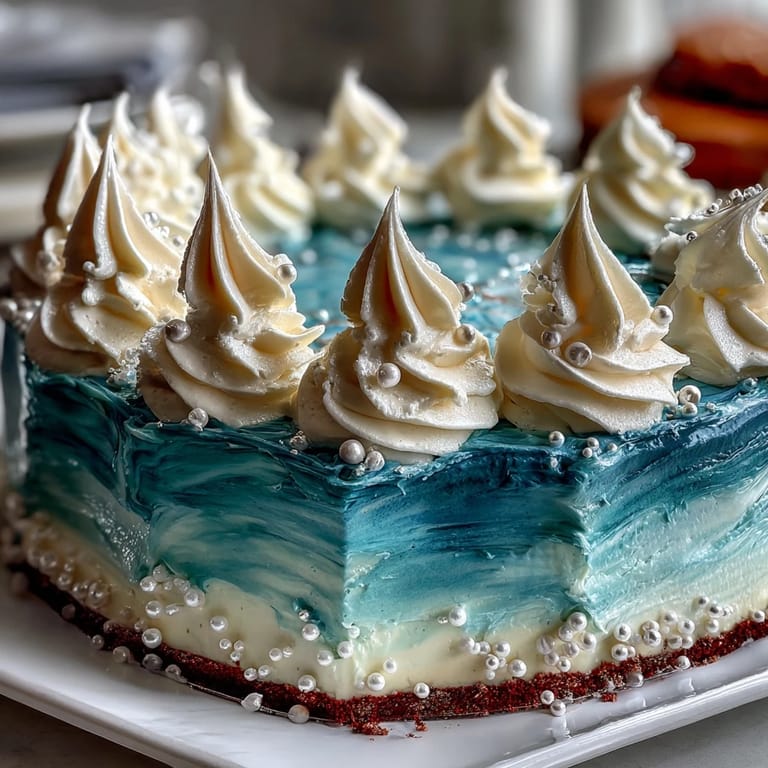
- Divide the buttercream into 3–4 bowls and tint each with blue gel coloring in different intensities—deep ocean blue, medium blue, pale aqua, and white. The variation is what makes it feel like real waves.
- Apply the crumb coat:
- Spread a thin layer of white buttercream all over the cooled cake and chill for 20 minutes so the crumb coat sets. This prevents cake particles from mixing into your final frosting layers.
- Paint the ocean:
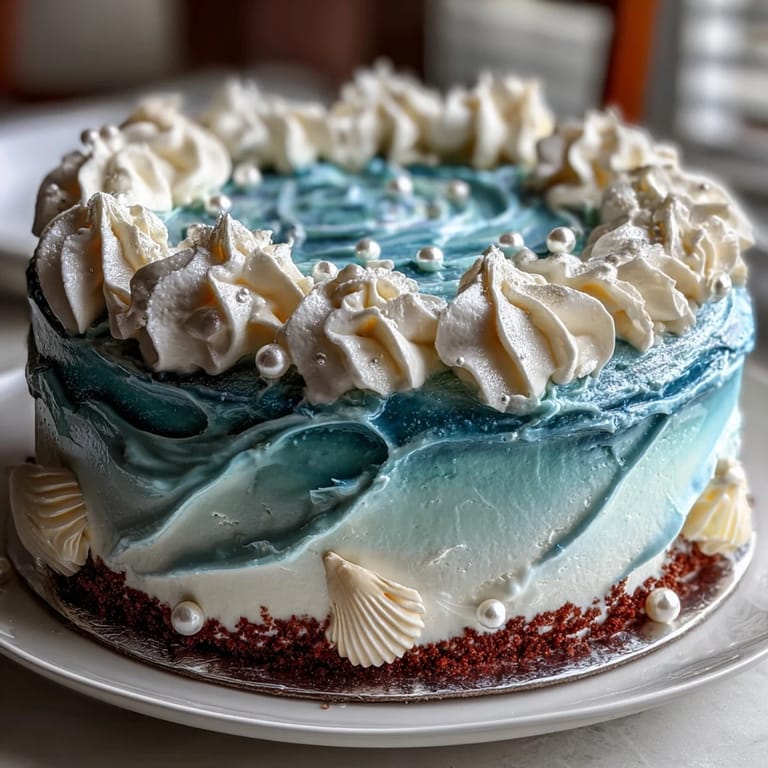
- Use an offset spatula to layer the blue buttercreams in swooping, wave-like shapes, starting with the darkest shade at the bottom and moving to lighter shades as you rise. Trust your instinct—imperfect waves look more natural and alive.
- Add sea foam:
- Pipe or swirl white buttercream across the top to mimic sea foam and whitecaps. Let the piping bag do the work; you're just guiding it in loose, wavy lines.
- The finishing touch:
- If you want, scatter edible pearls and add a Pisces symbol made from white chocolate or fondant. This is where it stops being a cake and becomes a moment.
 Pin It
 The real magic happened when my cousin took her first bite and closed her eyes, then looked at the cake again like it was something she wanted to remember forever. That's when I realized this wasn't just about Pisces or zodiac themes—it was about making something beautiful enough to pause for, something that felt like an experience rather than just dessert.
Why Room Temperature Matters
I used to think room temperature was just a suggestion until one winter morning I grabbed eggs straight from the fridge and ended up with a batter that looked separated and sad. The emulsion broke because cold eggs don't blend smoothly with warm butter, which means your cake won't rise properly and the texture becomes dense instead of light. Now I set out eggs and butter at least 30 minutes before I start, and it makes all the difference—the batter comes together silky and holds more air.
The Secret of Ombré Buttercream
Creating that smooth gradient from deep ocean blue to pale aqua is easier than it sounds if you think about it like painting rather than decorating. Start your darkest color at the bottom edge of the cake and work upward, overlapping each layer slightly so the colors blend at the transitions. The key is making peace with the fact that waves aren't perfectly clean—they blend and swirl in real life, so your buttercream should too.
Flavor Variations and Personal Touches
Once you master the basic vanilla cake and blue buttercream, there are so many ways to make it your own without changing the whole vibe. Add a teaspoon of lemon zest to the batter for brightness, or a hint of almond extract alongside the vanilla for something subtly different. You could even brush the cooled cake with a light simple syrup infused with blueberry or lavender to add moisture and a whisper of extra flavor.
- Lemon zest in the cake brightens everything and pairs beautifully with the ocean theme.
- Edible glitter mixed into white buttercream catches light like actual sea sparkle.
- A tiny drop of peppermint extract alongside vanilla creates an unexpected freshness that feels oceanic.
 Pin It
 This cake became my favorite thing to make because it sits at that perfect intersection of impressive and achievable, and every time someone tastes it, they feel a little transported. Serve it with sparkling water or a light Moscato and watch it disappear.
Recipe FAQs
- → How do I achieve the ombré effect on the frosting?
Divide the buttercream into several portions and tint each with varying blue shades from dark to light. Layer these colors in sweeping, wave-like motions to create a natural gradient.
- → What is the best way to keep the buttercream smooth and fluffy?
Beat unsalted butter until creamy before gradually adding sifted powdered sugar. Adding milk and vanilla last and beating well ensures a smooth, fluffy consistency.
- → How can I prevent the sponge from drying out?
Ensure accurate baking time between 28-32 minutes and check doneness with a toothpick. Cooling the cake in the pan briefly before transferring helps retain moisture.
- → Are there tips for piping ocean waves?
Use an offset spatula or petal piping tips to create swooping motions that mimic rolling waves. Practice on parchment before decorating the cake for clean application.
- → Can the decoration be customized?
Yes, edible pearls or sugar pearls can add texture, and a Pisces symbol can be crafted from white chocolate or fondant for a personalized touch.