 Pin It
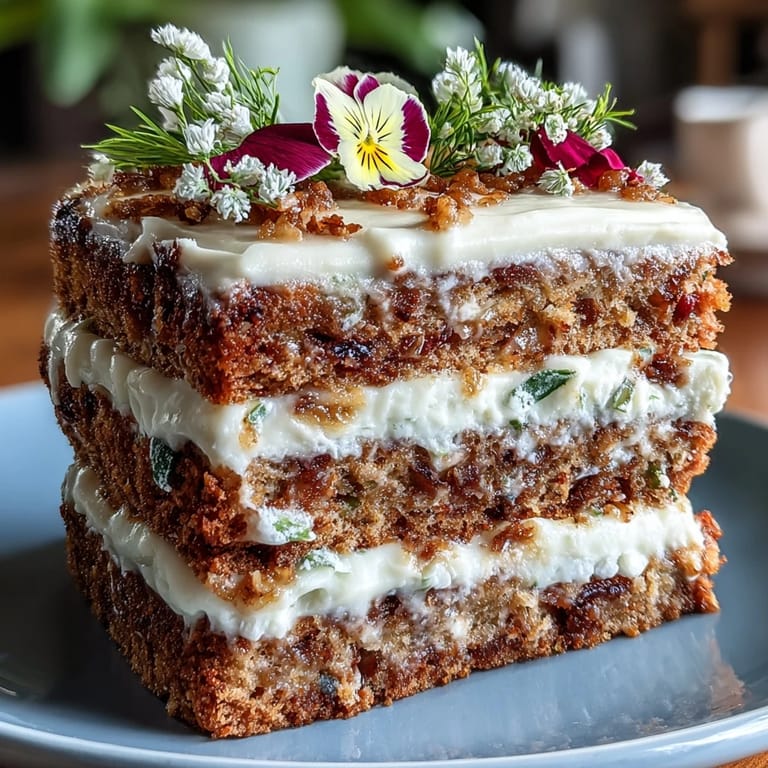
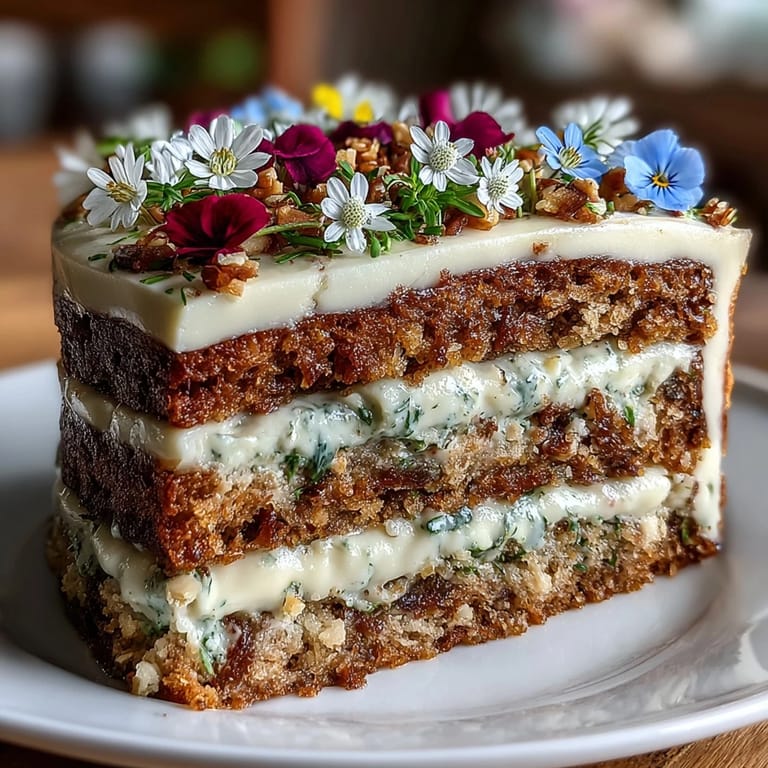
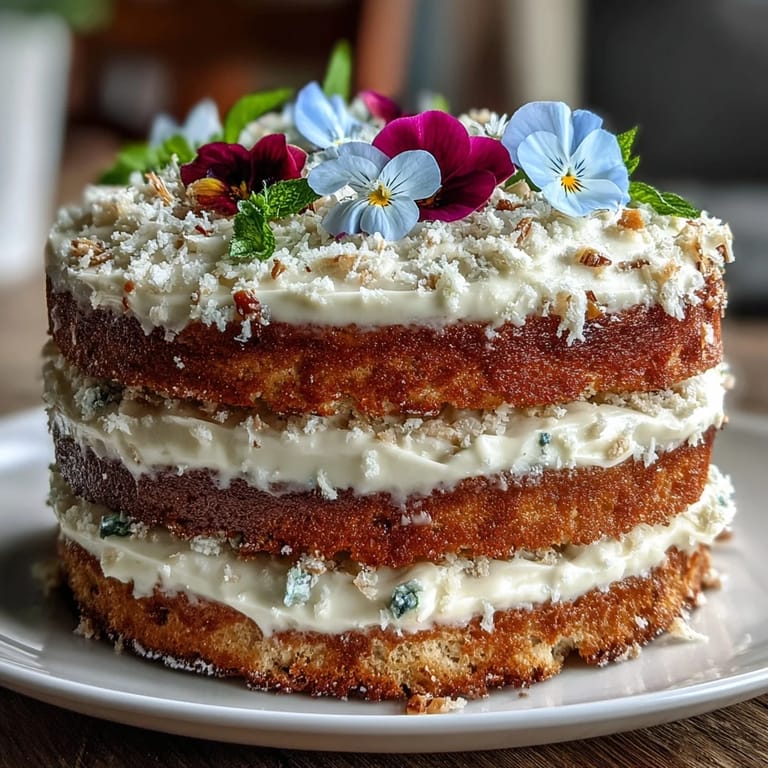
 My sister brought home a box of crystallized violets from a farmers market one spring morning, and I became absolutely obsessed with finding the perfect cake to showcase them. After some kitchen tinkering, this naked cake emerged—three delicate layers of buttery lemon sponge held together with bright homemade lemon curd and clouds of whipped cream. It's the kind of dessert that looks like you spent all day fussing, but the truth is far simpler and more forgiving than it appears.
I made this cake for my neighbor's garden party last May, and watching people's faces light up when they saw the edible flowers on top felt like a small victory. One guest asked for the recipe three times, and another just stood there quietly eating a second slice while staring at the remaining cake as if it might disappear. Those are the moments that remind me why baking matters.
Ingredients
- All-purpose flour: The foundation here is a tender crumb, so don't sift unless your flour came compacted in the bag—just whisk it to aerate it slightly.
- Baking powder and baking soda: This combination gives you rise and a delicate structure that won't become dense.
- Unsalted butter: Room temperature is non-negotiable; cold butter won't cream properly and you'll lose that light, airy texture.
- Granulated sugar: The key to creaming is patience—three full minutes seems long, but it's worth it.
- Eggs: Room temperature eggs emulsify better and create a smoother batter that holds air.
- Buttermilk: The acidity here reacts with the baking soda to give you that tender crumb; don't skip it for regular milk.
- Lemon zest: One lemon for the cake, two for the curd—fresh zest makes all the difference in brightness.
- Freshly squeezed lemon juice: Bottled juice tastes different and will make your curd taste flat; squeeze it yourself right before you start.
- Egg yolks: Four of them go into the curd, creating that silky, custard-like richness.
- Heavy cream: Cold cream whips better and holds its shape longer, especially important before serving.
- Edible flowers: Buy from reputable sources or grow your own—farmer's markets are your safest bet for pesticide-free varieties.
Tired of Takeout? 🥡
Get 10 meals you can make faster than delivery arrives. Seriously.
One email. No spam. Unsubscribe anytime.
Instructions
- Prepare your pans:
- Preheat the oven to 350°F and line three 8-inch round pans with parchment circles. I like to butter the pans first so the parchment sticks in place.
- Mix the dry goods:
- Whisk flour, baking powder, baking soda, and salt together in a bowl. This ensures everything is evenly distributed and you won't hit pockets of baking soda in the finished cake.
- Cream the butter and sugar:
- Beat softened butter and sugar for about three minutes until it looks light, fluffy, and pale—this is the air that makes the cake tender. Stop and scrape down the bowl halfway through.
- Add eggs one at a time:
- Add each egg individually and beat well after each addition. This takes a few extra minutes but helps everything emulsify smoothly.
- Fold in the flavorings:
- Mix in vanilla extract and lemon zest until just combined. You'll see little green flecks throughout, which is exactly what you want.
- Alternate wet and dry:
- Add the dry mixture in three parts, alternating with buttermilk—dry, wet, dry, wet, dry. Stir just until combined; overmixing develops gluten and makes the cake tough.
- Divide and bake:
- Divide batter evenly among the three pans using a kitchen scale if you have one (it ensures even layers). Bake for 25–30 minutes until a toothpick comes out clean and the tops spring back when gently pressed.
- Cool properly:
- Let cakes cool in the pans for 10 minutes, then turn them out onto wire racks. Trying to remove them too early results in breaking, so patience here saves heartbreak.
- Make the lemon curd:
- Set a heatproof bowl over a saucepan of simmering water and whisk together lemon juice, zest, sugar, and egg yolks. Whisk constantly for 8–10 minutes until it thickens enough to coat the back of a spoon—it should be silky, not scrambled.
- Finish the curd:
- Remove from heat and whisk in butter cubes until smooth and glossy. This cooling step is crucial; a warm curd will melt your cake layers, so let it cool completely in the fridge.
- Whip the cream:
- Beat cold heavy cream with powdered sugar and vanilla until stiff peaks form. Don't overbeat or you'll have sweet butter; stop the moment the peaks stand up on their own.
- Assemble with care:
- Place the first cake layer on your serving platter, spread half the lemon curd on top, then a layer of whipped cream. Repeat with the second layer, then top with the third cake and a generous layer of cream.
- Decorate at the last moment:
- Scatter edible flowers and lemon zest curls on top just before serving so they stay fresh and bright. If you do this too early, flowers can wilt or release moisture onto the cake.
 Pin It
 The first time I made this for a friend dealing with something heavy, she told me later that taking that first bite felt like a small kindness. That's when I realized this cake isn't really about the lemon or the flowers—it's about showing up with something beautiful and nourishing.
Why This Cake Works Year-Round
Spring flowers are lovely, but this cake adapts beautifully to other seasons and occasions. In summer, add a handful of fresh berries between the layers. In winter, swap the edible flowers for candied citrus peel or a light dusting of powdered sugar. The lemon curd stays the same—bright, tart, and always welcome—which is why this base works so well for experimentation.
Naked Cake Styling That Actually Works
The beauty of a naked cake is that you don't need perfect frosting skills; a few crumbs showing are part of the charm. If a layer shifts slightly during assembly, just use the whipped cream to shore it up. The flowers and zest curls are your helpers here—they distract the eye from anything that's not perfectly straight.
Storage and Make-Ahead Tips
You can bake the cake layers a full day ahead and store them wrapped in plastic wrap at room temperature. The lemon curd also keeps beautifully in the fridge for up to five days, which means you can assemble this cake the morning of serving without stress. The whipped cream is the only thing that must be made fresh, though you can prepare it up to two hours before serving if you keep it refrigerated.
- Never frost this cake more than four hours before serving or the layers will absorb moisture and become soggy.
- If you need to transport it, assemble it in a shallow cake box and let guests admire it before slicing.
- Leftover cake keeps covered in the fridge for two days, though the flowers are best eaten fresh.
 Pin It
 This cake has become my answer to nearly every spring celebration, and I hope it becomes yours too. There's something about serving something that looks this beautiful and tastes this bright that makes any gathering feel a little more special.
Recipe FAQs
- → How do I keep the layers moist?
Use buttermilk in the batter and avoid overbaking to retain moisture in the sponge layers.
- → Can I prepare lemon curd in advance?
Yes, lemon curd can be made ahead and chilled; ensure it’s completely cooled before assembling.
- → What edible flowers work best for decoration?
Pansies, violets, marigolds, and nasturtiums add color and are safe for consumption.
- → How should the whipped cream be stored before assembly?
Keep whipped cream refrigerated until just before assembling to maintain stiffness and freshness.
- → Any tips for layering the cake smoothly?
Use an offset spatula to evenly spread lemon curd and whipped cream between layers for a clean look.