 Pin It
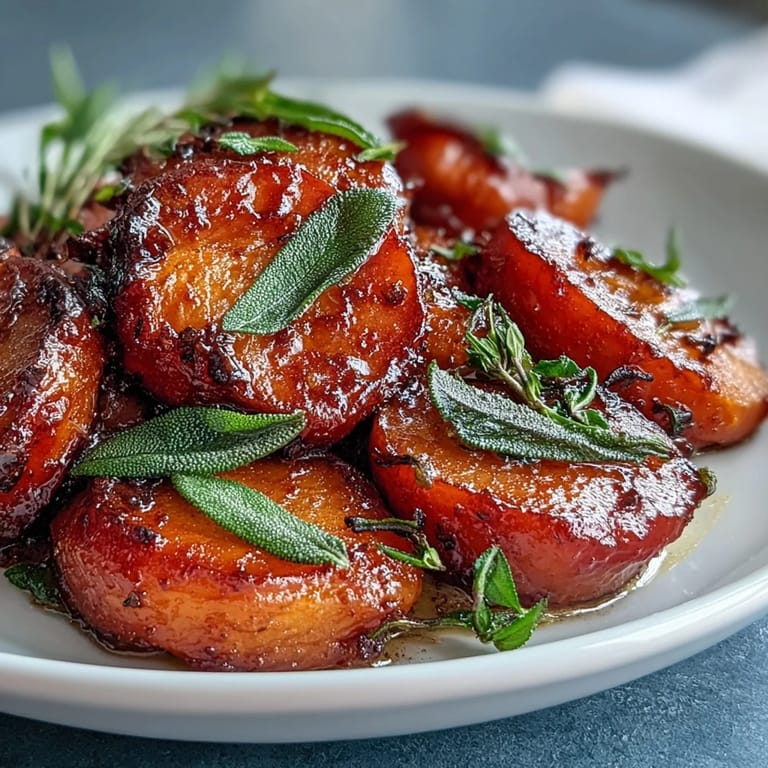
 There's a moment every November when my kitchen fills with the smell of butter turning golden, and I know the holidays have truly arrived. My aunt once made candied yams the traditional way—heavy cream, marshmallows, the works—and while it was good, I found myself craving something with more depth. That's when I discovered brown butter and sage could transform this dish entirely, turning what felt like a relic into something that actually stops people mid-conversation at the table.
I made this for a smaller Thanksgiving once when my extended family couldn't gather, just cooking for four people instead of fourteen. My partner stood by the stove as the butter foamed and browned, genuinely curious about why I kept swirling it instead of just letting it sit. When that sage hit the pan and released its aroma, they finally understood—it's not just a side dish, it's the bridge between autumn spice and buttery comfort.
Ingredients
- Yams (sweet potatoes), 3 pounds: Choose firm ones without soft spots, and don't peel them until you're ready to work—they oxidize quickly and turn brown, which doesn't affect taste but looks less appealing.
- Unsalted butter, 8 tablespoons: This is where you can't skip quality; unsalted butter lets you control the salt and browns more evenly than salted varieties.
- Fresh sage leaves, 10: Fresh is non-negotiable here—dried sage tastes dusty and metallic by comparison, and you need just enough to perfume without overwhelming.
- Light brown sugar, 1/2 cup packed: Pack it down when measuring so you get the full sweetness and molasses depth that light brown sugar provides.
- Pure maple syrup, 1/4 cup: Real maple syrup matters because the fake stuff leaves a chemical finish, and this isn't a dish where shortcuts won't show.
- Orange juice, 1/4 cup freshly squeezed: Fresh juice adds brightness that cuts through the richness; bottled juice tastes thin and slightly bitter by comparison.
- Ground cinnamon, 1/2 teaspoon: This amount warms without dominating—go easy because cinnamon can quickly take over a dish.
- Ground nutmeg, 1/4 teaspoon: A small amount adds mystery and depth; nutmeg is pungent, so less really is more.
- Kosher salt, 1/4 teaspoon: Salt balances sweetness and makes every flavor pop more clearly.
- Vanilla extract, 1 teaspoon: Pure vanilla adds subtle floral sweetness that rounds out the spices perfectly.
Tired of Takeout? 🥡
Get 10 meals you can make faster than delivery arrives. Seriously.
One email. No spam. Unsubscribe anytime.
Instructions
- Heat your oven and prepare the dish:
- Set the oven to 375°F and lightly grease your 9x13-inch baking dish—just a thin coating so the yams don't stick but you're not adding extra fat.
- Layer the yams:
- Arrange your yam rounds in a single layer, overlapping slightly if needed. They should fit snugly but not be piled on top of each other, so heat reaches every piece evenly.
- Brown the butter carefully:
- Melt butter in a medium saucepan over medium heat, then keep swirling it—don't walk away. Watch as it froths, then foams, then turns a deep golden color with a nutty, almost toasted aroma (about 3 to 4 minutes total). The moment it smells incredible and looks amber, it's ready.
- Add the sage and let it bloom:
- Add your chopped sage immediately and cook for just 30 seconds, letting it become fragrant and slightly crispy at the edges. This infuses the butter with sage's aromatic oils without letting it burn.
- Build the glaze:
- Remove from heat and whisk in brown sugar, maple syrup, orange juice, cinnamon, nutmeg, salt, and vanilla extract until smooth. The mixture should look glossy and smell like autumn in a bowl.
- Coat the yams:
- Pour the warm glaze over the yam rounds, then gently toss everything together so each piece gets coated. You're not trying to break them apart, just ensuring the glaze reaches everywhere.
- Bake covered, then uncovered:
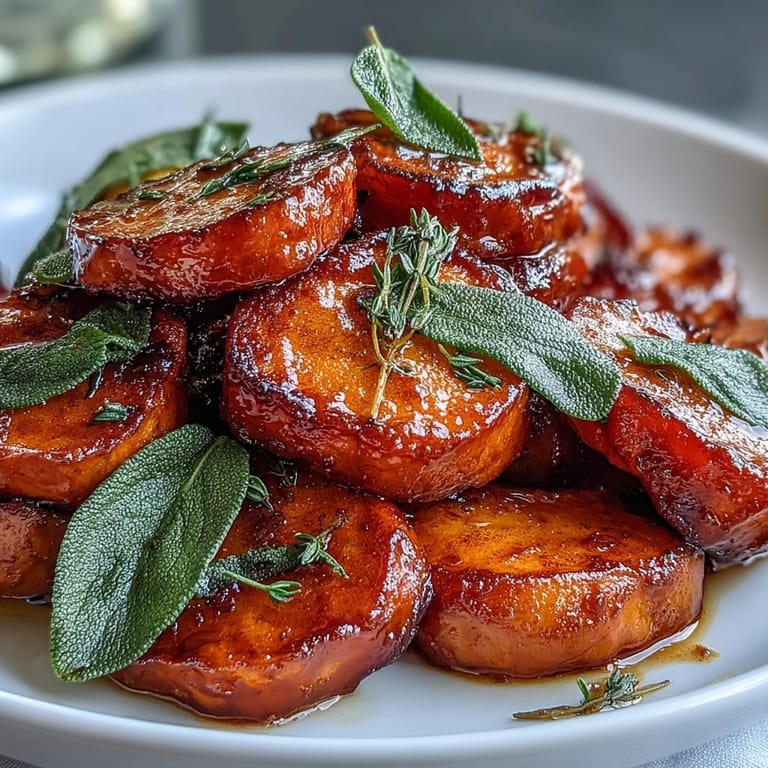
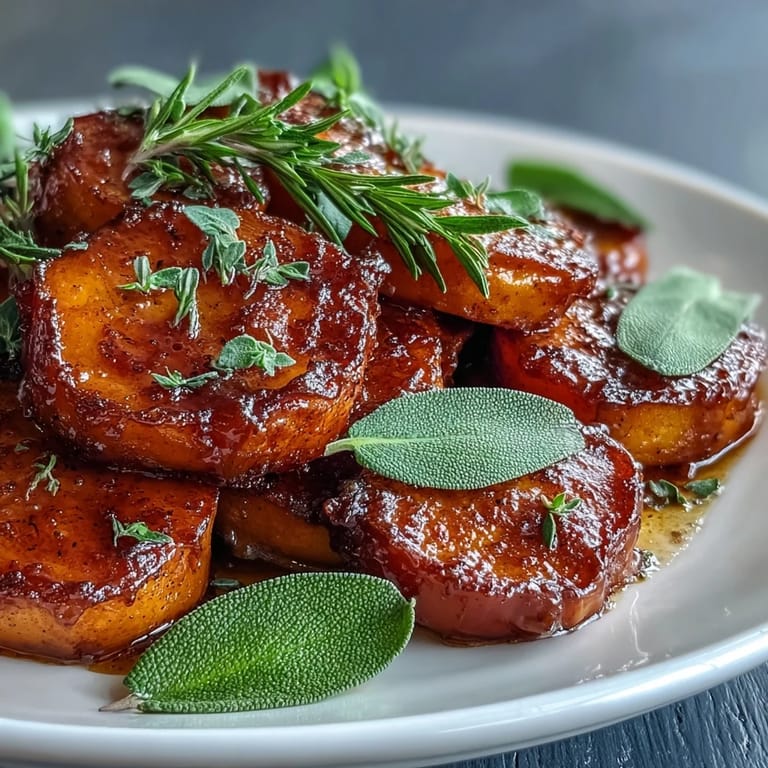
- Cover the dish tightly with foil and bake for 30 minutes until the yams start softening. Remove the foil, baste the yams with the pan juices (this is where the magic happens, the glaze reduces and thickens), then bake uncovered for another 15 minutes until the yams are completely tender and the glaze coats them in a slight syrupy shine.
- Rest and serve:
- Let everything sit for 5 minutes so the glaze sets slightly and the yams firm up just a touch. Garnish with fresh sage if you're feeling fancy, though it's honestly perfect as is.
 Pin It
 The first time I served this version to my family, my usually quiet uncle asked for seconds and told me it tasted like someone finally figured out what yams were supposed to be. That's when I realized this dish had crossed from being something I made because it was expected into something people actually wanted, which changes everything.
The Brown Butter Technique Explained
Brown butter seems intimidating but it's actually just patient observation. As the butter melts, the water content evaporates and the milk solids sink to the bottom, toasting slowly. You're looking for that nutty, toasted aroma—it takes about 3 to 4 minutes total, and the color goes from pale yellow to golden to deep amber. The trick is staying present and swirling occasionally so the solids toast evenly without burning. Once you nail this technique, you'll start using brown butter in everything, from cake batters to Brussels sprouts.
Why Fresh Sage Matters Here
Sage is assertive in a beautiful way—it's savory with peppery edges and just enough mint-like coolness to balance sweetness. When you add fresh sage to hot brown butter, it releases its essential oils and becomes almost floral, adding complexity that makes people taste multiple flavors instead of just sweetness and spice. Dried sage tastes powdery and metallic by comparison, which would muddy what you're building. Fresh sage in this dish is the difference between a good recipe and one people remember.
Variations and Serving Suggestions
This dish is flexible enough to adapt to what you have on hand and what you're serving alongside it. The foundation—brown butter, sage, and spices—stays the same, but you can play with additions and pairings to match your table.
- Toasted pecans or candied walnuts sprinkled on top add crunch and richness, turning it from a side into something closer to a composed dish.
- Honey works beautifully in place of maple syrup if that's what you have, though it'll taste slightly different and a bit lighter in depth.
- Serve this alongside roasted turkey or ham, and the savory sage flavor becomes the perfect bridge between rich meat and bright green vegetables.
 Pin It
 This has become my version of tradition, the dish I make when I want to feel like I'm building something that matters. It's one of those recipes that reminds me why cooking for people you care about is actually worth the effort.
Recipe FAQs
- → How do I make brown butter for this dish?
Gently melt unsalted butter over medium heat, swirling the pan until the butter turns golden brown and releases a nutty aroma, about 3-4 minutes.
- → Can I substitute another sweetener for maple syrup?
Yes, honey can be used as an alternative sweetener, offering a different but complementary flavor profile.
- → What type of yams are best for this preparation?
Peeled sweet potatoes cut into 1-inch rounds work well, providing a tender texture after baking.
- → How is the sage incorporated to enhance flavor?
Fresh chopped sage is added to the brown butter right after browning, allowing its aroma to infuse the sauce before mixing with the glaze ingredients.
- → Any tips for achieving a thickened glaze?
Baking covered with foil first helps steam the yams and thicken the glaze, followed by uncovered baking to concentrate the flavors and develop a sticky finish.