 Pin It
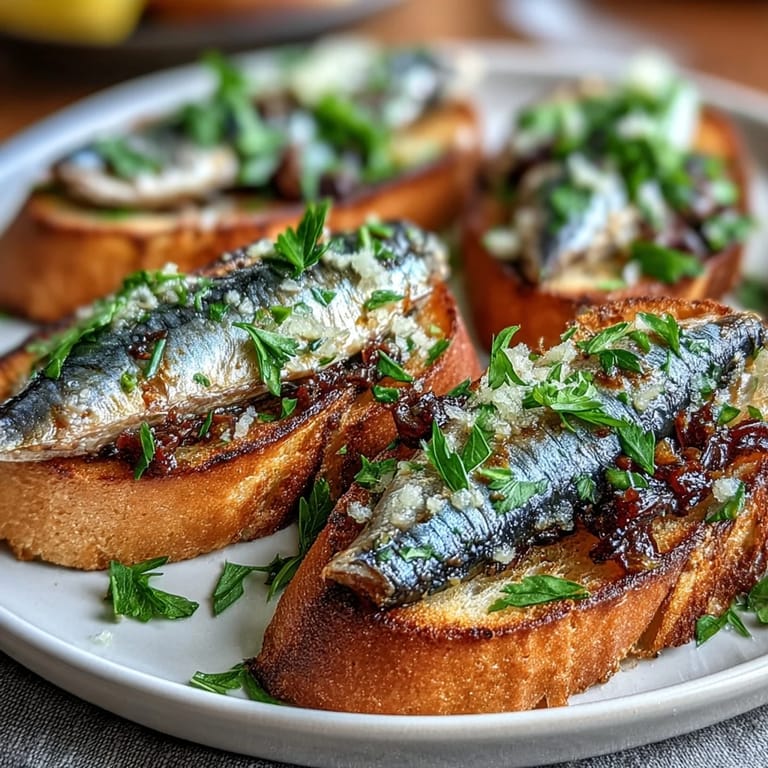
 My neighbor Marco brought these over one evening with a bottle of wine, and I was immediately struck by how something so simple could taste so complete. The sardines were buttery, the bread snapped between my teeth, and that hit of lemon made everything feel alive on my tongue. I spent the next week trying to recreate them, learning that the magic wasn't in complexity but in respecting each ingredient enough to let it shine. Now whenever I need something that feels both effortless and special, this is what I reach for.
I made these for a small gathering last spring, and someone asked for the recipe mid-bite, which honestly meant more to me than any compliment. There's something about standing in your kitchen toasting bread while people are laughing in the next room, knowing you're about to serve them something that tastes like you actually care. That's when I realized this dish does that quietly—it says something without needing to be loud.
Ingredients
- Baguette, sliced into 8 thin rounds: Quality bread matters here because it's one of three main components, so choose something with real crust and a tender crumb rather than a dense loaf.
- Extra-virgin olive oil: Use something you'd actually taste on its own, since it's doing real work on that bread—I learned the hard way that cheap oil makes the whole thing taste hollow.
- High-quality sardines in olive oil, 1 tin (about 100 g), drained: These little fish are the entire show, so buy the kind you'd be happy eating straight from the tin; Spanish or Portuguese varieties tend to have that buttery texture that changes everything.
- Lemon zest: Fresh zest from 1 lemon brings a brightness that bottled zest simply cannot touch, and you'll use the lemon juice from the same fruit.
- Lemon juice, freshly squeezed, 1 tbsp: This is what transforms the sardines from rich to balanced, so squeeze it yourself if you can rather than reaching for the bottle.
- Garlic clove, 1 small, peeled: The garlic is just a whisper here, a gentle rub on warm bread rather than a punch, which is why using less is actually more.
- Fresh flat-leaf parsley, 2 tbsp, finely chopped: The green keeps everything from feeling heavy, and flat-leaf has a cleaner taste than curly parsley.
- Freshly ground black pepper and flaky sea salt: These two deserve their own mention because the flake of sea salt tastes completely different from table salt, and fresh pepper makes sardines sing.
Tired of Takeout? 🥡
Get 10 meals you can make faster than delivery arrives. Seriously.
One email. No spam. Unsubscribe anytime.
Instructions
- Get your oven ready and oil the bread:
- Preheat to 400°F and arrange your baguette slices on a baking sheet, brushing both sides lightly with olive oil. The lightness is key here—you want crispy bread, not greasy bread.
- Toast until golden:
- Bake for 8 to 10 minutes, flipping halfway through so both sides turn golden and crisp. You'll smell when they're almost there, and that's your signal to watch them closely.
- Rub with garlic while warm:
- Take that warm bread straight from the oven and gently rub one side with the cut garlic clove, then discard what's left. Warm bread absorbs the garlic flavor in a way that cold bread simply won't.
- Layer the sardines:
- Lay the drained sardines evenly across each slice, breaking larger fillets if they're too big. Handle them gently so they don't fall apart.
- Finish with brightness:
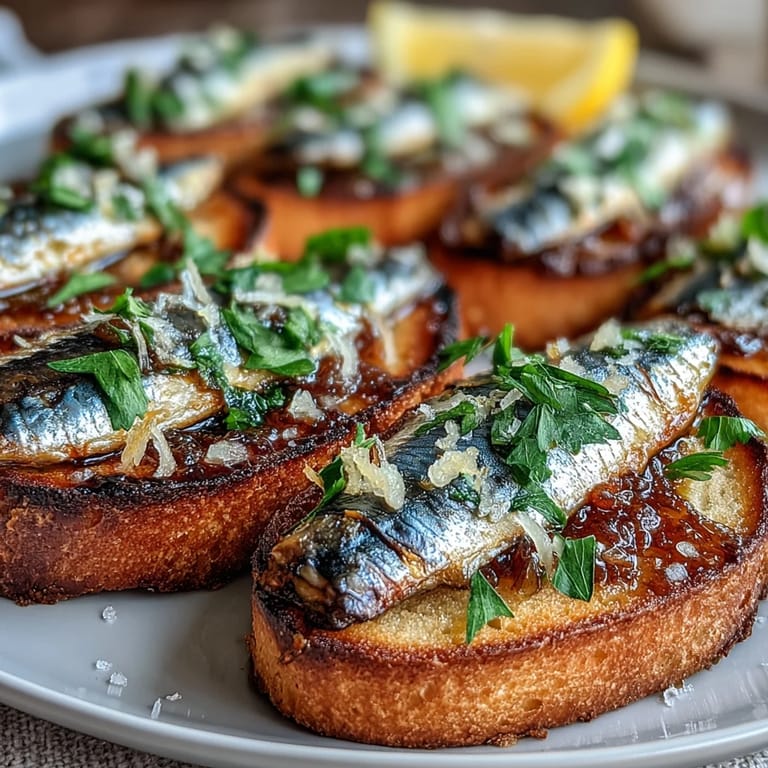
- Drizzle each crostini with a small squeeze of lemon juice, then sprinkle with lemon zest and finely chopped parsley. This is where the dish comes into focus.
- Season and serve:
- Crack some fresh black pepper over the top and finish with just a pinch of flaky sea salt. Garnish with extra parsley leaves and serve with lemon wedges if you'd like.
 Pin It
 I once made these for someone who said they didn't eat fish, and after one bite they asked for seconds, which is when I understood that these crostini aren't really about the sardines at all. They're about contrast—crispy against soft, salty against bright, rich against fresh—and somehow that combination makes something that tastes bigger than its parts. That's a feeling worth chasing in a kitchen.
The Bread Makes It
The foundation of this whole thing lives or dies with how you toast that bread, and I've learned to listen to it rather than just watch the clock. When you brush those slices with oil and slide them in, flip them at the halfway mark while the kitchen smells like toasting wheat—that's when you know you're on the right track. The goal is a crust that snaps when you bite it but still has some give underneath, not a hard rock that fights your teeth.
Why Fresh Sardines Matter
There's a real difference between a tin of sardines that tastes like the ocean and one that tastes like, well, something that was sitting in a warehouse for six months. I used to buy whatever was cheapest, thinking they were all the same, until I spent a little more on a Spanish brand and realized what I'd been missing. Now I check the label for tin date, smell the tin when I open it, and actually taste them before I commit to serving them to people. It's a small thing, but it's the kind of small thing that changes how everyone feels about the whole plate.
Pairing and Timing
These crostini live best in the moment they're finished—you want that bread still warm and crispy, not soggy from sitting around sweating under the sardines. If you're making them for a group, toast the bread in advance and keep it in a sealed container, then assemble everything right before people arrive. Pair them with something crisp and clean like Verdicchio or Pinot Grigio, the kind of wine that tastes like it came from the same coastline as the fish.
- Make the bread ahead and store it in an airtight container so you can assemble crostini at the last minute.
- Don't be shy with the lemon zest—it's the surprise that makes people ask what's in these.
- If your guests include sardine skeptics, just let them try one before they say no; most people come around after the first bite.
 Pin It
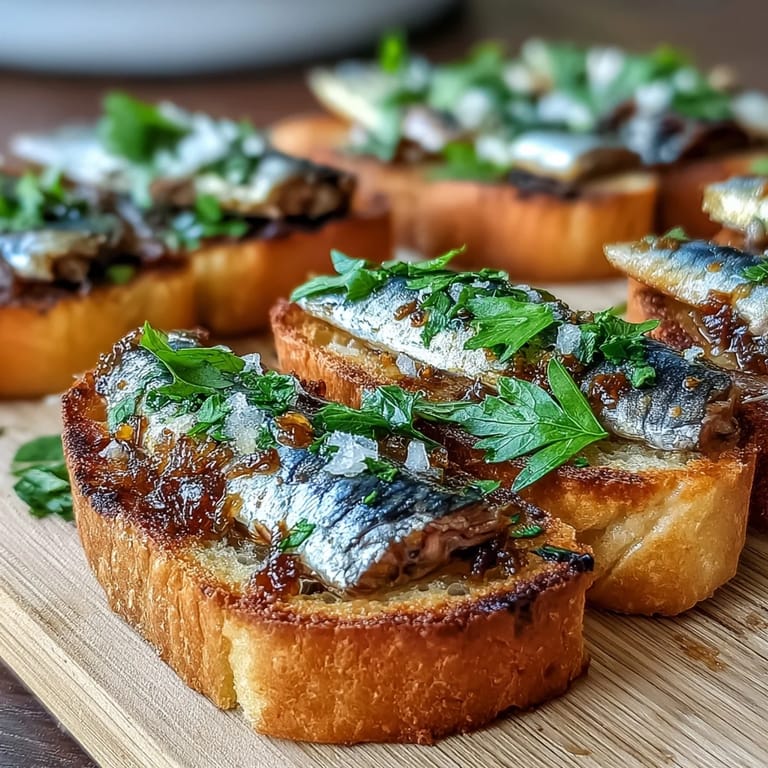
 These crostini have become my go-to when I want to feel like I've done something thoughtful without actually doing much at all. There's something genuinely kind about putting good food on a plate and sharing it with people you like.
Recipe FAQs
- → What type of bread is best for crostini?
A baguette sliced thin works well, offering a crisp texture when toasted that holds toppings without becoming soggy.
- → How can I ensure the crostini are evenly toasted?
Arrange bread slices on a baking sheet and toast at 400°F, flipping halfway to achieve golden, crisp results on both sides.
- → Can other fish be used in place of sardines?
Yes, smoked mackerel or anchovies offer alternative flavors while maintaining a similar texture and richness.
- → How does lemon enhance the flavor in this dish?
Lemon juice and zest add bright acidity and fresh citrus notes that complement the richness of the sardines.
- → What is the purpose of rubbing garlic on the bread?
Rubbing warm bread with garlic imparts a subtle aromatic layer without overpowering the other ingredients.
- → What garnishes work well with these crostini?
Fresh parsley leaves and extra lemon wedges provide additional freshness and vibrant color.