 Pin It
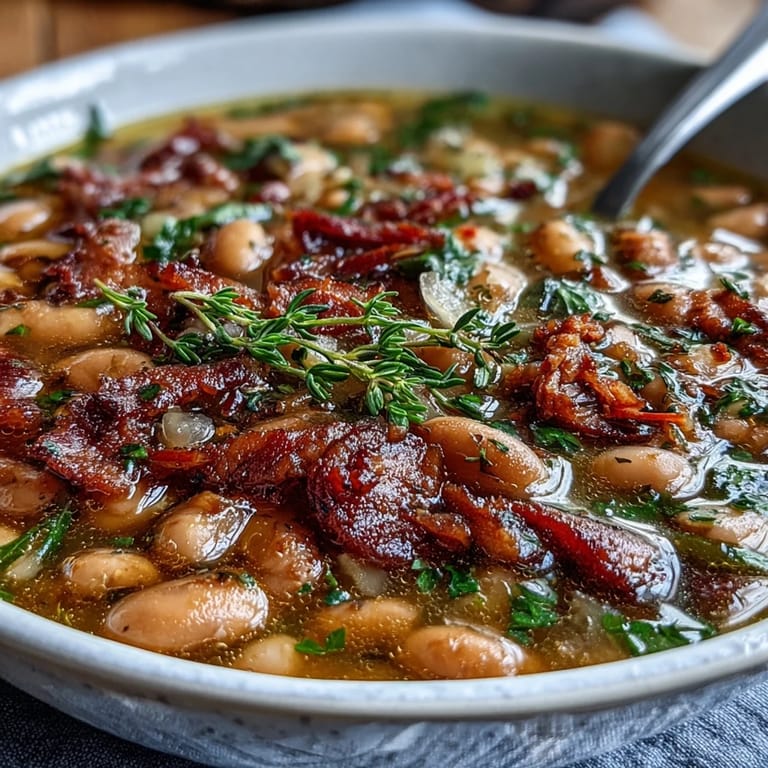
 My grandmother used to make this soup on the first cold snap of autumn, when the kitchen would fog up with steam and the whole house smelled like woodsmoke and thyme. She'd start it in the morning, let it bubble away while she gardened, and by dinner time the navy beans had absorbed every bit of that smoky ham flavor into their soft centers. I didn't appreciate it then—I was too impatient for slow cooking—but years later, standing in my own kitchen on a chilly evening, I realized I was making her exact soup without even meaning to.
I made this for my neighbor during a rough week when she was recovering from surgery, and watching her eat a full bowl—asking for seconds with actual enthusiasm—reminded me why I love cooking comfort food. There's something powerful about a soup that fills you up and makes you feel cared for at the same time, without any pretense or fanciness.
Ingredients
- Navy beans (1 pound, dried): These little beans soak up flavor like nobody's business; soaking them overnight makes cooking faster, but even a quick soak works in a pinch.
- Smoked ham hock or diced cooked ham (1 pound): The ham hock is worth hunting down because it releases a deeper, more complex flavor into the broth than pre-cooked ham ever could.
- Yellow onion, carrots, celery (1 large onion, 2 medium carrots, 2 stalks): These form the aromatic base that carries all the other flavors—don't skip them or rush the sautéing step.
- Garlic (3 cloves, minced): Fresh garlic makes a difference; jarred garlic will leave the soup tasting a bit flat and one-dimensional.
- Chicken broth (8 cups): Low-sodium broth lets you control the salt level yourself, and honestly, the soup tastes more alive when you season it to your own taste.
- Fresh thyme (2 sprigs) or dried (1 teaspoon): Fresh thyme brings a brightness that dried can't quite match, but dried works beautifully if that's what you have on hand.
- Bay leaves (2) and black pepper (1 teaspoon): Bay leaves are quiet but essential—they tie everything together—and freshly ground pepper tastes so much better than pre-ground.
- Fresh parsley and crusty bread (optional): A sprinkle of parsley at the end adds a pop of color and freshness that cuts through the richness.
Tired of Takeout? 🥡
Get 10 meals you can make faster than delivery arrives. Seriously.
One email. No spam. Unsubscribe anytime.
Instructions
- Soak your beans if time allows:
- Overnight soaking is ideal, but if you're running behind, cover dried beans with water, bring to a boil for 5 minutes, then let them sit off heat for an hour. Drain and rinse either way—this step actually does matter because it helps the beans cook more evenly and reduces any digestive upset.
- Build your flavor base:
- Heat a splash of oil in your Dutch oven over medium heat and sauté the diced onion, carrots, and celery until they're softened and the onion turns translucent—this takes about 5 minutes and fills your kitchen with the most inviting smell. Once they're soft, add the minced garlic and cook for just another minute until it becomes fragrant.
- Combine everything and bring to a boil:
- Add your soaked beans, ham hock, chicken broth, fresh thyme sprigs, bay leaves, and black pepper to the pot and stir everything together. Bring the whole thing to a boil, then immediately turn the heat down to low, cover with a lid, and let it simmer gently for about an hour and a half until the beans are completely tender.
- Finish and season:
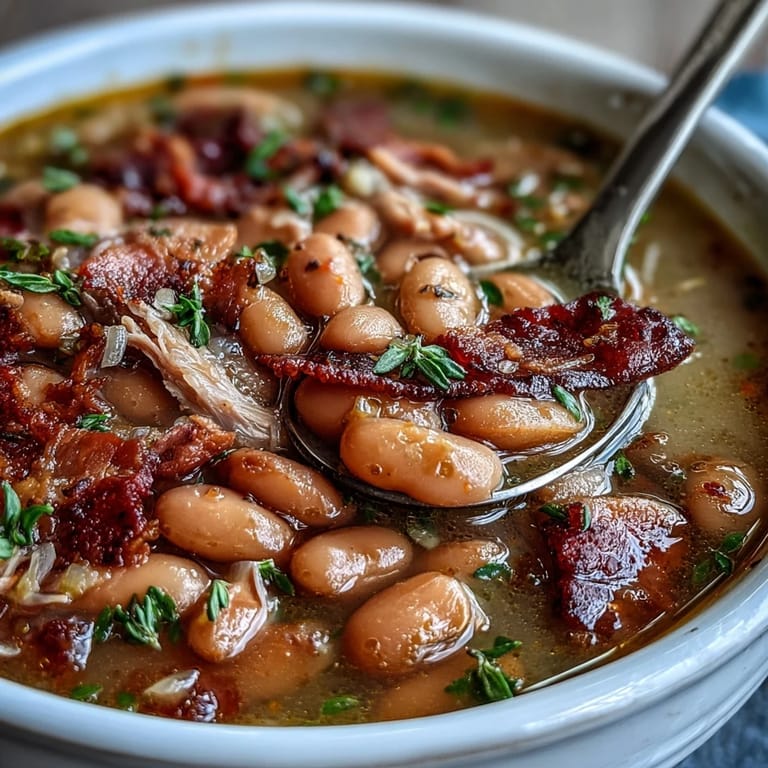
- Remove the ham hock from the pot, pull off any meat clinging to the bone, shred it with two forks, and stir it back into the soup. Discard the thyme sprigs and bay leaves, then taste the soup and adjust the salt and pepper to your preference—this is important because you want it seasoned to your liking, not the recipe's.
 Pin It
 There was an afternoon when my daughter came home from school in a terrible mood, and I ladled her a bowl of this soup still steaming from the pot. She sat at the kitchen table, blew on each spoonful, and by the time she finished, her shoulders had relaxed and she was telling me about her day like the frustration had simply dissolved.
The Truth About Navy Beans
Navy beans are unassuming little things—pale, modest, easy to overlook—but they have a quiet magic. They hold their shape through long cooking, they absorb broth like they're meant for it, and they turn creamy without ever falling apart into mush. Once you work with them a few times, you realize they're not just a budget ingredient; they're actually the right choice for this particular soup.
Making It Your Own
This soup welcomes variation without complaint. Some people swear by adding a splash of apple cider vinegar at the end for brightness, others throw in diced potatoes halfway through cooking for more substance, and I've had friends add smoked paprika because they wanted a bit more depth. The base is forgiving enough to handle these kinds of experiments, which is partly why it's such a reliable recipe to come back to year after year.
Storage, Freezing, and Serving
This soup actually improves if you let it sit overnight in the refrigerator—the flavors deepen and intensify, making day-old soup even better than the fresh batch. It freezes beautifully for up to three months, which means you can make a double batch and have comfort food waiting for those nights when you don't feel like cooking.
- Reheat gently on the stovetop over medium heat, stirring occasionally, and add a splash of broth if it's thickened too much while stored.
- Serve with thick slices of crusty bread for soaking up every last drop, or crumble cornbread into it if you want something more substantial.
- A squeeze of fresh lemon juice right before eating adds brightness that makes people ask what you did differently.
 Pin It
 This soup is the kind of thing that costs almost nothing to make but tastes like you spent hours on it, which honestly feels like winning at something. Serve it to people who need feeding, and watch how the simple warmth of it settles them down.
Recipe FAQs
- → Can I use quick-soak beans?
Yes, you can quick-soak the navy beans by boiling for 5 minutes and letting them sit for 1 hour before cooking.
- → What are good substitutes for smoked ham?
Smoked turkey leg or sausage can replace ham to maintain a smoky, savory flavor.
- → How do I make the soup creamier?
Mash some of the cooked beans in the pot to create a thicker, creamier texture.
- → Can I prepare the soup ahead of time?
Yes, the soup freezes well for up to 3 months, making it convenient for future meals.
- → What herbs enhance the flavor?
Fresh thyme and bay leaves provide aromatic depth and complement the ham and beans beautifully.