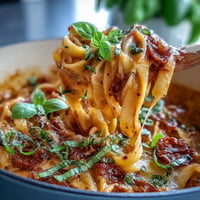
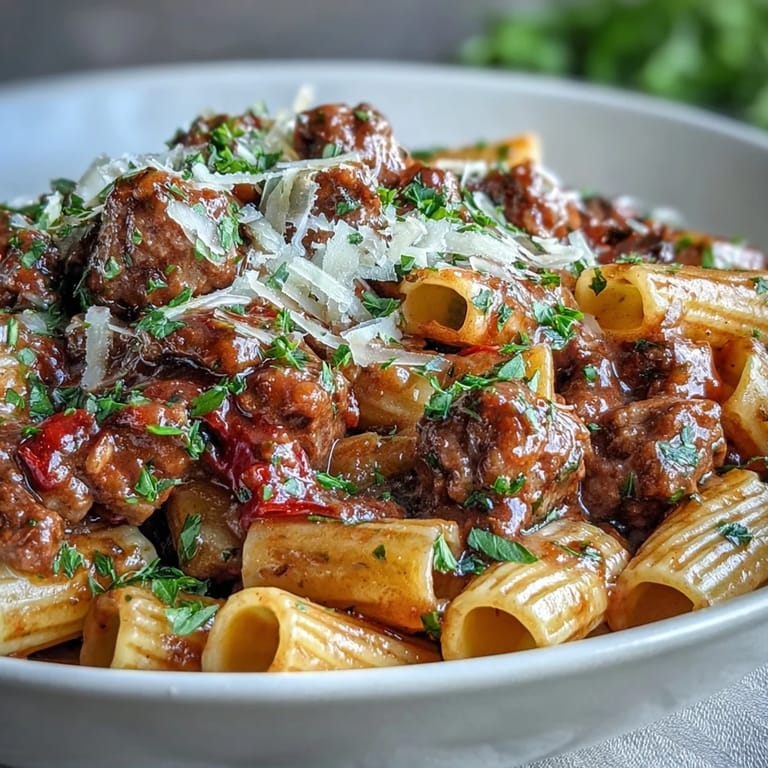
 Pin It
 There's something about a weeknight when everything feels rushed—work ran late, the kids are hungry, and you've got maybe thirty minutes to pull dinner together. That's when I discovered the magic of throwing everything into one pot and letting it do the heavy lifting. This creamy red wine sausage pasta emerged from pure necessity, but it stuck around because it tasted like I'd been cooking for hours when really, I'd barely lifted a finger. The wine adds this sophisticated depth that makes it feel fancy, even though your kitchen is probably still a mess from the day.
I made this for my sister on a random Tuesday when she was going through a rough patch, and she sat at my kitchen counter watching the cream swirl into the deep red sauce like it was therapy she didn't know she needed. She kept saying it tasted like comfort, and honestly, that's when I realized this dish had become something more than just dinner—it was proof that you can make something people remember with ingredients that don't even sound like they belong together. The soy sauce was the secret she asked about, and I loved being able to share that little trick.
Ingredients
- Italian sausage (300 g / 10 oz): The backbone of everything—choose spicy if you like heat, mild if you're cooking for someone cautious, and don't skip removing the casings since they'll just get chewy.
- Yellow onion (1 medium): Finely chop it because you want it to almost disappear into the sauce, becoming sweetness rather than chunks.
- Garlic (3 cloves): Minced small so it blooms fast and distributes evenly throughout the entire pot.
- Red bell pepper (1): Adds sweetness and texture; dice it consistently so it cooks at the same rate as everything else.
- Canned crushed tomatoes (400 g / 14 oz): Don't use whole tomatoes here—crushed ones already break down, saving you time and texture issues.
- Penne or rigatoni (300 g / 10 oz): Use dry pasta; it absorbs the sauce beautifully while cooking directly in the pot.
- Dry red wine (120 ml / ½ cup): Pick something you'd actually drink because you'll taste it—cheap wine tastes cheap in the final dish.
- Low-sodium chicken broth (750 ml / 3 cups): Low-sodium lets you control the salt instead of ending up with an undrinkable bowl of brine.
- Soy sauce (2 tbsp): This is the secret weapon that deepens the flavor and adds umami without announcing itself.
- Heavy cream (120 ml / ½ cup): Stir it in at the end to create that silky, restaurant-quality finish.
- Dried oregano (1 tsp): Don't use fresh herbs here; dried ones stand up to the long simmer.
- Dried basil (½ tsp): Complements oregano without overpowering it.
- Crushed red pepper flakes (¼ tsp, optional): For when you want people to feel the heat a little, not just taste it.
- Salt and black pepper: Season at the very end so you're not guessing.
- Parmesan cheese (30 g / ¼ cup): Freshly grate if you can; the pre-grated stuff has anti-caking agents that make it weirdly textured.
- Fresh basil or parsley: A final whisper of something green that makes it look intentional.
Tired of Takeout? 🥡
Get 10 meals you can make faster than delivery arrives. Seriously.
One email. No spam. Unsubscribe anytime.
Instructions
- Brown the sausage:
- Heat your large pot over medium-high heat and add the sausage, breaking it up as it cooks so you get nice browned bits everywhere—that's where the flavor lives. This takes about 3 to 4 minutes, and you'll know it's ready when there's no pink left and the kitchen smells like dinner is definitely happening.
- Build the aromatics:
- Toss in the onion and bell pepper, stirring occasionally until they soften and the onion turns translucent, roughly 3 minutes. Add the garlic right after and let it cook for just 1 minute so it releases its aroma without turning bitter.
- Deglaze with wine:
- Pour in the red wine and use your spoon to scrape up all those caramelized brown bits stuck to the bottom—they're liquid gold. Let it bubble and reduce for 2 minutes, which mellows the rawness of the wine and concentrates its flavor.
- Add everything else:
- Stir in the tomatoes, soy sauce, oregano, basil, red pepper flakes if you're using them, uncooked pasta, and chicken broth, making sure nothing sticks to the bottom. It'll look loose and soupy, which is exactly right.
- Simmer to tender pasta:
- Bring it to a boil, then drop the heat to a gentle simmer, cover it, and let it cook for 12 to 14 minutes, stirring every few minutes so the pasta doesn't clump. You're looking for al dente pasta that's cooked through and most of the liquid absorbed into those noodles.
- Finish with cream:
- Pour in the heavy cream and stir it through, simmering uncovered for 2 to 3 more minutes until the sauce turns silky and coats every strand. Taste it and add salt and pepper until it tastes like something you'd miss when it's gone.
- Plate and garnish:
- Top with Parmesan and fresh herbs, and serve immediately while everything's still warm and the flavors are singing together.
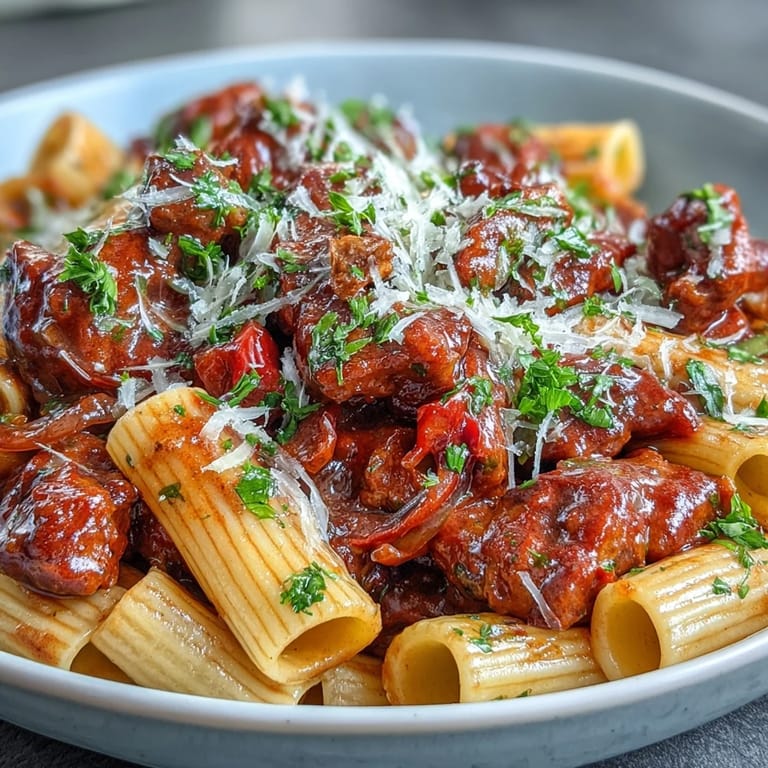 Pin It
 My neighbor came over one evening when this was simmering, and before I could even finish explaining what it was, she was asking if she could take notes. There's something about feeding people something unexpected that turned out amazing—it becomes a story they tell. This dish did that for me, and now whenever someone's stuck in a dinner rut, this is what I suggest.
Why Red Wine Matters Here
Using actual red wine instead of cooking wine or vinegar changes everything in ways that are hard to explain until you taste them. The wine doesn't just add acidity; it contributes body and a slight tannin structure that makes the sauce feel sophisticated without tasting boozy. It's also why choosing something you'd actually drink makes such a difference—cheap wine tastes thin and sharp, while a decent Chianti or Merlot adds this subtle earthiness that nobody can quite name but everyone can feel.
The One-Pot Magic
Cooking the pasta directly in the sauce instead of separately is the moment everything clicked for me. Usually that idea sounds risky—won't the pasta be mushy, won't it burn, won't it be a disaster? But it's actually the opposite; the pasta absorbs all that flavor as it cooks and releases its own starches, which thickens the sauce naturally. The only rule is stirring occasionally so nothing sticks to the bottom, and watching the liquid level so you know when it's done.
Making It Your Own
The bones of this recipe are solid enough that you can play with them and still land somewhere delicious. Turkey or plant-based sausage works just fine if that's what you're reaching for, and spinach or kale stirred in during the last few minutes adds color and nutrition without changing the vibe. Even switching the type of pasta or using half-and-half instead of heavy cream won't break the dish—it'll just taste like a different, equally valid version of itself.
- If the sauce looks too thick, add a splash of broth at the end; if it's too thin, let it simmer a few extra minutes uncovered.
- Taste it before you plate because salt needs are different depending on your broth brand and how much liquid cooked off.
- Leftovers actually taste better the next day once all the flavors have gotten to know each other, so definitely make extra.
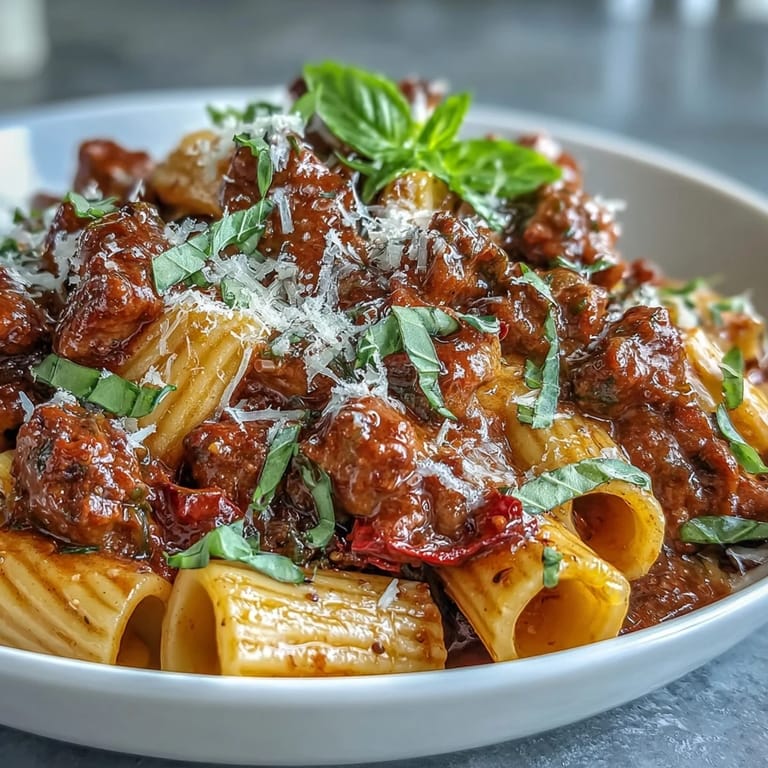 Pin It
 This is the kind of recipe that quietly becomes a regular in your rotation because it asks almost nothing of you and gives back a complete, satisfying meal. Make it once and you'll understand why it deserves a permanent spot in your weeknight lineup.
Recipe FAQs
- → Can I make this pasta ahead of time?
Yes, this dish reheats beautifully. Store in an airtight container in the refrigerator for up to 3 days. Add a splash of broth or cream when reheating to restore the sauce's consistency.
- → What type of red wine works best?
A dry red wine like Chianti, Merlot, or Cabernet Sauvignon works wonderfully. Avoid sweet wines as they'll alter the sauce's flavor profile. Cooking wine is perfectly acceptable if you prefer not to use drinking wine.
- → Can I use different pasta shapes?
Absolutely. While penne and rigatoni hold sauce well, you can use fusilli, ziti, or even shells. Just adjust cooking time slightly as different shapes may cook at different rates.
- → Is it possible to make this lighter?
Yes. Substitute half-and-half or evaporated milk for the heavy cream. You can also use turkey sausage or chicken sausage instead of pork to reduce the fat content while maintaining great flavor.
- → Why add soy sauce to an Italian-style pasta?
Soy sauce acts as a flavor enhancer, adding umami and depth without making the dish taste Asian. It complements the tomatoes and wine, creating a more complex and savory sauce.
- → Can I freeze leftovers?
The pasta can be frozen, though the cream sauce may separate slightly upon reheating. To serve, thaw overnight in the refrigerator and reheat gently, stirring in a bit of cream to bring it back together.