 Pin It
 There was this Saturday afternoon when I had a bunch of rhubarb sitting in the crisper drawer, looking sadder by the hour. I'd bought it impulsively at the farmers market, charmed by the bright pink stalks, with no real plan beyond maybe a crumble. Then I remembered a pork roast I'd defrosted and thought, why not just throw it all on one tray? The smell that filled the kitchen an hour later, all warm spice and citrus with that sharp rhubarb tang, made me wonder why I'd ever kept them separate.
I made this for a small dinner party once, mostly because I was too tired to attempt anything complicated. My friend Sophie, who usually turns her nose up at anything remotely adventurous, went back for seconds and asked for the recipe before dessert even hit the table. She later told me she'd made it three times that month, which is the highest compliment I've ever received from someone who considers black pepper daring.
Ingredients
- Boneless pork shoulder or loin: Shoulder stays juicier and more forgiving if you accidentally overcook it, but loin works beautifully if you prefer something leaner and keep an eye on the time.
- Rhubarb: Look for firm stalks with vibrant color, trim off any leaves completely as they're toxic, and don't worry if it looks like too much because it shrinks down considerably as it roasts.
- Red onions: They sweeten and soften into jammy bits that soak up all the pan juices, adding a mellow depth that yellow onions just don't quite manage.
- Fresh ginger: Grate it finely so it melts into the glaze rather than sitting in sharp little pockets, and if your ginger is old and fibrous, use a spoon to scrape the skin off instead of a peeler.
- Orange zest and juice: The zest brings floral brightness while the juice adds acidity that balances the honey, so use a whole orange and don't skimp on either.
- Honey or maple syrup: This tempers the rhubarb's natural tartness and helps everything caramelize, though I've used maple syrup when my honey jar was mysteriously empty and it worked just as well.
- Ground coriander, fennel, cinnamon, smoked paprika: These warm spices create layers that make the dish feel complex without being heavy, and the smoked paprika adds a subtle richness that ties everything together.
- Fresh parsley or cilantro: A handful of fresh herbs at the end cuts through the richness and makes the whole platter look like you tried harder than you actually did.
Tired of Takeout? 🥡
Get 10 meals you can make faster than delivery arrives. Seriously.
One email. No spam. Unsubscribe anytime.
Instructions
- Get the oven ready:
- Preheat to 200°C (400°F) and line your largest baking tray with parchment paper. This saves cleanup time and keeps the sticky glaze from welding itself to the pan.
- Season the pork:
- Toss the pork slices in a bowl with olive oil, salt, pepper, and all those gorgeous spices until every piece is coated. Arrange them on one side of the tray with a little space between each slice so they brown instead of steam.
- Prepare the rhubarb mixture:
- In another bowl, combine rhubarb, red onion wedges, minced garlic, grated ginger, orange zest, orange juice, and honey, tossing everything until it's glossy and fragrant. Spread this mixture on the other side of the tray, letting some pieces overlap because they'll shrink as they cook.
- Start roasting:
- Slide the tray into the oven and roast for 35 minutes, flipping the pork and stirring the rhubarb mixture at the halfway mark so everything cooks evenly. The kitchen will start smelling incredible around the 20-minute mark.
- Finish with high heat:
- Crank the oven up to 220°C (430°F) and roast for another 10 to 15 minutes until the pork develops golden edges and the rhubarb turns jammy and caramelized. Watch closely during this stage because the line between caramelized and burnt is thinner than you'd think.
- Rest and serve:
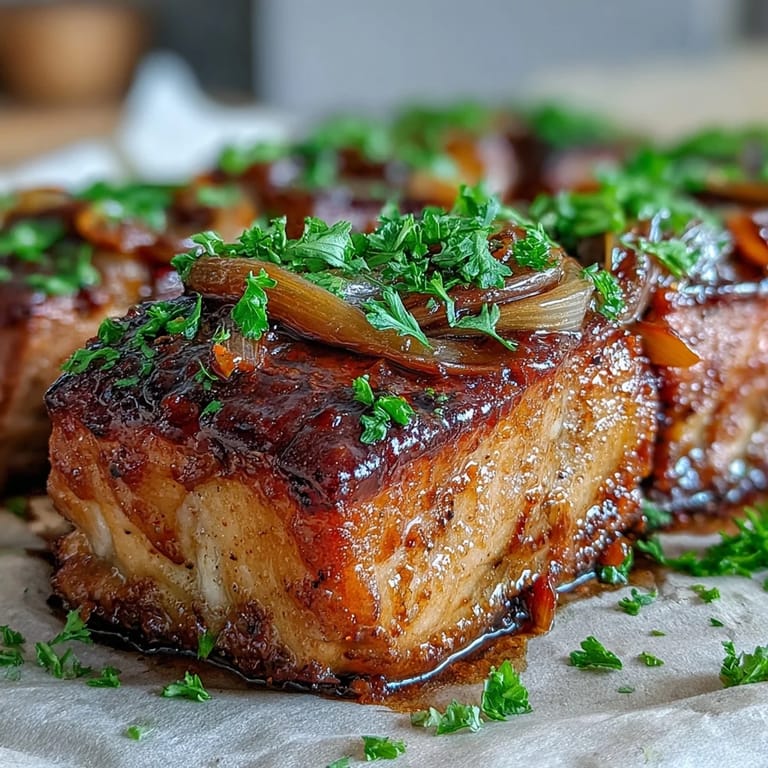
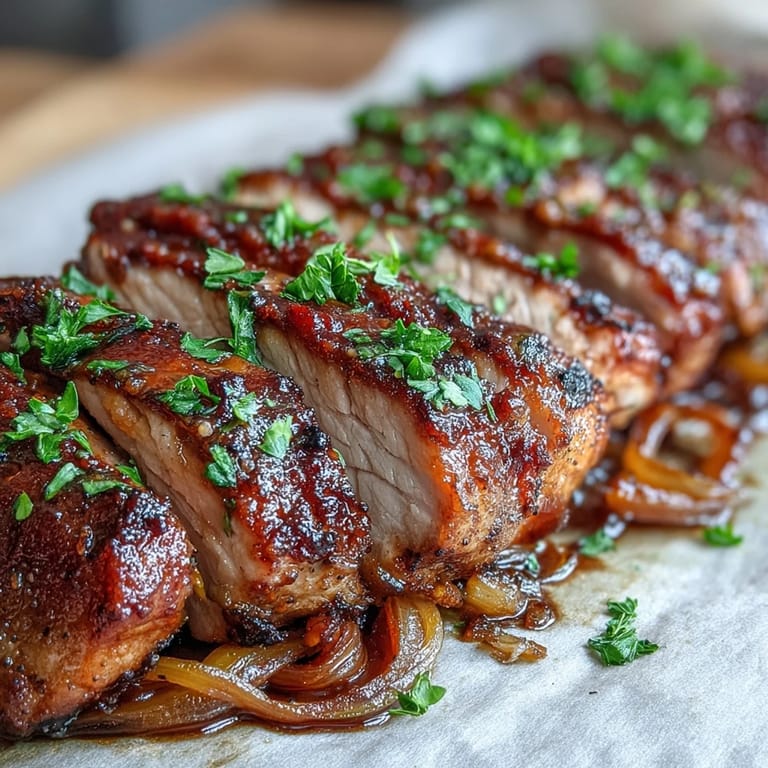
- Let the pork rest for 5 minutes before slicing it against the grain. Pile everything onto a platter, drizzle over any pan juices, and scatter fresh herbs on top like confetti.
 Pin It
 The first time I served this, my partner wandered into the kitchen and said it smelled like something his grandmother used to make, though he couldn't name what. That's when I realized this dish has that rare quality of feeling both completely familiar and entirely new at the same time. We ended up eating it straight from the tray, standing at the counter, because sometimes the best meals don't need a formal table.
What to Serve Alongside
This traybake is rich and saucy enough that it needs something to soak up all those pan juices. I usually roast baby potatoes on a separate tray at the same time, tossed with olive oil and sea salt, so they're ready when the pork comes out. Fluffy couscous works beautifully too, especially if you stir in some chopped mint and a squeeze of lemon, and a simple green salad with a sharp vinaigrette cuts through the sweetness in a way that feels absolutely necessary. On lazier nights, I've served it with good crusty bread and called it dinner, letting everyone mop up the glaze with torn pieces until the platter is clean.
Swaps and Substitutions
If pork isn't your thing or you're cooking for someone who doesn't eat it, bone-in chicken thighs work wonderfully and stay just as juicy, though you might need an extra 10 minutes of cooking time. I've also made this with thick slices of firm tofu for a vegetarian friend, pressing the tofu well first and adding an extra drizzle of olive oil, and while it's a different dish entirely, the spiced rhubarb glaze still does all the heavy lifting. When rhubarb isn't in season, I've used thinly sliced fennel bulb and it brings a completely different but equally lovely anise sweetness that plays beautifully with the spices.
Storage and Reheating
Leftovers keep in an airtight container in the fridge for up to three days, and honestly, they taste even better after a night when all those flavors have had time to settle into each other. Reheat gently in a low oven (around 160°C) covered with foil so the pork doesn't dry out, or warm individual portions in the microwave with a damp paper towel over the top. I've also shredded leftover pork and stirred it back into the rhubarb mixture to make a quick filling for grain bowls or stuffed into warm pita with a dollop of yogurt.
- Let everything cool completely before storing to prevent condensation from making the pork soggy.
- The rhubarb mixture freezes surprisingly well on its own if you want to make a double batch and save half for a weeknight shortcut.
- If reheating from frozen, thaw overnight in the fridge first for the most even results.
 Pin It
 This is the kind of recipe that makes weeknight cooking feel less like a chore and more like something you actually want to do. I hope it finds a regular spot in your rotation, the way it has in mine.
Recipe FAQs
- → Can I use a different cut of pork?
Yes, both pork shoulder and pork loin work well. Shoulder is more marbled and stays juicier, while loin is leaner. You can also substitute with chicken thighs for similar results.
- → What if my rhubarb is very tart?
Adjust the honey to taste. Start with 2 tablespoons and add more if needed. The orange juice and caramelization during roasting also help balance the tartness naturally.
- → Can I prepare this ahead of time?
You can prep the ingredients and season everything up to 4 hours in advance. Keep refrigerated, then bring to room temperature for 15 minutes before roasting for even cooking.
- → What should I serve with this traybake?
This pairs beautifully with roasted potatoes, fluffy couscous, quinoa, or a crisp green salad. The caramelized pan juices also make a wonderful sauce for grains or vegetables.
- → How do I know when the pork is fully cooked?
The pork should reach an internal temperature of 63°C (145°F) and have golden, caramelized edges. Let it rest for 5 minutes before slicing to retain juices.
- → Can I add other vegetables to the tray?
Absolutely. Carrots, parsnips, or sweet potatoes work well. Cut them into similar-sized pieces as the rhubarb so everything cooks evenly in the same timeframe.