 Pin It
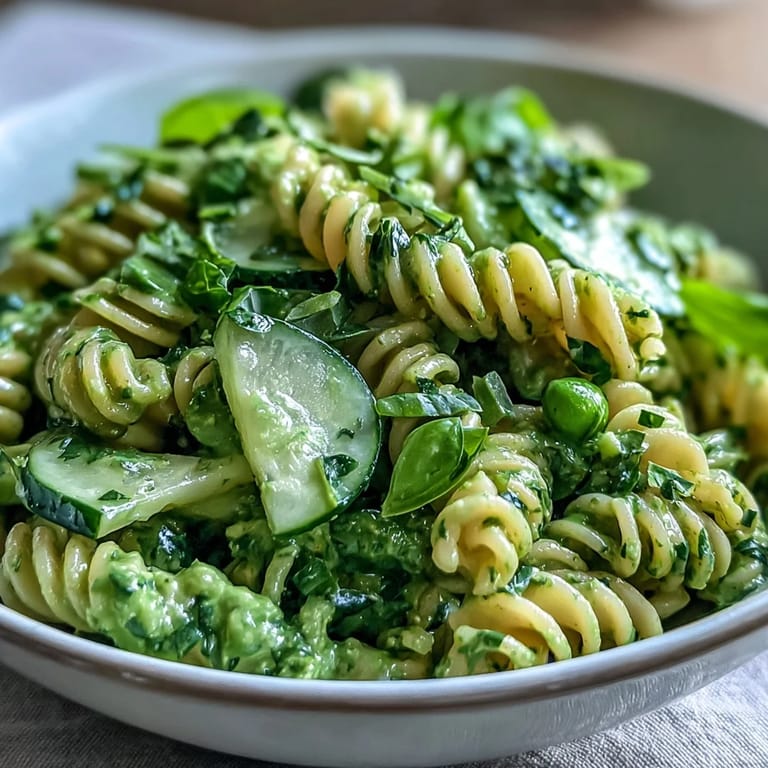
 Last summer, my neighbor showed up to a potluck with this jade-green pasta salad, and I watched people actually go back for seconds—which never happens at these things. She explained it was vegan, and I'll admit I was skeptical until I tasted that impossibly creamy dressing made from simple ingredients I could actually pronounce. The brightness of fresh herbs and snap of peas made it feel less like a side dish and more like something worth planning around. That afternoon, I started growing basil specifically so I could replicate what she'd made, and this recipe became my go-to when I need something that looks fancy but feels effortless.
I made this for my partner's work picnic where everyone was bringing store-bought sides, and watching their coworkers actually ask for the recipe felt like a small victory. They kept asking what made it so creamy, and when I mentioned there was no mayo hiding dairy in it, the surprise on their faces was genuinely satisfying. That moment taught me that good food doesn't need to shout about being vegan—it just needs to taste like you care.
Ingredients
- Short pasta (fusilli, rotini, or shells), 300 g: The shape matters here because it catches the dressing in all those little crevices, making every bite creamy rather than just the first few forkfuls.
- Frozen peas, 1 cup thawed: I used to think frozen was a compromise, but they're picked at peak ripeness and taste brighter than fresh ones sitting in the produce bin.
- Cucumber, 1 small diced: This adds that crucial crunch that keeps the salad from feeling heavy, even after it's been dressed.
- Baby spinach, 1 cup roughly chopped: Raw spinach wilts slightly as it sits with the warm pasta, becoming tender without turning into mush.
- Radishes, 1/2 cup thinly sliced: They're the surprise element that cuts through richness with a peppery bite nobody expects but everyone loves.
- Scallions, 1/3 cup thinly sliced: The white and green parts both matter—use the whole thing for layers of mild onion flavor.
- Vegan mayonnaise, 1/2 cup: This is your creamy base, and the quality matters; I learned this the hard way when a cheaper brand made everything taste flat.
- Plant-based yogurt, 1/4 cup unsweetened: This adds tang and keeps the dressing from being one-note; coconut yogurt gives a subtle sweetness while soy stays neutral.
- Fresh basil, 1/4 cup packed: Don't even think about using dried here—basil is why people will keep asking you to bring this to everything.
- Fresh parsley, 2 tbsp: It grounds the basil and adds a subtle earthiness that feels professional.
- Fresh chives, 2 tbsp: These provide delicate onion notes without overwhelming, and they're the herb that makes people wonder what your secret ingredient is.
- Fresh tarragon, 1 tbsp (or extra parsley): If you can find it, tarragon brings an elegant anise-like flavor; if not, honestly extra parsley won't disappoint you.
- Lemon juice, 2 tbsp: This is what makes the dressing sing—it keeps everything tasting bright and fresh instead of heavy.
- Olive oil, 1 tbsp: A quality oil helps the dressing emulsify and adds richness, so don't skip it.
- Garlic, 1 small clove: One clove is all you need; more and it bullies all the delicate herb flavors you're trying to highlight.
- Salt and black pepper to taste: Season gradually because the dressing will taste different once it coats all that pasta.
- Fresh basil for garnish, 2 tbsp sliced: This final sprinkle is where you show off—it makes everything look restaurant-quality.
- Toasted sunflower seeds, 1 tbsp optional: They add texture and nuttiness without any actual nuts, which I appreciate as much for the flavor as for keeping it nut-free.
Tired of Takeout? 🥡
Get 10 meals you can make faster than delivery arrives. Seriously.
One email. No spam. Unsubscribe anytime.
Instructions
- Get the pasta going:
- Boil a large pot of salted water—it should taste like the sea—and cook your pasta until it's just tender but still has a slight resistance when you bite it. Drain it into a colander, then rinse under cold water while stirring it gently with your fingers so it stops cooking and doesn't stick together.
- Build your emerald dressing:
- While the pasta cools, add the vegan mayo, plant-based yogurt, basil, parsley, chives, tarragon, lemon juice, olive oil, garlic, salt, and pepper to a blender or food processor. Blend until it's completely smooth and that gorgeous green color is uniform throughout—this usually takes about a minute, but don't rush it.
- Prepare your vegetables:
- Dice your cucumber into bite-sized pieces, thinly slice the radishes so they stay crisp, chop your spinach roughly, and slice the scallions on a slight angle so they look intentional. Keep the peas separate since they're already cooked and just need a rinse.
- Bring it all together:
- In a large bowl, combine the cooled pasta with the peas, cucumber, spinach, radishes, and scallions, tossing gently with your hands or two spoons so nothing gets bruised. Pour that green goddess dressing over everything and toss again, making sure every piece of pasta gets coated.
- Taste and adjust:
- Here's where you become the chef: taste a forkful and think about whether it needs more salt for savory depth, more lemon juice for brightness, or maybe a few more torn basil leaves for herb intensity. Trust yourself—this is your dish now.
- Finish and serve:
- Transfer the salad to your serving bowl or platter, scatter that sliced basil on top, and add the toasted sunflower seeds if you're using them for that final textural contrast. You can serve it immediately while everything still has some temperature contrast, or cover it and chill it for an hour or two so flavors deepen.
 Pin It
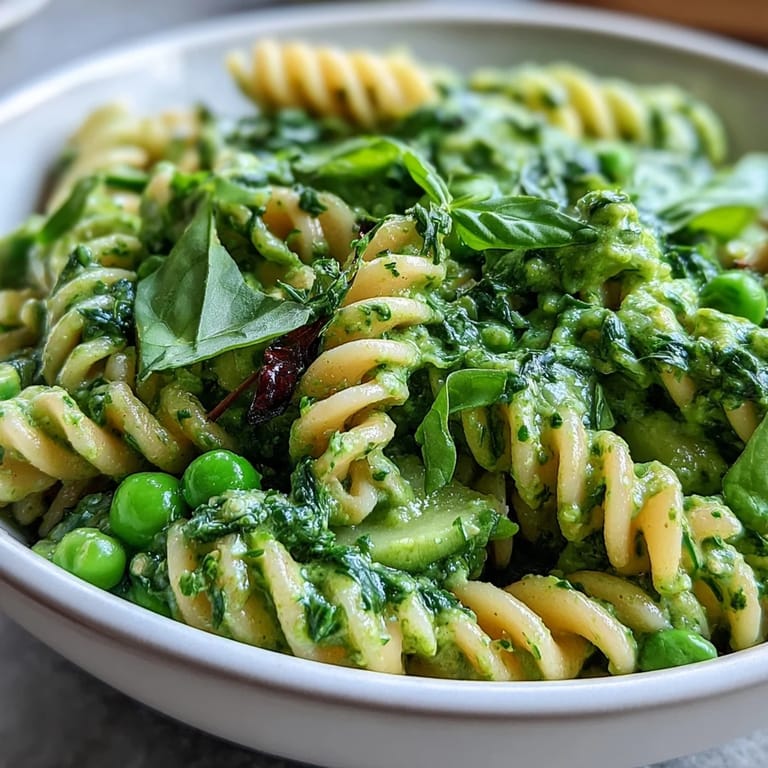
 My friend's kid, who's usually suspicious of anything green, actually asked for thirds of this at dinner and called it "the fancy green pasta." That's the moment I realized this recipe does something special—it doesn't feel like virtue signaling or compromise, it just tastes like summer in a bowl. When food can make a skeptical five-year-old and a room full of adults equally happy, you know you've found something worth repeating.
Why This Works Better Than You'd Expect
The magic here is that creamy dressing bridging the gap between what people expect from vegan food and what they actually want to eat. Vegan mayo plus plant-based yogurt creates a texture that's indulgent without feeling heavy, and the fresh herbs are doing the real work—they're what make you forget you're eating something without dairy. When you blend them together with lemon juice and garlic, you get something that tastes sophisticated without requiring any fancy techniques.
Timing and Temperature Strategy
There's actually a sweet spot with this salad where serving it immediately means you get textural contrast—the warm pasta still has some give, the fresh vegetables stay crisp, and the dressing hasn't completely penetrated everything yet. But here's the secret: make it an hour or two ahead and the flavors become more cohesive and complex, which is why it's perfect for meal prep or making it the morning of an event. I've had people prefer it cold, others prefer it barely chilled, so really the best version is whichever one you're most likely to actually make.
Make It Your Own
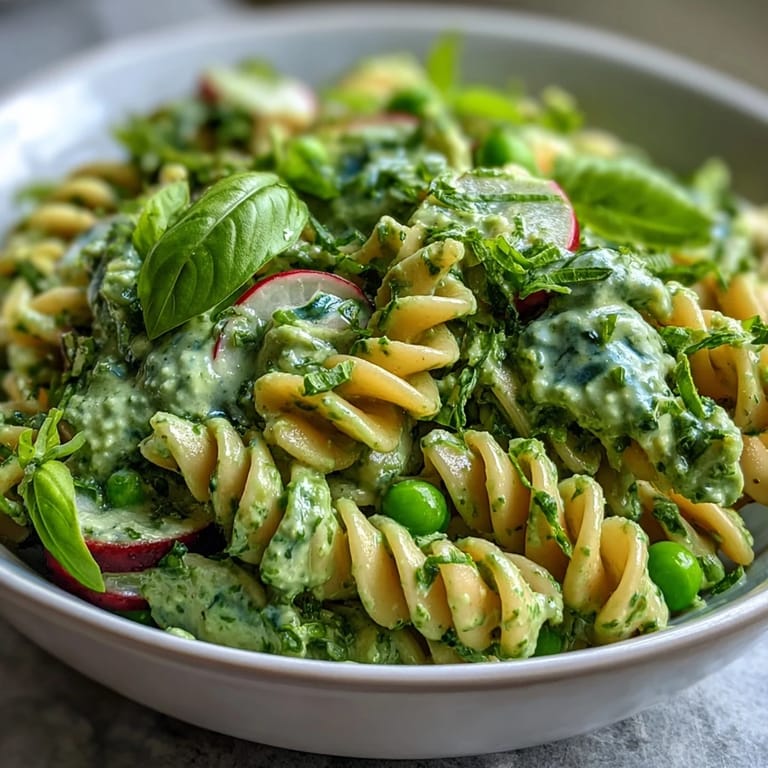
The beauty of this salad is that it's genuinely flexible without falling apart—you can swap vegetables based on what's in your garden or farmers market, adjust herbs based on what you have growing on your windowsill, and even play with the seeds or nuts depending on allergies. I've made it with asparagus in spring, added avocado when they're ripe and affordable, and once threw in some grilled zucchini just because I had it leftover. The core idea of the creamy green goddess dressing holding everything together stays consistent, so you're free to riff.
- Gluten-free pasta works perfectly and tastes just as good—just make sure you rinse it well so it doesn't get gluey.
- Add diced avocado right before serving if you want richness, or grilled asparagus for a spring version that feels elegant.
- Swap sunflower seeds for pumpkin seeds, hemp seeds, or leave them out entirely if you need to keep it nut and seed-free.
 Pin It
 This recipe has become my answer to the question of what to bring when I want to contribute something meaningful without stress. It's proof that vegan food can be indulgent, that potluck dishes don't have to come from a box, and that sometimes the best meals are the ones made with fresh herbs and a little bit of intention.
Recipe FAQs
- → What type of pasta works best?
Short pasta shapes like fusilli, rotini, or shells hold the dressing well and provide a nice texture contrast.
- → Can I make this dish gluten-free?
Yes, simply substitute regular pasta with your preferred gluten-free variety without altering the flavor.
- → How can I store leftovers?
Store in an airtight container in the refrigerator for up to 2 days. Chilling enhances the flavors.
- → Is there a nut-free option for the garnish?
Toasted sunflower seeds add crunch and can be swapped with pumpkin seeds or omitted entirely for a nut-free option.
- → Can I add other vegetables for variety?
Yes, diced avocado or grilled asparagus can be added for extra texture and flavor.