 Pin It
 My grandmother kept dried cod hanging in her pantry like treasured artifacts, and I'd watch her perform this week-long ritual each December with quiet reverence. The transformation from hard, brittle sheets into tender, delicate fish felt like minor kitchen magic—one that required patience I didn't fully appreciate until I tried rushing the soaking process myself and ended up with rubbery, oversalted disappointment. Now, when I soak lutefisk, I think of her hands rinsing the fish each morning, the water running clear, her satisfied nod that meant we were getting closer. There's something meditative about honoring the slow work, about letting time do what hurrying never could.
I made this for my partner on a snowy December evening, and the aroma of butter and mustard filling our small kitchen felt like an act of love itself. He'd never tried lutefisk before, approached it with cautious skepticism until the first bite, then looked up at me with genuine surprise—not nostalgia, just appreciation for something genuinely delicious. We sat by the window watching snow accumulate while we ate, and I realized this dish had stopped being about tradition and become about the two of us, right then.
Ingredients
- Dried cod (1 kg): This is the star—look for thick pieces with a pale, creamy color, never yellow or darkened, as that signals age past its prime.
- Cold water: Change it daily without fail; this is what unlocks the fish's gentle flavor and proper texture.
- Coarse salt (1 tbsp): Use proper sea salt here, not fine table salt, which dissolves unevenly and over-salts quickly.
- Unsalted butter (2 tbsp): This matters because you're controlling the salt story entirely in this dish.
- All-purpose flour (2 tbsp): Keep a gluten-free option on hand if anyone at your table needs it; the sauce comes out equally silky.
- Whole milk (300 ml): Don't use skim—the fat carries the mustard flavor in a way leaner milk can't.
- Dijon mustard (2 tbsp): The smooth kind, subtle and sophisticated; this is your base note.
- Whole-grain mustard (1 tbsp): Those little seeds add texture and a slight tang that makes people ask what you put in the sauce.
- Sugar (1 tsp): Just enough to round the edges of the mustard's sharpness without making anything sweet.
- Salt and white pepper: White pepper feels lighter, more delicate—it won't leave little black specks in your pale, creamy sauce.
- Boiled potatoes (4 small): Waxy potatoes hold their shape better than floury ones; I use fingerlings when I can find them.
- Crispbread or flatbread: Something sturdy enough to soak up sauce without falling apart.
- Fresh parsley: A bright garnish that cuts through the richness and reminds you that you're eating something alive and present.
Tired of Takeout? 🥡
Get 10 meals you can make faster than delivery arrives. Seriously.
One email. No spam. Unsubscribe anytime.
Instructions
- Rinse and ready the fish:
- Run the dried cod under cold water until it stops smelling aggressively fishy and the surface feels less chalky. This is your first signal that rehydration is beginning.
- Begin the five-day soak:
- Submerge the fish in a large container filled with cold water, making sure every piece is fully covered. Each morning, pour out the cloudy water and replace it with fresh cold water—this discipline is what transforms the fish from brined and intensely salty into something mild and forgiving. By day five, the water should run nearly clear, and the fish should bend slightly when you lift it.
- Final salt and rest:
- Drain the soaked fish thoroughly, sprinkle the coarse salt over it, and let it sit undisturbed for thirty minutes. This draws out remaining moisture and firms up the flesh slightly.
- Rinse away the salt:
- Run the salted fish under cold water again, rubbing gently with your fingertips to remove the salt crystals, then pat it completely dry with paper towels or a clean cloth.
- Heat the oven and prepare to bake:
- Preheat your oven to 200°C (390°F) and arrange the fish pieces in a baking dish in a single layer, not crowded.
- Cover and bake gently:
- Drape the fish with foil to keep it moist, and slide it into the oven for twenty-five to thirty minutes. You'll know it's done when the flesh is opaque and flakes easily under a gentle fork test—overcooking turns it into mush, so start checking at the twenty-five minute mark.
- Make the mustard sauce base:
- While the fish bakes, melt the butter in a saucepan over medium heat until it foams and smells nutty. Whisk the flour into the melted butter and cook for exactly one minute, stirring constantly, to cook out the raw flour taste without browning it.
- Build the sauce smoothly:
- Add the milk slowly while whisking constantly—this is the trick to avoiding lumps, and your whisking motion matters as much as the speed of the milk. Once all the milk is in, simmer gently for three to four minutes until the sauce thickens enough to coat the back of a spoon.
- Season with mustard and finesse:
- Stir in both mustards, the sugar, and a pinch each of salt and white pepper. Taste and adjust—you want the mustard to shine without overwhelming, the sugar just barely detectable as a gentle sweetness that rounds the edges.
- Plate with intention:
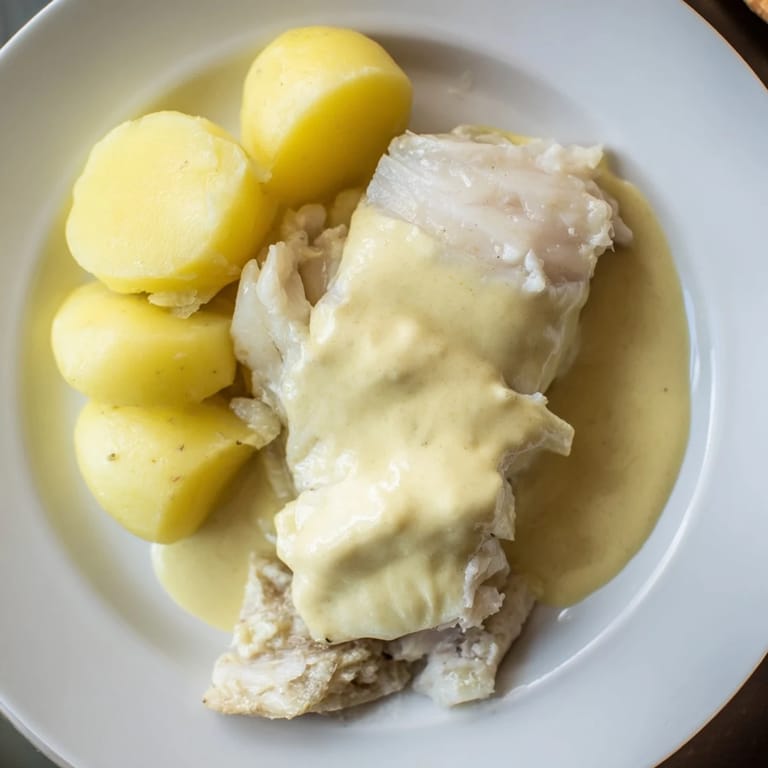
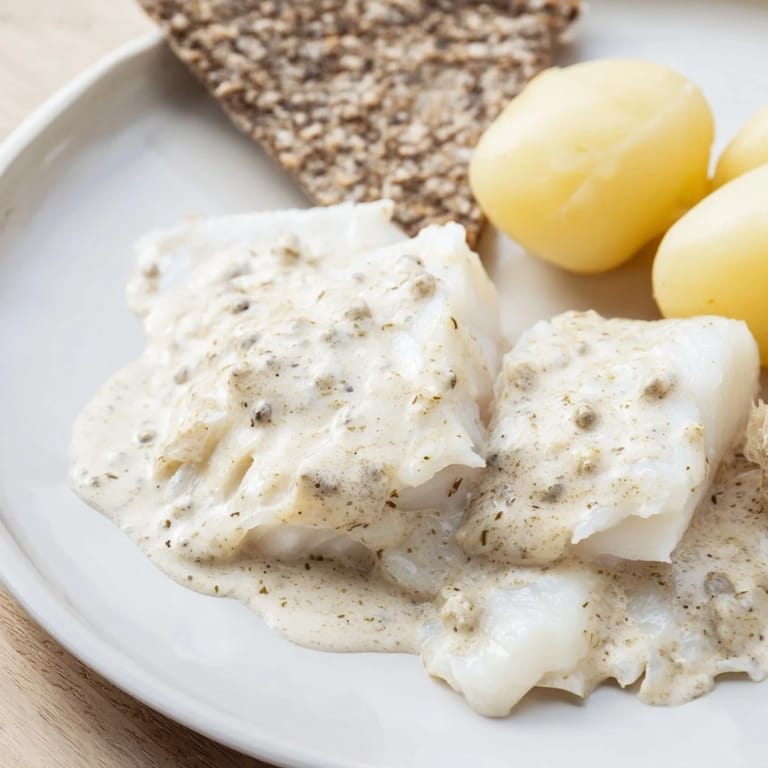
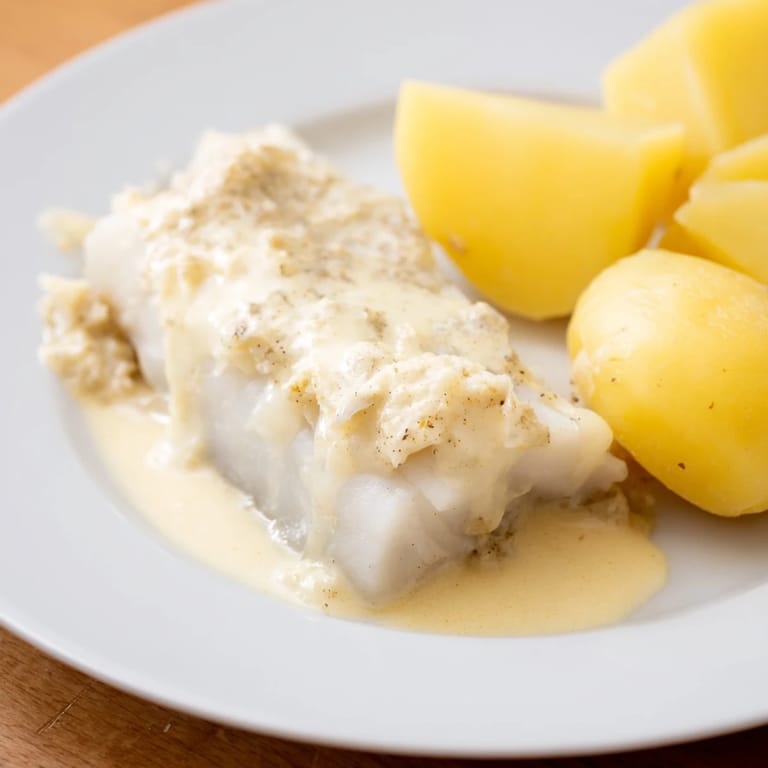
- Place a portion of hot lutefisk on each plate alongside boiled potatoes and a piece of crispbread. Spoon the warm mustard sauce generously over the fish, letting it pool around the potatoes, and scatter parsley over the top if you have it.
 Pin It
 A friend visited from Oslo one winter and tasted what I'd made, and instead of the usual polite nod, he set down his fork and said quietly, "This is how my mother made it." That sentence meant more than any compliment—it meant I'd crossed from approximation into something true.
The Long Soak: Why Patience Wins
The soaking is where most people stumble, not because it's difficult but because it feels so simple that we convince ourselves we're doing it wrong. The fish sits there day after day looking almost unchanged, and the temptation to speed up the process becomes real around day three. But the soaking is the entire foundation—it's what replaces the aggressive brine the fish was cured in with gentle water, what allows the flesh to rehydrate into tenderness rather than staying tough and overly salty. I've learned to see those six days as the dish's most important phase, not a frustrating preamble to the actual cooking.
The Sauce That Makes It All Matter
Without the mustard sauce, lutefisk would be pleasant but forgettable—mild, flaky, a bit austere. The sauce is what transforms it into something you'll actually crave. The Dijon provides sophistication, the whole-grain mustard adds texture and character, and the butter and milk create a canvas that carries both without overriding them. I used to be timid with the mustard, but I've learned that this dish can handle boldness. The sauce should taste confident, creamy but with real mustard backbone.
What to Serve Alongside
Lutefisk demands companions that won't upstage it but will give you texture and contrast to work with as you eat. Boiled potatoes are traditional for good reason—they're mild, starchy, and excellent for soaking up sauce. Crispbread or flatbread serves the same purpose, plus gives you something sturdy to hold between bites.
- Fresh parsley is not optional in my kitchen; that bright green note cuts through the richness and makes each bite feel fresh.
- Some families add peas, bacon bits, or a dollop of butter on the side—these are all traditions worth honoring if they speak to your family's version of the dish.
- Aquavit or a crisp lager is the drink that belongs beside this meal, something cold and clean to reset your palate between bites.
 Pin It
 This is food that connects you to centuries of winter kitchens, to people who preserved fish to survive lean months and eventually turned necessity into tradition. Make it without apology or explanation—it's honest and real, and that's exactly its greatest strength.
Recipe FAQs
- → How long should the dried fish soak before cooking?
The dried whitefish needs to soak in cold water for 5 to 6 days, with daily water changes, to rehydrate and soften properly before baking.
- → What is the best way to bake the whitefish for tender results?
After soaking and salting briefly, bake the fish covered with foil at 200°C (390°F) for 25–30 minutes until it flakes easily with a fork.
- → How is the mustard sauce prepared to achieve its creamy texture?
The sauce is made by melting butter, whisking in flour, then gradually adding milk while stirring until thickened. Dijon and whole-grain mustards, along with sugar and seasoning, are then incorporated.
- → What side dishes traditionally accompany this dish?
It is typically served with boiled potatoes and crispbread or flatbread, often garnished with fresh parsley to complement the flavors.
- → Can this dish be adapted for gluten-free diets?
Yes. Substitute the all-purpose flour in the mustard sauce with a gluten-free alternative to accommodate dietary needs.