 Pin It
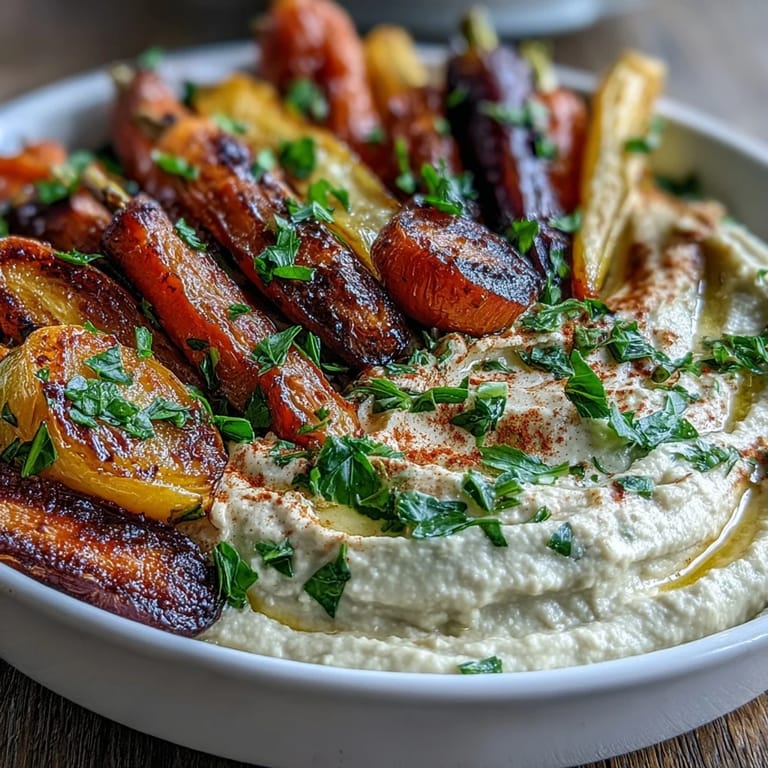
 My kitchen smelled like caramelizing sugar the day I realized carrots weren't just an afterthought side dish—they were the star. A farmers market bag of impossibly bright rainbow carrots sat on my counter, and instead of roasting them plain, I decided to pair them with creamy tahini hummus. The contrast of sweet roasted vegetables against that sesame-rich dip felt like discovering something entirely new, even though both are classics on their own.
I made this for a potluck once, nervous that it was too simple to share alongside everyone's elaborate casseroles. Watching people go back for thirds of the carrots, dunking them repeatedly in hummus like they were fries, taught me that sometimes the most satisfying foods are the ones that don't try too hard. One guest even asked for the recipe before taking the last carrot.
Ingredients
- Rainbow carrots (1 lb, peeled and trimmed): Look for a mix of purple, orange, and yellow varieties at farmers markets or specialty stores—they're worth the hunt because they taste slightly different from standard orange carrots, with the purple ones bringing an earthy depth.
- Olive oil (2 tbsp for carrots, 2 tbsp for hummus): Use your best extra-virgin oil, especially for drizzling the finished hummus where its flavor matters most.
- Sea salt and black pepper: These simple seasonings let the carrot sweetness shine, so don't skip tasting as you go.
- Ground cumin (1/2 tsp optional for carrots, 1/2 tsp for hummus): It adds warmth and complexity that makes people wonder what secret ingredient you used.
- Fresh parsley (1 tbsp chopped): The brightness cuts through richness and adds that just-made freshness that matters more than you'd think.
- Canned chickpeas (15 oz, drained and rinsed): Rinsing them removes the starchy liquid that can make hummus gluey, so don't skip this step even though it feels unnecessary.
- Tahini (1/4 cup): Stir the jar thoroughly before measuring because the oil separates—a quick lesson I learned after making oddly textured batches.
- Lemon juice (2 tbsp freshly squeezed): Fresh juice tastes brighter than bottled, and you'll notice the difference in every bite.
- Garlic (1 clove minced): One clove is enough to give presence without overwhelming, though you can add more if garlic is your thing.
- Cold water (2-3 tbsp): Add gradually because you can always thin hummus more, but you can't thicken it once it's too loose.
- Smoked paprika (1/4 tsp for garnish): This is entirely optional but transforms the visual presentation and adds a whisper of smokiness.
Tired of Takeout? 🥡
Get 10 meals you can make faster than delivery arrives. Seriously.
One email. No spam. Unsubscribe anytime.
Instructions
- Heat your oven and prep the pan:
- Set your oven to 425°F and line a baking sheet with parchment paper while it preheats. This prevents sticking and makes cleanup infinitely easier.
- Coat the carrots evenly:
- Toss the trimmed rainbow carrots with olive oil, salt, pepper, and cumin in a bowl until every piece glistens. The oil is what creates those caramelized edges, so don't be shy with it.
- Arrange and roast:
- Spread the carrots in a single layer on your baking sheet, then roast for 25 to 30 minutes, turning them halfway through. You'll know they're done when they're fork-tender and the tips are slightly darkened and crispy.
- Build the hummus while carrots roast:
- Add drained chickpeas, tahini, olive oil, lemon juice, minced garlic, cumin, and salt to a food processor and blend until completely smooth. Start with 2 tablespoons of cold water and add more gradually while the machine runs, stopping when the texture is creamy and spreadable.
- Taste and adjust:
- Pulse a few more times after tasting, adjusting salt or lemon juice if needed—hummus should be balanced between savory, tangy, and nutty.
- Plate and finish:
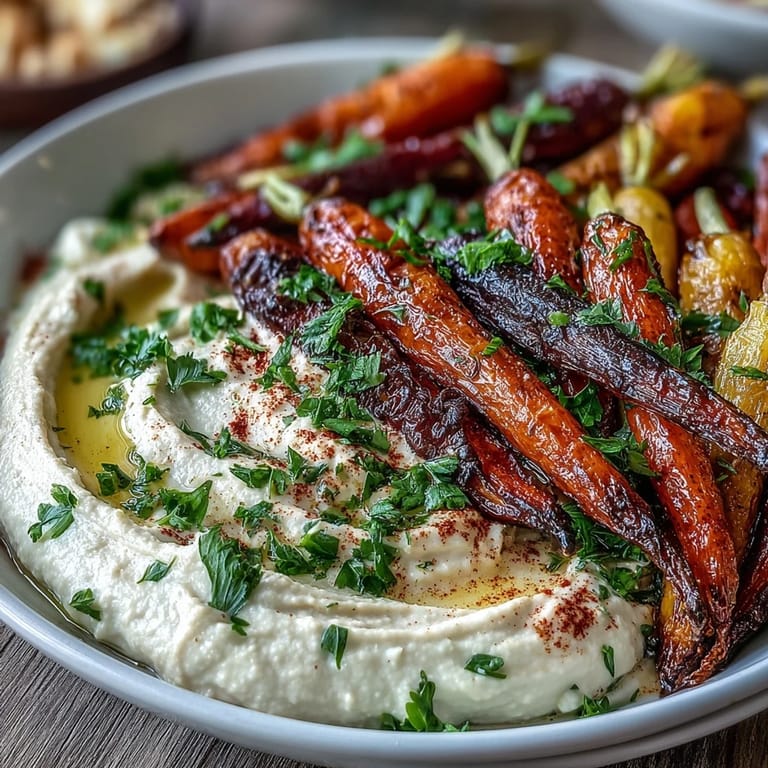
- Transfer hummus to a serving bowl and drizzle with a little more olive oil, then sprinkle with smoked paprika if you have it. Arrange the warm roasted carrots on a platter nearby, scatter parsley over the top, and bring everything to the table together.
 Pin It
 There's something deeply satisfying about serving food that makes people slow down and actually taste what's in front of them. This platter does that—no pretension, no fuss, just vegetables and dip that somehow feels like a celebration.
Why Rainbow Carrots Matter
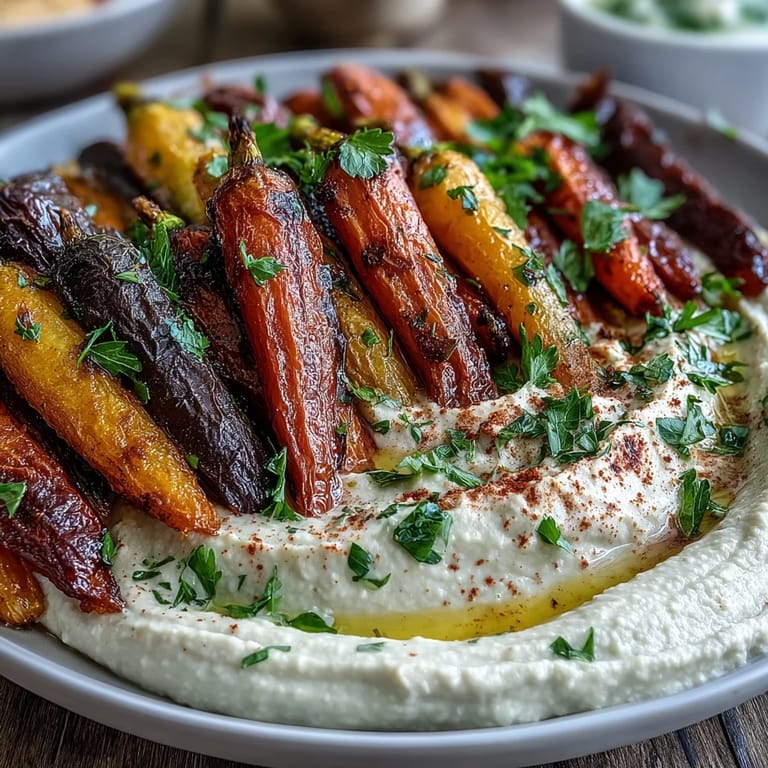
Orange carrots are fine, but rainbow varieties offer subtly different flavors that blend together into something more complex and interesting. The purple ones taste earthier, almost mineral-like, while the yellow ones are sweeter and slightly less assertive. When you roast them all together, their individual personalities meld into a unified deliciousness that feels somehow more alive than a monochrome pile would be.
The Magic of Homemade Hummus
Store-bought hummus often tastes either too garlicky, too thin, or leaves a weird aftertaste from preservatives—making it fresh takes the same amount of time as a trip to the store. Tahini is the secret weapon here; it's what creates that silky texture and nutty depth that tastes expensive and restaurant-quality but costs almost nothing.
Serving and Storage Ideas
This platter works equally well as an appetizer before dinner, a healthy snack for afternoons, or even as part of a vegetable-focused grazing board. The roasted carrots are best enjoyed warm or at room temperature, but leftover hummus keeps refrigerated for about five days and actually develops deeper flavor as it sits.
- Sprinkle toasted sesame seeds or dukkah over the carrots for extra crunch and nuttiness.
- Add red pepper flakes to the carrots before roasting if you like a gentle heat building underneath the sweetness.
- Serve alongside warm pita, crackers, or additional raw vegetables for guests who want variety on their plate.
 Pin It
 This recipe proves that the simplest dishes often become the ones people remember longest. Make it once, and you'll find yourself reaching for it again whenever you need something beautiful, nourishing, and genuinely delicious.
Recipe FAQs
- → What makes rainbow carrots special?
Rainbow carrots contain different pigments that offer unique flavors—orange carrots are sweet, purple varieties have an earthy taste, yellow carrots are mild, and red carrots carry subtle spice notes. Together they create visual appeal and diverse flavor profiles on your platter.
- → Can I prepare the components ahead?
The hummus actually tastes better when made a day ahead, allowing flavors to meld. Roast the carrots up to 4 hours before serving and reheat briefly at 350°F. Store everything separately in airtight containers in the refrigerator.
- → Why add water to hummus?
Cold water transforms thick tahini mixtures into that irresistibly creamy, airy texture found in restaurant-quality hummus. Add it gradually while the food processor runs until you reach your desired consistency—usually 2-3 tablespoons does the trick.
- → What pairs well with this platter?
Serve warm pita bread, olives, cucumber slices, or additional raw vegetables like bell peppers and radishes. A drizzle of extra-virgin olive oil and sprinkle of za'atar or dukkah adds authentic Mediterranean flair.
- → How do I store leftovers?
Keep roasted carrots and hummus in separate airtight containers. The hummus stays fresh for up to a week, while carrots last 3-4 days. Reheat carrots at 350°F for 5-10 minutes to restore their tenderness.
- → Can I use regular carrots?
Absolutely—standard orange carrots work perfectly fine and will taste just as delicious. You'll miss the visual variety, but roasting brings out the same natural sweetness regardless of color.