 Pin It
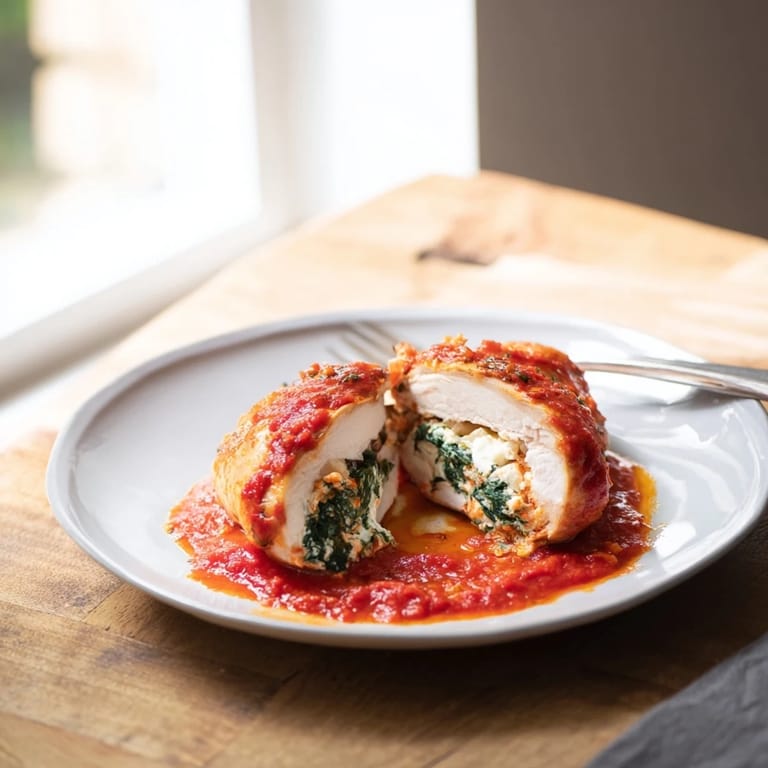
 My neighbor brought me a basket of spinach from her garden one afternoon, far more than I could toss into salads before it wilted. I had chicken breasts thawing and a tub of ricotta left over from lasagna, so I started experimenting. The idea of tucking all that green goodness inside the chicken felt both practical and a little fancy. When I pulled the skillet out of the oven that night, the smell alone made my family gather in the kitchen before I even called them.
I made this for a small dinner party once, and my friend who claims she does not cook asked for the recipe twice before dessert. She loved that it felt impressive without requiring advanced knife skills or a long ingredient list. We sat around the table longer than usual that night, mopping up the tomato sauce with bread and talking until the candles burned low. That is when I knew this dish had earned its place in my regular rotation.
Ingredients
- Boneless, skinless chicken breasts: Look for breasts that are similar in size so they cook evenly, and if they are very thick, gently pound them to an even thickness before cutting the pocket.
- Ricotta cheese: Whole milk ricotta gives the creamiest filling, but part-skim works if you want to lighten it up without sacrificing too much texture.
- Fresh baby spinach: Chop it finely so it blends smoothly into the filling and does not create air gaps that make the chicken hard to seal.
- Parmesan cheese: Freshly grated melts better and tastes sharper than the pre-grated kind, which often contains anti-caking agents.
- Garlic cloves: Mince them finely or use a press so the flavor disperses evenly without leaving big bites of raw garlic.
- Dried Italian herbs: A blend of basil, oregano, and thyme works perfectly, or use whatever Italian seasoning you have in the cupboard.
- Lemon zest: Just half a lemon is enough to brighten the rich ricotta without making the filling taste citrusy.
- Canned crushed tomatoes: San Marzano tomatoes are worth it if you can find them, they are sweeter and less acidic than standard crushed tomatoes.
- Onion and garlic for the sauce: Sauteing them in the same skillet you seared the chicken adds depth and saves a pan.
- Dried oregano and sugar: Oregano reinforces the Italian vibe, and a pinch of sugar balances the acidity of the tomatoes beautifully.
- Olive oil: Use it for both searing the chicken and building the sauce, it ties the flavors together.
- Salt and black pepper: Season every component separately, the chicken, the filling, and the sauce, so every bite is balanced.
Tired of Takeout? 🥡
Get 10 meals you can make faster than delivery arrives. Seriously.
One email. No spam. Unsubscribe anytime.
Instructions
- Preheat and prep:
- Set your oven to 375 degrees Fahrenheit so it is ready when you finish searing the chicken. Gather all your ingredients and tools before you start, it makes the process feel much calmer.
- Make the filling:
- In a mixing bowl, stir together ricotta, chopped spinach, Parmesan, minced garlic, Italian herbs, lemon zest, salt, and pepper until everything is evenly distributed. Taste it and adjust the seasoning, this is your chance to make it perfect.
- Prepare the chicken:
- Lay each chicken breast flat on a cutting board and use a sharp knife to slice horizontally into the thickest part, creating a pocket without cutting all the way through the other side. Season both sides generously with salt and pepper.
- Stuff the chicken:
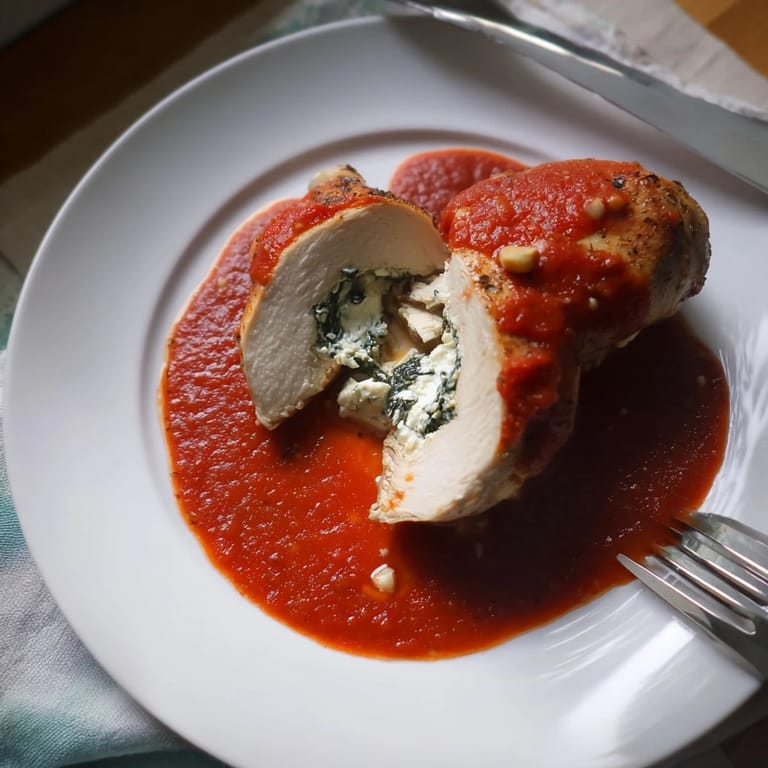
- Divide the ricotta mixture among the four chicken breasts, spooning it into the pockets and pressing gently to spread it evenly. If the filling wants to escape, secure the opening with a toothpick or two.
- Sear the chicken:
- Heat a tablespoon of olive oil in an oven-safe skillet over medium-high heat until it shimmers. Place the stuffed breasts in the skillet and sear for two to three minutes per side until golden, then remove them to a plate.
- Build the sauce:
- In the same skillet, add another tablespoon of olive oil and cook the chopped onion until it turns translucent, about three minutes. Stir in the garlic and let it cook for one more minute until fragrant.
- Simmer the tomatoes:
- Pour in the crushed tomatoes, then add oregano, sugar, salt, and pepper. Let the sauce simmer for five minutes to thicken slightly and let the flavors come together.
- Nestle and bake:
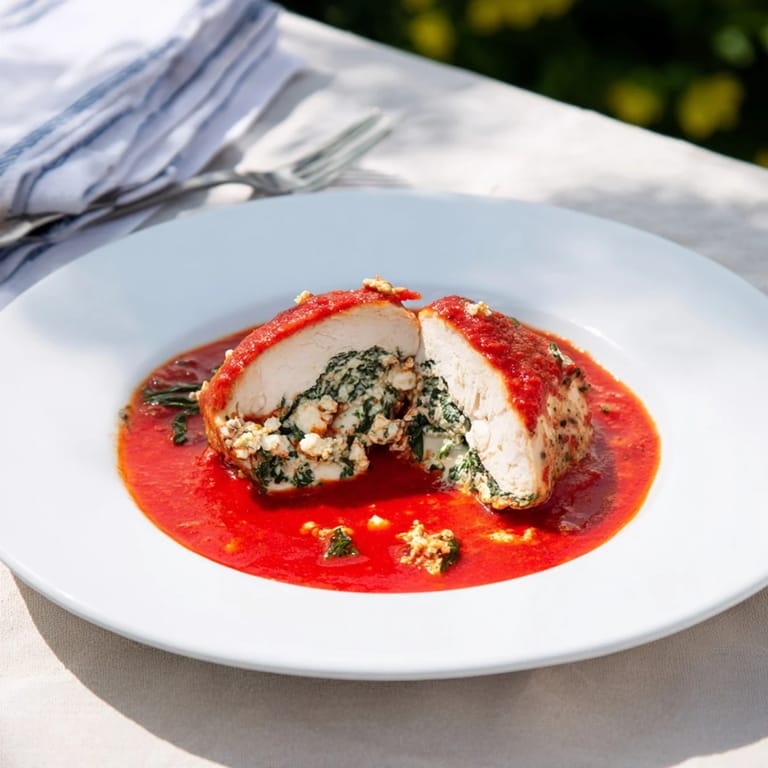
- Return the seared chicken breasts to the skillet, nestling them into the sauce and spooning some over the tops. Transfer the whole skillet to the oven and bake uncovered for twenty to twenty-five minutes, until the chicken reaches an internal temperature of 165 degrees Fahrenheit.
- Finish and serve:
- Remove the skillet from the oven and carefully take out any toothpicks. Sprinkle with extra Parmesan or fresh basil if you like, then serve hot with the sauce spooned over each piece.
 Pin It
 One evening my son asked if we could have the stuffed chicken again, not because it was fancy, but because it reminded him of the night we all sat together without phones at the table. Sometimes a recipe earns its place not just for how it tastes, but for the memories it quietly builds. This one has given me more of those moments than I expected.
Choosing the Right Chicken
I used to buy whatever chicken was on sale, but I learned that size consistency matters more than price when you are stuffing breasts. If one is twice as thick as another, the thin one will dry out before the thick one is done. I now look for breasts that are roughly the same weight and shape, and I am not afraid to trim or pound them to match. It is a small step that makes a big difference in how evenly everything cooks.
Making the Filling Your Own
The ricotta and spinach base is forgiving, so feel free to swap in kale, arugula, or even thawed frozen spinach if that is what you have. I have added sun-dried tomatoes, swapped Parmesan for pecorino, and stirred in a pinch of red pepper flakes when I wanted a little heat. Each version felt like a new dish, but the method stayed exactly the same. That kind of flexibility is what keeps a recipe from getting boring.
Serving and Pairing Ideas
This chicken begs for something to soak up the tomato sauce, so I usually serve it with crusty bread, but it is just as good over pasta or alongside roasted vegetables. A crisp Pinot Grigio or a light red like Chianti complements the richness without overpowering it. Leftovers make an excellent lunch the next day, sliced cold over a green salad or reheated gently in the microwave.
- Serve with garlic bread or a simple arugula salad dressed with lemon and olive oil.
- Try it over creamy polenta or mashed cauliflower for a low-carb option.
- Garnish with fresh basil or a drizzle of good olive oil just before serving to brighten the flavors.
 Pin It
 This dish has become my answer to the question of what to make when I want something special without spending all day in the kitchen. It never fails to make dinner feel like an occasion.
Recipe FAQs
- → How do I prevent the chicken from drying out during baking?
Ensure your chicken breasts are of even thickness before stuffing, and don't overbake. Use a meat thermometer to check that the internal temperature reaches 165°F (74°C). The tomato sauce helps keep the meat moist during the baking process.
- → Can I prepare this dish in advance?
Yes, you can assemble the stuffed chicken breasts up to 4 hours ahead and refrigerate. When ready to cook, sear and bake as directed, adding 5-10 minutes to the baking time if cooking from cold.
- → What are good side dishes to serve with this?
This pairs wonderfully with roasted vegetables, pasta, risotto, or crusty bread to soak up the sauce. A fresh green salad with lemon vinaigrette complements the rich filling nicely.
- → Can I use frozen spinach instead of fresh?
Absolutely. Thaw frozen spinach completely and squeeze out excess moisture before chopping to prevent a watery filling. Use the same quantity as fresh spinach.
- → How do I know when the chicken is fully cooked?
Use an instant-read thermometer inserted into the thickest part of the chicken. It should read 165°F (74°C). The chicken will also feel firm and spring back when pressed lightly.
- → Can I make this dairy-free?
This dish contains ricotta and Parmesan, so it's not naturally dairy-free. However, you could experiment with dairy-free ricotta and nutritional yeast, though the flavor and texture will differ significantly.