 Pin It
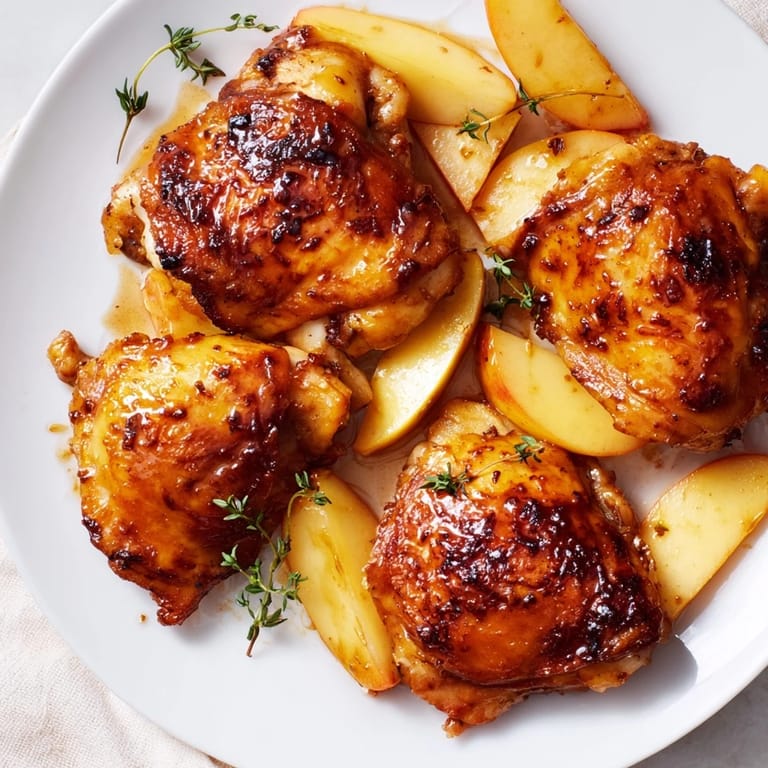
 There's something about the smell of maple and apples roasting together that stops you mid-whatever-you're-doing. I discovered this combination on a quiet Sunday afternoon when I had chicken thighs defrosting and a bottle of apple cider sitting on the counter, and I thought, why not? The glaze came together in minutes, but what emerged from the oven was this burnished, sticky masterpiece that made everyone at the table go quiet for a moment. It's become the dish I reach for when I want to feel like I've actually accomplished something in the kitchen without the fuss.
I made this for my sister's birthday dinner when she mentioned being tired of the same old chicken dishes, and watching her eyes light up when she took that first bite was worth every minute. The apples softened into almost-candy by the end of cooking, and my nephew asked for seconds before anyone else had even finished their first plate. That's the moment I knew this wasn't just a recipe—it was something I'd be making again and again.
Ingredients
- Bone-in, skin-on chicken thighs (8 pieces, about 1.2 kg / 2.5 lbs): Dark meat stays tender even with heat, and that skin crisps up beautifully when you let it sit uncovered in the oven.
- Pure maple syrup (1/3 cup): Use the real thing—the pancake-aisle stuff with the long ingredient list won't give you that deep, caramel-like finish.
- Apple cider or unsweetened apple juice (1/3 cup): Fresh cider is ideal if you can find it, but the pasteurized juice from the grocery store works just fine.
- Apple cider vinegar (2 tbsp): This is your secret weapon for cutting through the sweetness and keeping the glaze from becoming cloying.
- Dijon mustard (2 tbsp): It adds a subtle tanginess and helps emulsify the glaze so it clings to the chicken.
- Olive oil (2 tbsp): Keeps the glaze rich and helps everything cook evenly.
- Garlic, minced (2 cloves): Adds savory depth without overpowering the apple-maple story.
- Fresh thyme leaves (1 tsp, or 1/2 tsp dried): If you're using dried, add it to the glaze; if fresh, save some for garnish at the end.
- Smoked paprika (1/2 tsp): This brings an earthy warmth that makes people wonder what your secret ingredient is.
- Salt and freshly ground black pepper (1/2 tsp and 1/4 tsp): Season generously—the chicken needs it, and the apples will thank you.
- Medium apples like Honeycrisp or Gala (2 apples, cored and sliced into wedges): These hold their shape better than softer varieties and add brightness to the plate.
Tired of Takeout? 🥡
Get 10 meals you can make faster than delivery arrives. Seriously.
One email. No spam. Unsubscribe anytime.
Instructions
- Get your oven ready:
- Preheat to 400°F (200°C) and line a large baking dish with parchment paper or a light oil coating. This prevents sticking and makes cleanup feel less like a punishment.
- Dry and season the chicken:
- Pat each thigh completely dry with paper towels—this step is non-negotiable if you want that skin to crisp. Season both sides with a whisper of salt and pepper.
- Make the glaze:
- Whisk together the maple syrup, apple cider, apple cider vinegar, Dijon mustard, olive oil, minced garlic, thyme, smoked paprika, salt, and pepper in a medium bowl until everything is smoothly combined. Taste it and adjust if needed—it should taste bold and slightly tangy, not aggressively sweet.
- Arrange and pour:
- Arrange and coat:
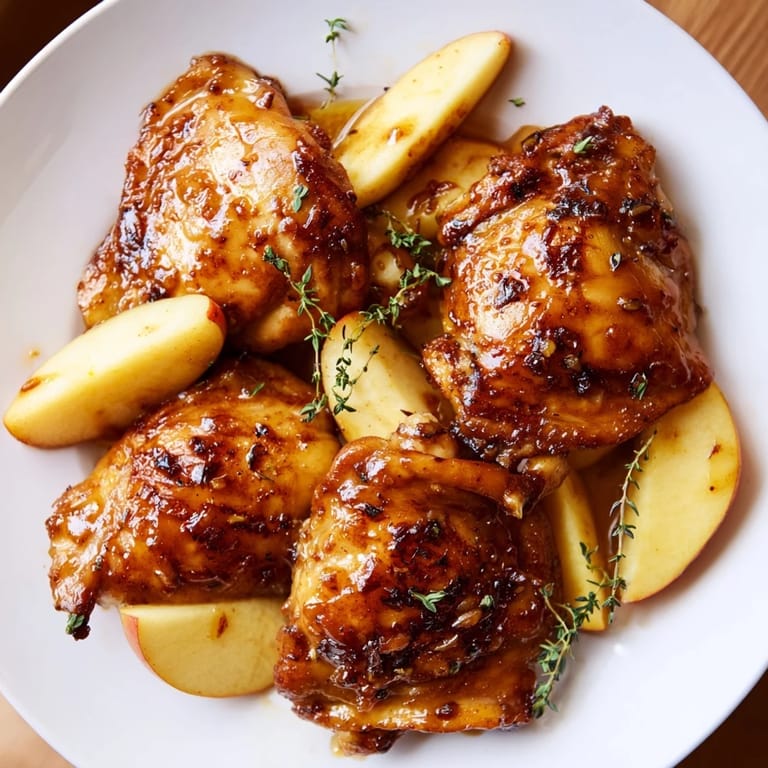
- Place the chicken thighs skin-side up in the baking dish, nestling apple wedges in the spaces around them. Pour the glaze evenly over everything, then flip each piece to coat the underside before turning skin-side up again.
- Bake with occasional love:
- Roast for 30 to 35 minutes, basting the chicken and apples with pan juices once or twice if you remember. The chicken is done when the skin is golden and an instant-read thermometer inserted into the thickest part reads 165°F (74°C).
- Finish with a kiss of heat (optional):
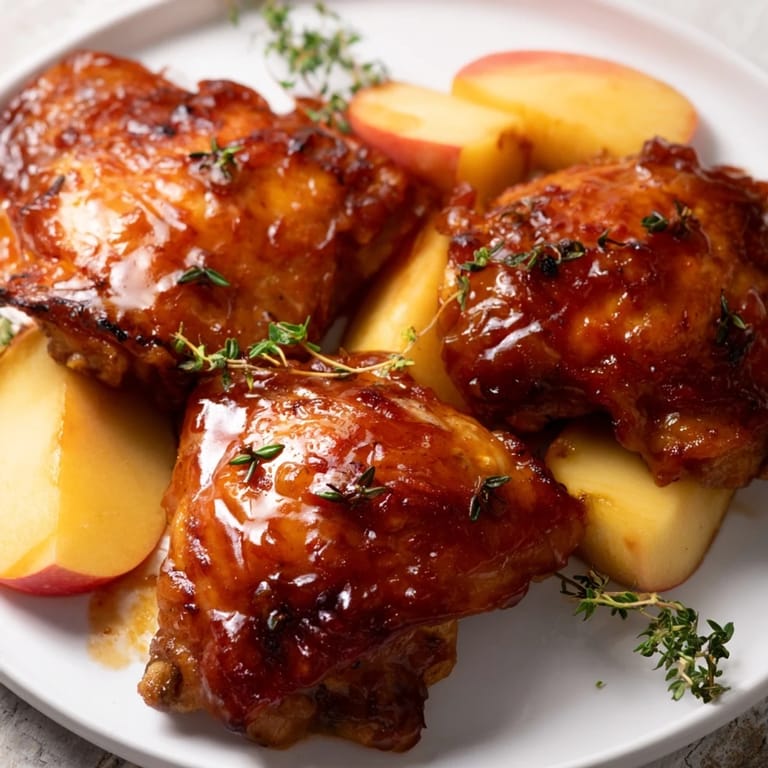
- For extra caramelization and stickiness, turn on the broiler to high and let it go for 2 to 3 minutes, watching closely so nothing burns. The edges should look almost blackened and glossy.
- Rest and serve:
- Let the chicken rest for 5 minutes before plating—this keeps the juices where they belong. Garnish with fresh thyme sprigs if you have them.
 Pin It
 The moment that made this dish feel complete was when my friend asked if this was something I'd learned from a cookbook or if I'd made it myself—and I realized I couldn't quite remember where the idea came from. It just felt right, like something that was always supposed to exist in my kitchen.
Why Dark Meat Matters Here
Chicken breasts would dry out before the skin got golden, but thighs are forgiving. They have enough fat running through them that even if you overbake by a few minutes, they stay tender and succulent. The skin crisps up from that maple glaze hitting it, and the meat beneath stays juicy. Once you go back to chicken thighs, there's no going back.
The Apple-Vinegar Balance
This glaze walks a line between sweet and savory, and the apple cider vinegar is what keeps it from tipping into dessert territory. The mustard helps too, adding a subtle tang that makes your mouth water before you take a bite. If you taste the glaze raw and it feels too tart, remember it will mellow as it cooks and the chicken juices blend in.
Serving and Pairing Ideas
This dish doesn't demand much in the way of sides, but it loves company. I've served it with mashed potatoes to soak up the pan juices, with roasted root vegetables that caramelize alongside it, and even over rice when I wanted something light. The sticky glaze ties everything together, so keep your sides simple and let the chicken shine.
- If you're pouring apple cider or a dry Riesling, the acidity cuts through the richness perfectly.
- Leftover chicken shreds beautifully and makes an incredible sandwich the next day.
- The pan juices are liquid gold—spoon them over whatever you're serving, or even use them to dress a simple salad.
 Pin It
 This is the kind of dinner that tastes like you spent hours in the kitchen when really you just mixed a bowl and let the oven do the work. That's the whole magic of it.
Recipe FAQs
- → What type of chicken works best?
Bone-in, skin-on chicken thighs are ideal for juicy, flavorful results and a crispy exterior.
- → Can I use a different vinegar in the glaze?
Apple cider vinegar enhances the glaze’s tang, but white wine vinegar or balsamic can be used for variation.
- → How do apples affect the flavor?
They add natural sweetness and moisture, balancing the savory and smoky elements of the glaze.
- → Is broiling necessary?
Broiling briefly caramelizes the glaze, creating a glossy, sticky finish but can be skipped if preferred.
- → What side dishes complement this dish?
Roasted vegetables, mashed potatoes, or rice pair well, enhancing the comforting and hearty qualities.