 Pin It
 My neighbor knocked on my door one November evening holding a bag of Brussels sprouts from her garden, insisting I try them before the frost hit. I had always been skeptical of the little cabbages, but her enthusiasm was contagious. That night, I tossed them in a creamy mustard sauce on a whim, and the kitchen filled with a smell so comforting I called her back over to taste. We stood at the stove, forks in hand, laughing at how wrong we'd both been about Brussels sprouts all those years.
I made this for a quiet dinner party last winter when the conversation had gone soft and everyone was hungry. The moment I set the skillet on the table, the room perked up. Someone said it smelled like a hug, and I've never found a better description. We passed the dish around twice, scraping the pan clean, and I realized I'd finally found a vegetable that could hold its own as the star.
Ingredients
- Brussels sprouts (600 g, cleaned and trimmed): Look for tight, firm heads with no yellowing, and trim the stems just enough to remove the dry end without losing too many outer leaves.
- Onion (1 small, finely chopped): A small yellow or white onion adds sweetness that balances the mustard, and chopping it fine helps it melt into the sauce.
- Garlic (1 clove, minced): Fresh garlic brings warmth and depth, but don't let it brown or it'll turn bitter.
- Fresh chopped parsley (for garnish): A handful of flat-leaf parsley brightens the whole dish and adds a pop of color right before serving.
- Cream cheese (150 g): This is what makes the sauce silky and rich, so use full-fat for the best texture.
- Dijon mustard (2 tablespoons): The sharpness cuts through the cream and wakes up every bite.
- Vegetable broth (150 ml): It thins the sauce just enough to coat the sprouts without weighing them down.
- Butter (2 tablespoons): Real butter adds a subtle sweetness and helps the onions soften beautifully.
- Lemon juice (1 teaspoon): Just a splash at the end lifts the flavors and keeps the dish from feeling too heavy.
- Salt and pepper (to taste): Season gradually, tasting as you go, since the mustard and broth already bring some saltiness.
Tired of Takeout? 🥡
Get 10 meals you can make faster than delivery arrives. Seriously.
One email. No spam. Unsubscribe anytime.
Instructions
- Boil the Brussels sprouts:
- Bring a large pot of salted water to a rolling boil, then drop in the cleaned Brussels sprouts and cook for 5 to 7 minutes until they're just tender but still have a little bite. Drain them well and set them aside while you start the sauce.
- Sauté the onion:
- Melt the butter in a large skillet over medium heat, then add the chopped onion and cook for 3 to 4 minutes, stirring occasionally, until it turns soft and translucent. The smell of butter and onion is your cue that you're on the right track.
- Add the garlic:
- Toss in the minced garlic and sauté for about 1 minute, just until it becomes fragrant. Be careful not to let it brown or it'll turn sharp and unpleasant.
- Build the sauce base:
- Lower the heat and stir in the cream cheese and Dijon mustard, mixing with a wooden spoon until the two melt together into a smooth, golden paste. It might look thick at first, but trust the process.
- Thin with broth:
- Slowly pour in the vegetable broth, stirring continuously, until the sauce loosens into a creamy, pourable consistency. Keep stirring so it stays smooth and doesn't clump.
- Season the sauce:
- Add salt, pepper, and lemon juice, then taste and adjust until it feels balanced. The lemon should brighten without overwhelming the mustard.
- Coat the Brussels sprouts:
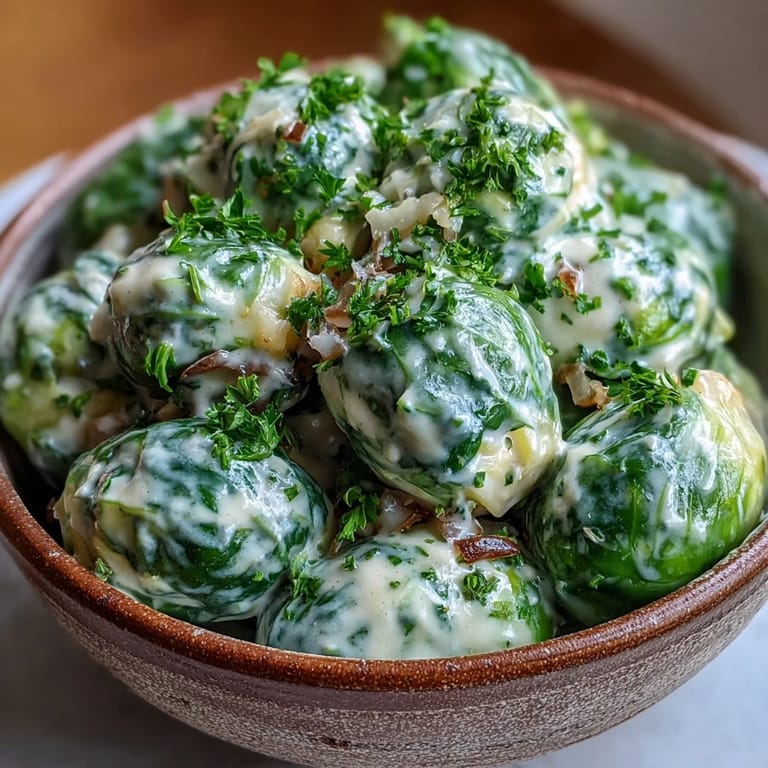
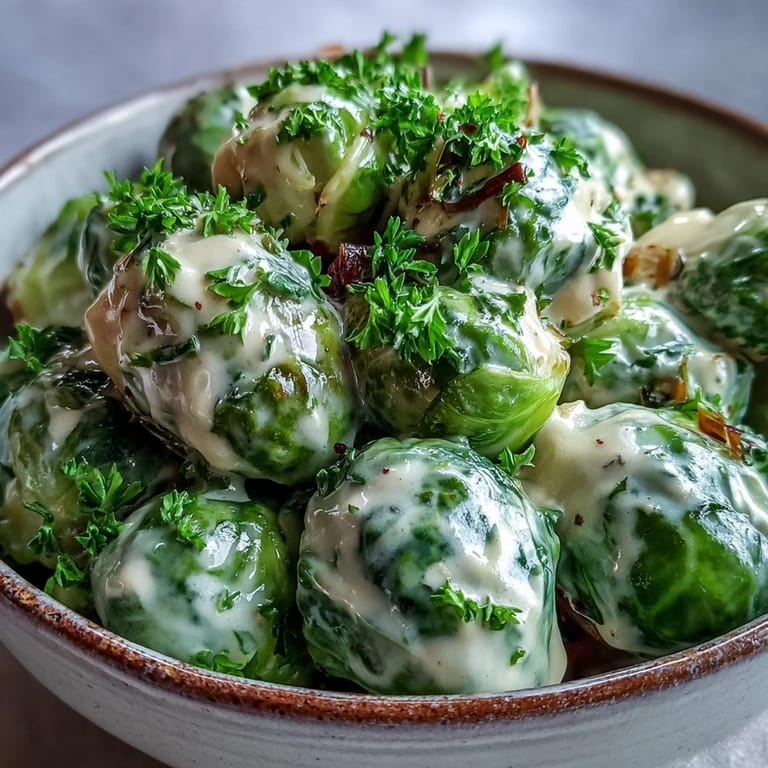
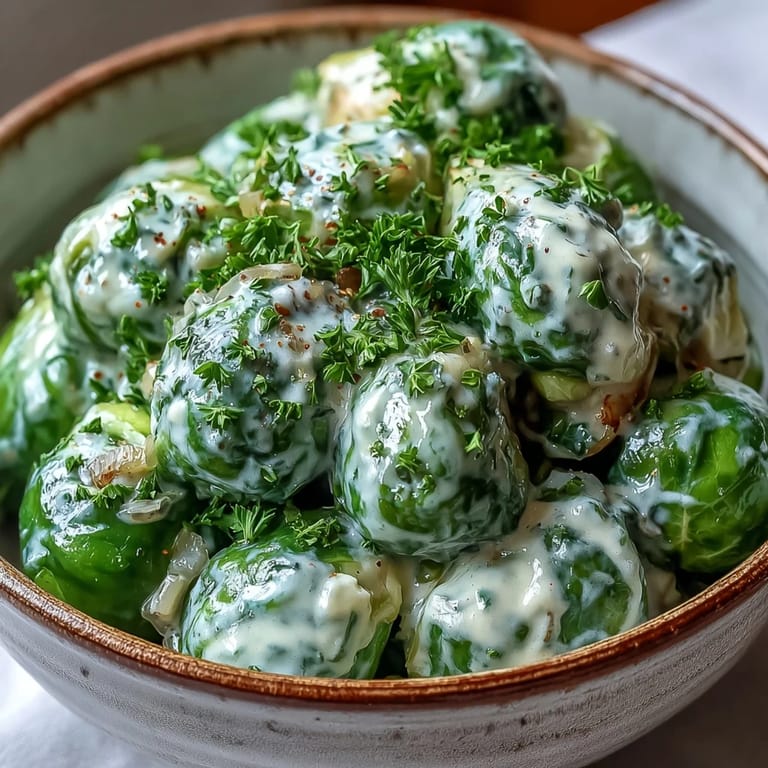
- Add the cooked Brussels sprouts to the skillet and gently toss them in the sauce, letting them warm through for 2 to 3 minutes. Every sprout should be glossy and well-coated.
- Garnish and serve:
- Transfer everything to a serving dish and scatter fresh chopped parsley over the top. Serve it warm while the sauce is still silky.
 Pin It
 One Sunday, I packed this into a container and brought it to a potluck where everyone else had made casseroles and roasts. I set it down quietly, unsure if anyone would try it. By the end of the meal, the dish was empty and three people had asked for the recipe. That's when I knew Brussels sprouts had finally earned their redemption in my kitchen.
Serving Suggestions
This pairs beautifully alongside roasted chicken, pork chops, or a simple piece of grilled salmon. I've also served it as a vegetarian main with crusty bread and a green salad, and no one missed the meat. The sauce is rich enough to feel indulgent but light enough not to overwhelm the rest of the meal.
Make-Ahead and Storage
You can cook the Brussels sprouts and make the sauce a day ahead, then store them separately in the fridge. When you're ready to serve, warm the sauce gently in a skillet, add the sprouts, and toss until heated through. Leftovers keep for up to three days and reheat wonderfully on the stovetop with a splash of water or broth to loosen the sauce.
Variations and Swaps
If you want a little heat, stir in a pinch of cayenne pepper or red pepper flakes when you add the mustard. For a lighter version, swap half the cream cheese for Greek yogurt, though the sauce won't be quite as silky. You can also try this with broccoli or cauliflower if Brussels sprouts aren't your thing, just adjust the boiling time accordingly.
- Add crispy bacon or pancetta on top for a smoky, salty crunch.
- Stir in a handful of grated Parmesan for extra richness and a nutty flavor.
- Use whole-grain mustard instead of Dijon for a more rustic, textured sauce.
 Pin It
 This dish taught me that the vegetables I once avoided could become the ones I crave most. I hope it does the same for you.
Recipe FAQs
- → How do I prevent Brussels sprouts from becoming mushy?
Boil the sprouts for just 5–7 minutes until tender but still firm. Testing with a fork helps—there should be slight resistance. Avoid overcooking during this initial step since they'll heat through again in the sauce.
- → Can I use frozen Brussels sprouts instead?
Frozen sprouts work in a pinch, though fresh yield better texture. Thaw completely and pat dry before boiling. Reduce the initial cooking time by 1–2 minutes since frozen sprouts soften more quickly.
- → What can I substitute for Dijon mustard?
Whole grain mustard adds texture, while spicy brown mustard brings more heat. For a milder version, use yellow mustard or reduce the amount. Avoid honey mustard as it will make the sauce overly sweet.
- → How long will leftovers keep?
Store in an airtight container in the refrigerator for up to 3 days. Reheat gently in a skillet over low heat, adding a splash of broth or water if the sauce has thickened too much. The sprouts may soften slightly upon reheating.
- → Can I make this dish ahead?
Absolutely. Prepare the sauce and cook the sprouts separately up to a day in advance. Combine and reheat just before serving, adding a touch more broth to restore creamy consistency. This makes it perfect for dinner parties or holiday meals.
- → Is this suitable for a vegetarian Thanksgiving?
Yes, this dish makes an excellent vegetarian Thanksgiving or Christmas side. The rich, creamy profile feels festive and substantial enough to stand alongside traditional holiday fare. Double the recipe for larger gatherings.