 Pin It
 Last October, I was standing in my kitchen on a particularly grey afternoon, staring at a farmers market haul that felt almost too beautiful to cook—butternut squash the color of sunset, Brussels sprouts still dusty with soil, an apple so crisp it practically sang when I bit into it. I wanted to create something that honored those ingredients without fussing over them too much, and this bowl came together almost by accident. It became my answer to every "what should I eat?" question that season, especially on days when I needed something both grounding and genuinely exciting.
I made this for my coworker Marcus who always skipped lunch, and watching him actually sit down and finish a whole bowl was weirdly moving. He came back the next day asking for the recipe, and within a week, three other people in the office were making their own versions. There's something about a meal this honest that makes people want to gather around it.
Ingredients
- Butternut squash, 2 cups peeled and cubed: The foundation of warmth here; peeling it raw saves time, though a microwave for five minutes makes it softer and way less of a wrestling match.
- Brussels sprouts, 2 cups trimmed and halved: They get crispy edges when roasted hot enough, which is where the magic lives—don't skip the high heat.
- Kale, 2 cups stems removed and leaves chopped: Massaging it with your fingertips for thirty seconds before cooking makes it more tender, a small move that changes everything.
- Apple, 1 large cored and sliced: The slight tartness keeps the bowl from feeling heavy; a Granny Smith or Honeycrisp holds its shape best.
- Farro, 1 cup: Chewier than rice with a nuttiness that pairs perfectly here; quinoa or brown rice work if you need gluten-free.
- Vegetable broth or water, 2 cups: Broth adds flavor depth, but water works fine if that's what you have.
- Olive oil, 3 tbsp total: Use good oil you actually like tasting; it makes a difference in how the whole thing comes together.
- Sea salt, 1 tsp and black pepper, 1/2 tsp: Start with this amount and taste as you go—you might want more.
- Smoked paprika, 1/2 tsp: This is what makes people ask what you did differently; it adds depth without being obvious about it.
- Ground cinnamon, 1/2 tsp: Just enough to whisper autumn without making it taste like dessert.
- Toasted pumpkin seeds, 1/4 cup and dried cranberries, 2 tbsp: These are your textural anchors—they keep things interesting bite to bite.
- Feta or vegan cheese, 2 tbsp crumbled (optional): A tanginess that balances the sweetness; leave it off if you want to keep things lighter.
Tired of Takeout? 🥡
Get 10 meals you can make faster than delivery arrives. Seriously.
One email. No spam. Unsubscribe anytime.
Instructions
- Get your oven ready and prep your pan:
- Preheat to 425°F and line two baking sheets with parchment paper—this prevents sticking and makes cleanup almost joyful. You'll be roasting vegetables on high heat, so the parchment is your friend here.
- Season and spread the squash and Brussels sprouts:
- In a bowl, toss your cubed squash and halved Brussels sprouts with two tablespoons of olive oil, salt, pepper, and smoked paprika until everything's coated. Spread them in a single layer on one baking sheet—they need room to actually roast, not steam.
- Prepare the apples separately:
- Arrange your apple slices on the second baking sheet, drizzle with one tablespoon of olive oil, and sprinkle with cinnamon. They roast faster than the squash, so keeping them separate means they finish when they're supposed to.
- Roast everything to golden:
- Pop both sheets in the oven; the squash and Brussels sprouts need 25 to 30 minutes, stirred once about halfway through, until they're golden and tender. The apples roast for about 15 minutes until they soften and caramelize slightly at the edges—they should smell like fall itself.
- Cook your grains while vegetables roast:
- Rinse your farro under cold water, then bring the vegetable broth or water to a boil in a medium saucepan. Add the farro, reduce heat to low, cover, and let it simmer for 20 to 25 minutes until the grains are tender and the liquid is mostly absorbed.
- Quickly wilt the kale:
- In a skillet over medium heat, add a splash of water and your chopped kale, stirring gently for just two to three minutes until it turns tender and dark. You want it soft enough to eat easily but still holding some character.
- Assemble your bowls with intention:
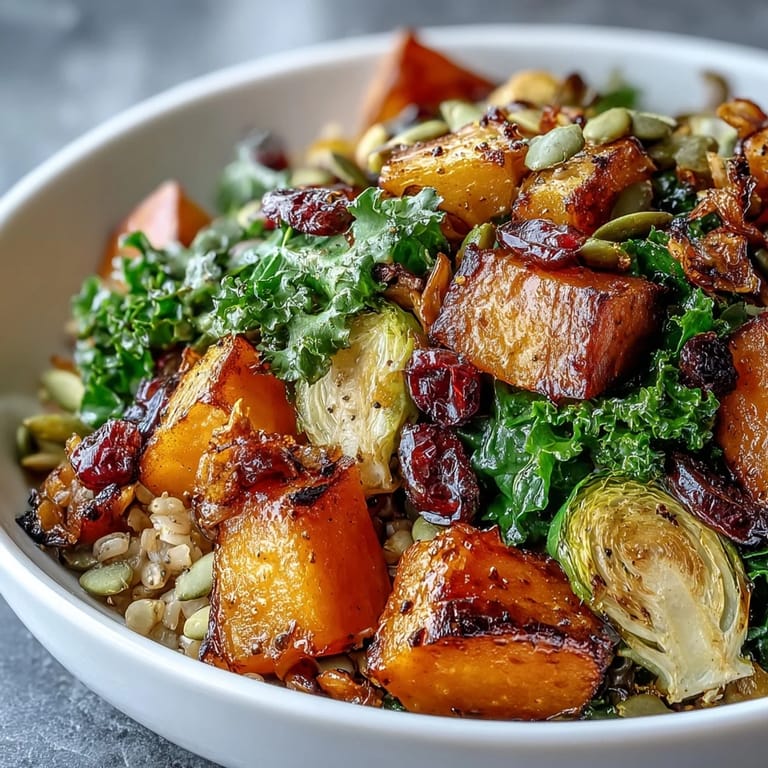
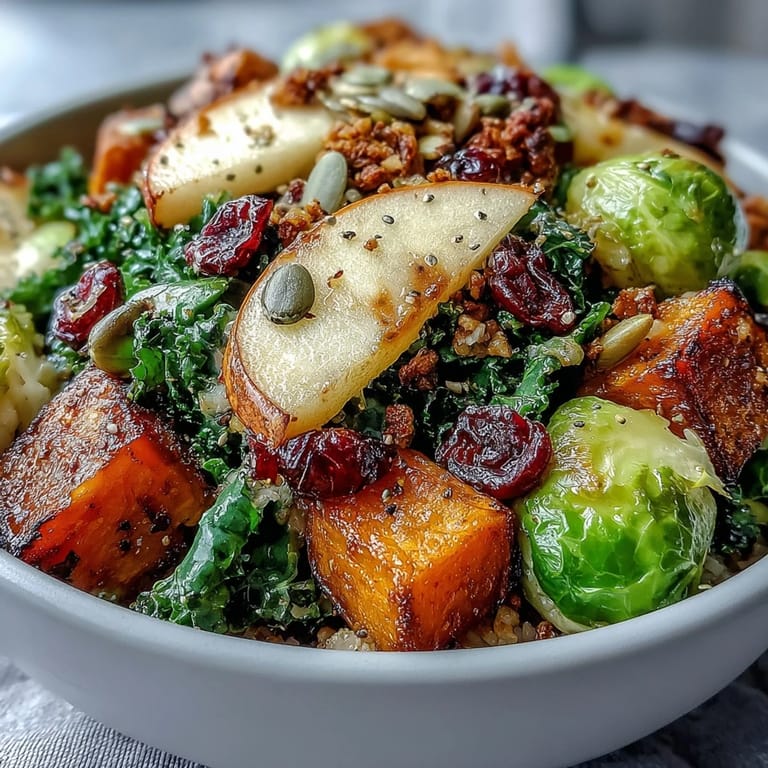
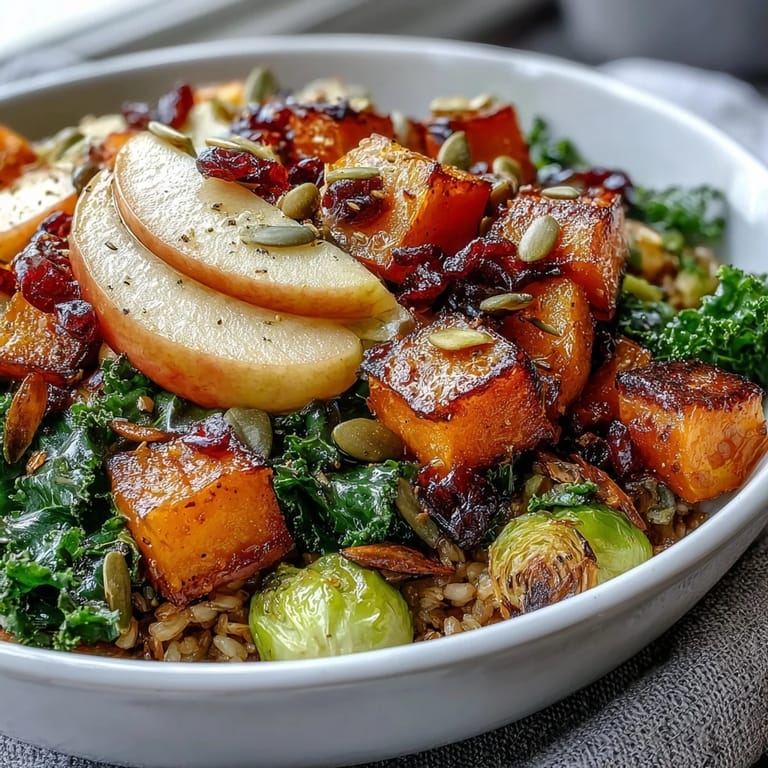
- Divide the cooked farro among four bowls as your base, then top each with the roasted squash, Brussels sprouts, sautéed kale, and roasted apples. The order doesn't matter much, but building them thoughtfully makes eating them feel intentional.
- Finish with the good stuff:
- Scatter pumpkin seeds and dried cranberries over each bowl, add cheese if you're using it, and serve while everything's still warm. This is where texture meets flavor, and it's why people ask for seconds.
 Pin It
 My neighbor brought her daughter over one evening, and the kid—who typically refuses anything green—actually asked for more kale. Sometimes food becomes the thing that surprises you, that opens a door you didn't know was closed.
Why Roasting Changes Everything
Roasting is where ordinary vegetables become something people crave. The high heat coaxes out natural sugars and creates those caramelized edges that taste infinitely better than raw or steamed. I learned this the hard way by overcrowding a pan once and ending up with disappointingly soft vegetables; now I respect the real estate on my baking sheets. The aromatics alone—that smell of paprika and cinnamon and sweet squash filling your kitchen—makes cooking this bowl feel like an act of love instead of a chore.
Making It Your Own
This bowl is almost designed to be adapted. Swap the grains, change the vegetables based on what's in season, experiment with different spice combinations. I've made versions with pears instead of apples, roasted chickpeas for extra protein, and even added crispy tofu when I was leaning vegan. The structure stays the same—roasted vegetables, cooked grains, some greenery, textural toppings—but what fills that structure can shift with your mood and your pantry.
Timing and Prep Strategy
The 50-minute total time assumes you're working efficiently, but don't rush yourself. Most of the cooking is hands-off while things roast, giving you time to set the table, pour a drink, or simply stand there and inhale the smell of autumn happening in your oven. I usually prep everything while the oven preheats, which takes about ten minutes and makes the rest feel easy. If you're meal prepping, roast your vegetables ahead and store them in the fridge for up to four days; just warm them gently before assembling.
- Cube your squash while the oven preheats to save yourself waiting time.
- A sharp knife makes prepping vegetables feel less like work and more like meditation.
- This bowl actually tastes better the next day as flavors continue melding together.
 Pin It
 This bowl has become my ritual for autumn, the meal I make when I want to feel grounded and fed. It's the kind of food that reminds you why you cook in the first place.
Recipe FAQs
- → Can I make this bowl gluten-free?
Absolutely. Simply substitute farro with quinoa or brown rice. Both cook similarly and work beautifully with the roasted vegetables and seasonal flavors.
- → How long do leftovers keep?
Store components separately in airtight containers for up to 5 days. Reheat vegetables and grains gently, then assemble fresh. The roasted flavors often develop even more depth overnight.
- → What protein works well with this bowl?
Roasted chickpeas, baked tofu, or pan-seared tempeh complement the autumn vegetables perfectly. Grilled chicken or roasted salmon also pair wonderfully if you eat meat.
- → Can I use other seasonal vegetables?
Yes. Sweet potatoes, beets, parsnips, or cauliflower all roast beautifully. The key is cutting vegetables into similar sizes so they cook evenly together.
- → Is this suitable for meal prep?
Ideal for meal prep. Roast a large batch of vegetables and cook grains in advance. Portion into containers, then add fresh toppings like pumpkin seeds just before eating.
- → What can I substitute for kale?
Spinach, Swiss chard, or collard greens all work well. Baby spinach needs just a quick wilt, while heartier greens like collards may need a few extra minutes to tenderize.