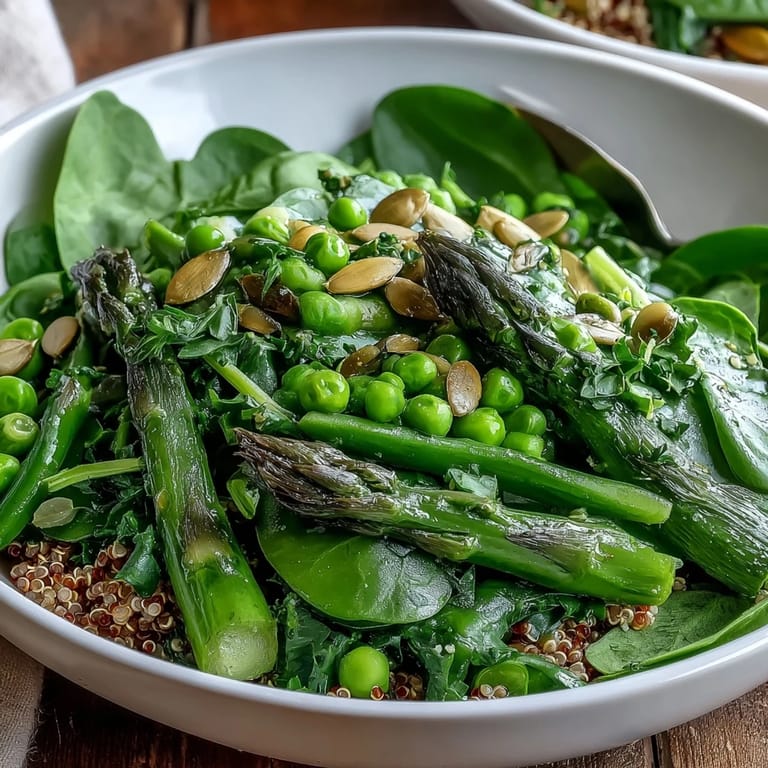
 Pin It
 There's something about assembling a spring green bowl that feels like you're capturing the season itself on a plate. I discovered this recipe on a Wednesday afternoon when my garden suddenly exploded with fresh vegetables and I had no idea what to do with all of them. The simplicity of it struck me—layer everything over warm grains, dress it with bright lemon, and suddenly you have something that tastes like hope tastes. It's become my go-to meal when I want to feel nourished without spending hours in the kitchen.
I made this for my coworker Marcus when he mentioned being tired of sad desk salads, and watching him eat it with genuine enthusiasm reminded me that good food doesn't need to be complicated. He asked for the recipe immediately, which is always the moment I know something's worth keeping around.
Ingredients
- Quinoa, brown rice, or farro (1 cup / 180 g): The grain is your foundation—quinoa cooks fastest and has a pleasant texture, but brown rice brings earthiness and farro adds a satisfying chew. Pick whatever you have time for.
- Water (2 cups / 480 ml) and salt (½ tsp): Never skip seasoning the cooking water; it's where the grain learns to taste like something.
- Fresh or frozen green peas (1 cup / 150 g): Frozen actually work beautifully here because they're picked at peak ripeness, and you'll blanch them anyway so texture matters less.
- Asparagus (1 cup / 120 g, trimmed and cut into 2-inch pieces): Those woody ends snap off easily when you bend them naturally—the vegetable tells you exactly where to cut.
- Green beans (1 cup / 120 g, trimmed and cut into 2-inch pieces): Keep them uniform so everything finishes blanching at the same moment.
- Baby spinach leaves (2 cups / 60 g): The heat barely wilts them, keeping that tender quality that makes spring feel alive on your tongue.
- Extra-virgin olive oil (3 tbsp): This is where you taste quality because there's nowhere to hide—use the good stuff.
- Freshly squeezed lemon juice (2 tbsp): Bottled juice will taste sharp in a way that doesn't feel fresh; squeeze it yourself and taste the difference.
- Lemon zest (1 tsp): That peppery brightness is the dressing's secret weapon.
- Dijon mustard (1 tsp): It acts as an emulsifier so the dressing actually clings to the vegetables instead of sliding off.
- Maple syrup or honey (1 tsp): A tiny touch balances the lemon's acidity and keeps it from tasting aggressively bright.
- Minced garlic (1 small clove): Raw garlic in dressing can be harsh, so one small clove whisked into oil becomes mellow and welcoming.
- Toasted pumpkin seeds or sunflower seeds (2 tbsp, optional): They add a nutty crunch that makes you want to eat slowly and notice what you're tasting.
- Crumbled feta cheese (¼ cup, optional): Tangy and salty, it plays beautifully against the brightness of lemon.
- Fresh herbs—mint, parsley, or dill (chopped, optional): Mint brings an unexpected coolness, parsley adds herbaceous green notes, and dill whispers of something almost coastal.
Tired of Takeout? 🥡
Get 10 meals you can make faster than delivery arrives. Seriously.
One email. No spam. Unsubscribe anytime.
Instructions
- Cook Your Grains Properly:
- Rinse them under cold water to remove surface starch, then bring your salted water to a rolling boil before adding them. Reduce heat, cover, and let them simmer gently—about 15 minutes for quinoa, 35 for brown rice, or follow your package. You'll know they're done when they're tender but not mushy and all the liquid is absorbed.
- Blanch the Spring Vegetables:
- Bring a large pot of salted water to boil and blanch the peas, asparagus, and green beans separately for 2–3 minutes each—you want them bright green and just tender, not soft. Transfer immediately to ice water so they stop cooking instantly and keep their snap.
- Wilt the Spinach Gently:
- Heat a skillet over medium heat, add the spinach, and let it rest for just 1–2 minutes until it softens into itself. It releases so much water that you don't need oil; just let the residual heat do the work.
- Whisk the Lemon Dressing:
- Combine olive oil, lemon juice, zest, mustard, maple syrup, and minced garlic in a small bowl and whisk until it emulsifies into something glossy and cohesive. Taste as you go and adjust salt and pepper—a little extra can make everything sing.
- Layer It All Together:
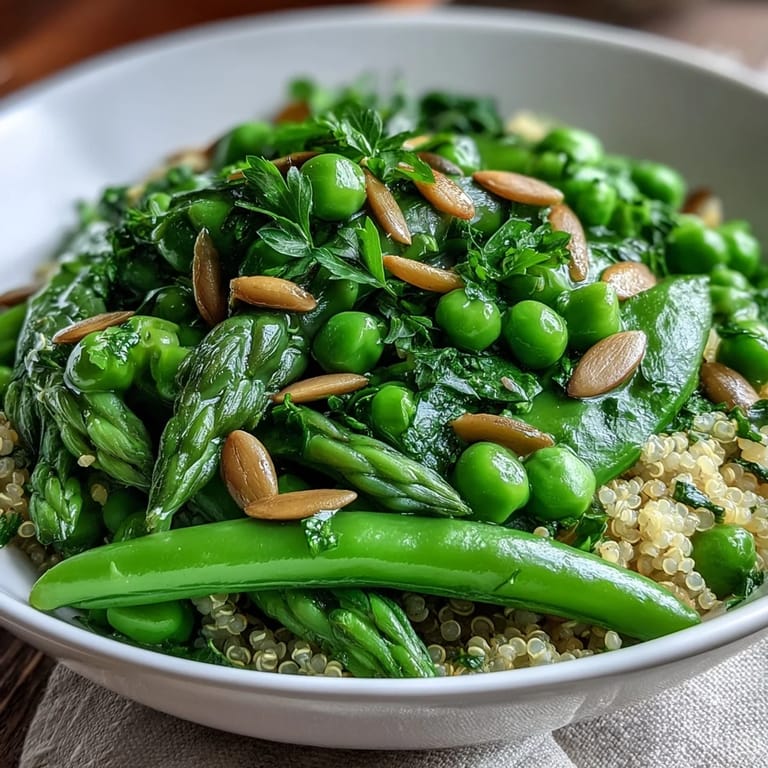
- Divide warm grains into four bowls, then arrange your blanched vegetables and wilted spinach on top like you're building something beautiful. Drizzle the dressing generously over everything so it can soak into the warm grain below.
- Finish and Serve:
- Scatter your chosen toppings—toasted seeds, crumbled feta if using it, fresh herbs—right before eating so they stay crisp and don't soften from the warmth.
 Pin It
 I realized this bowl had become something more than just lunch when my partner started requesting it before asking what was for dinner. It's the kind of food that makes you feel taken care of—nourished in a way that goes beyond calories—and somehow that happened without any fuss at all.
The Magic of Blanching
Most people either boil their vegetables into submission or eat them raw and crunchy, but there's this perfect middle ground where blanching takes you. The hot water gently unlocks the vegetables' flavors and softens them just enough that they're not tough, but the ice bath preserves their color and that pleasant little resistance when you bite. It's a technique that feels professional but works every single time, and once you understand why you're doing it, you'll use it everywhere.
Grain Choice Changes Everything
Quinoa brings a slight nuttiness and cooks fastest if you're in a hurry, brown rice tastes earthier and more substantial if you want the bowl to feel heartier, and farro has this wonderful chewiness that makes each bite feel intentional. You could honestly use whatever grain you have on hand—bulgur, couscous, even barley—and the bowl will still taste like spring. The vegetables are really the stars here; the grain is just the stage they perform on.
Making It Your Own
This bowl is genuinely forgiving because the framework is sound but the specifics are completely flexible. You can swap vegetables based on what's actually in season or what you can afford, add protein if you need it, use different herbs depending on your mood, and adjust the dressing balance if you prefer it more lemony or more garlicky. The core idea is fresh vegetables over warm grain with bright dressing, and everything else is just variation on that beautiful theme.
- Prep vegetables the night before but keep the dressing separate until you eat so nothing gets soggy.
- Grilled chicken, crispy tofu, or chickpeas add protein if you want the bowl to be more filling.
- Taste the dressing on a tiny piece of grain before you commit—it should taste bright but not sharp.
 Pin It
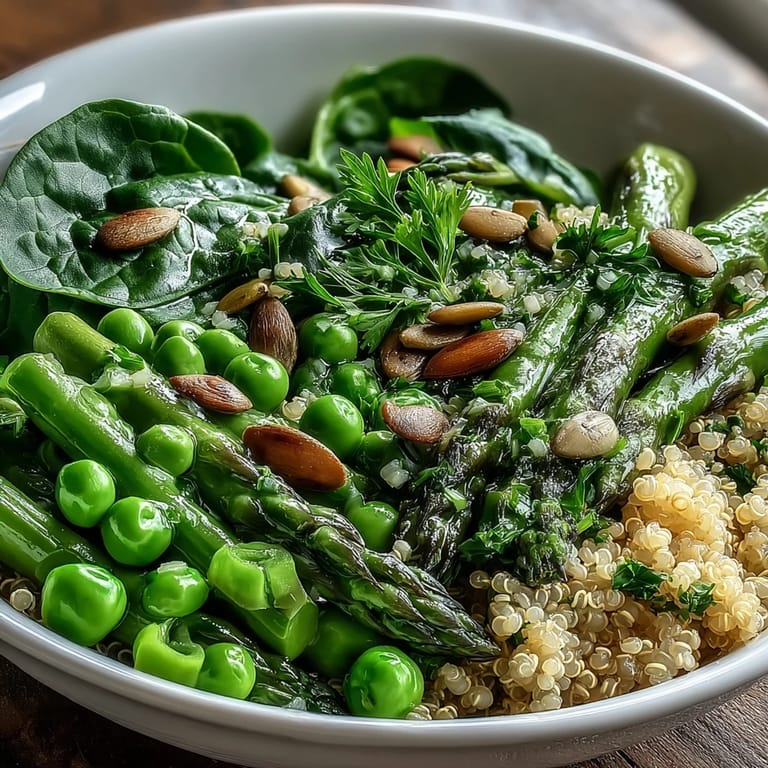
 This bowl has become my answer to wanting to eat something that actually feels like care. It's fast enough for a weeknight but nourishing enough that you feel genuinely better after eating it.
Recipe FAQs
- → Can I use different grains?
Absolutely. Quinoa, brown rice, farro, bulgur, or couscous all work beautifully. Adjust cooking time according to package instructions.
- → How do I store leftovers?
Keep components separate in airtight containers. Store dressing and toppings separately from grains and vegetables for up to 4 days. Assemble just before serving.
- → Can I make this vegan?
Yes. Simply omit the feta cheese and use maple syrup instead of honey in the dressing. The result is completely plant-based and dairy-free.
- → What protein additions work well?
Grilled chicken, baked tofu, roasted chickpeas, or even a soft-boiled egg complement the fresh flavors beautifully without overwhelming the delicate vegetables.
- → Can I use frozen vegetables?
Frozen peas work perfectly. For asparagus and green beans, fresh is preferable for texture, but frozen can be used in a pinch—just adjust blanching time slightly.
- → How can I add more crunch?
Toasted pumpkin seeds, sunflower seeds, chopped almonds, or even toasted walnuts add lovely texture. Fresh herbs like mint or parsley provide brightness too.